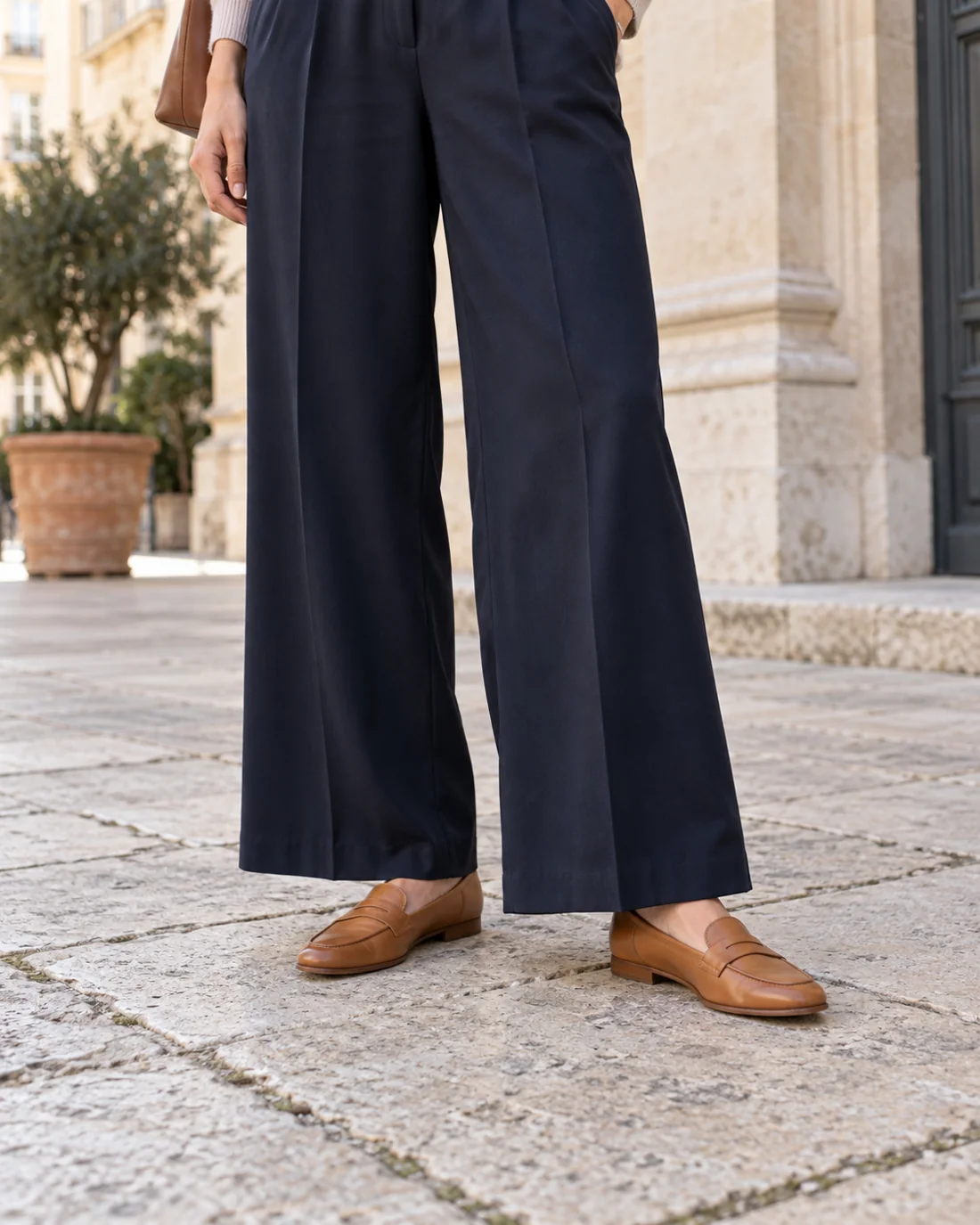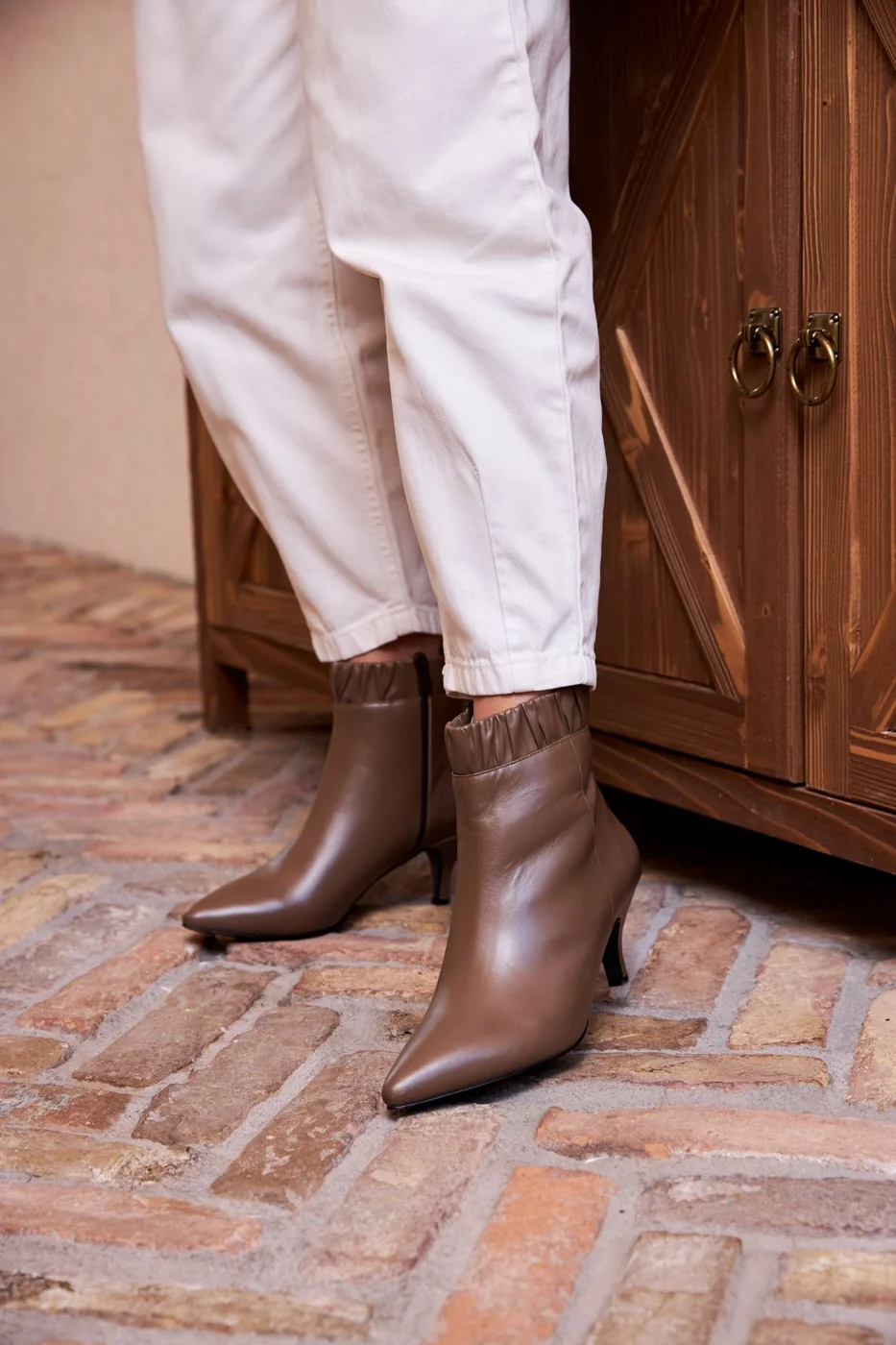
When the hem ends above
Cropped trousers leave a gap above the boot. That gap can show skin, socks or tights according to your preference. Choose the visible layer deliberately and inspect it while seated too. Trousers usually rise when you sit, revealing more than they do standing.
A small gap may disappear during walking when the hem falls onto the shaft. Notice whether it drops freely again or catches there. A larger gap or different shaft shape can avoid repeated correction. There is no universal number of centimetres for this.
Test two trouser legs with the same boot
Take straight and wide trousers you already own and try both with the same ankle boot. The straight hem may rest on the shaft edge while the wider one falls over it. This comparison explains why a boot need not be generally right or wrong for your wardrobe. It may simply work better with one leg width.
Check an existing hem slit too. It can provide more room over the shoe, but its edges may move differently from a closed hem. Inspect both sides after several steps. A side opening does not have to fall symmetrically like an ordinary trouser hem.
If only one pair works, record that exact combination. Do not immediately look for a new boot to cover every pair of trousers simultaneously. A low shoe you already own may serve the other pair. A small set of known combinations saves more morning decisions than a broad selection without clear pairings.
When trousers cover the shaft
The leg needs enough width to fall over the boot without catching on its zip or upper edge. Inspect the side and back. A hem that lies smoothly at the front may catch on a rear pull tab.
Take several ordinary steps and sit down. If the trousers remain caught after standing, do not simply smooth them once and declare the outfit finished. Try another pair or a lower shoe. Everyday wear involves repeated movement rather than one carefully arranged still image.
Tuck only when the shapes allow it
Narrow trousers may tuck into a sufficiently roomy shaft. Thick turn-ups or excess fabric can create pressure there, however. Check that the boot closes normally and allows ankle movement. It should not need to be forced over too much material.
Folding wide trouser legs tightly together often produces a different shape from the one originally intended. If that is exactly the effect you enjoy and it remains comfortable, you can try it. Another trouser width is often simpler for an easy combination.
Connect shoe changes with length
A higher sole or heel changes ground clearance. Mark a proposed shortening with the pair you expect to wear most often. A length that works with one shoe may be too long with another. Before a permanent alteration, secure a temporary hem and perform a brief movement test.
Finally photograph successful trouser-and-boot pairs. Note the socks too if helpful. You will not need to rediscover each morning why an almost identical boot with a different shaft height suddenly catches the hem.