Check contents and condition separately
Empty every compartment, including small inner and back pockets. Put frequently needed belongings in a fixed place so you can find them when changing bags. Personal documents should not remain in a bag being passed on or stored for a long time. Check the pockets a second time before those steps.
Then inspect lining, fastenings, handles and straps. Note a catching zip or questionable seam. Cleaning and care depend on the manufacturer's guidance and actual material. A leather product is not automatically suitable for every coated or textile surface.
Preserve shape without pressure
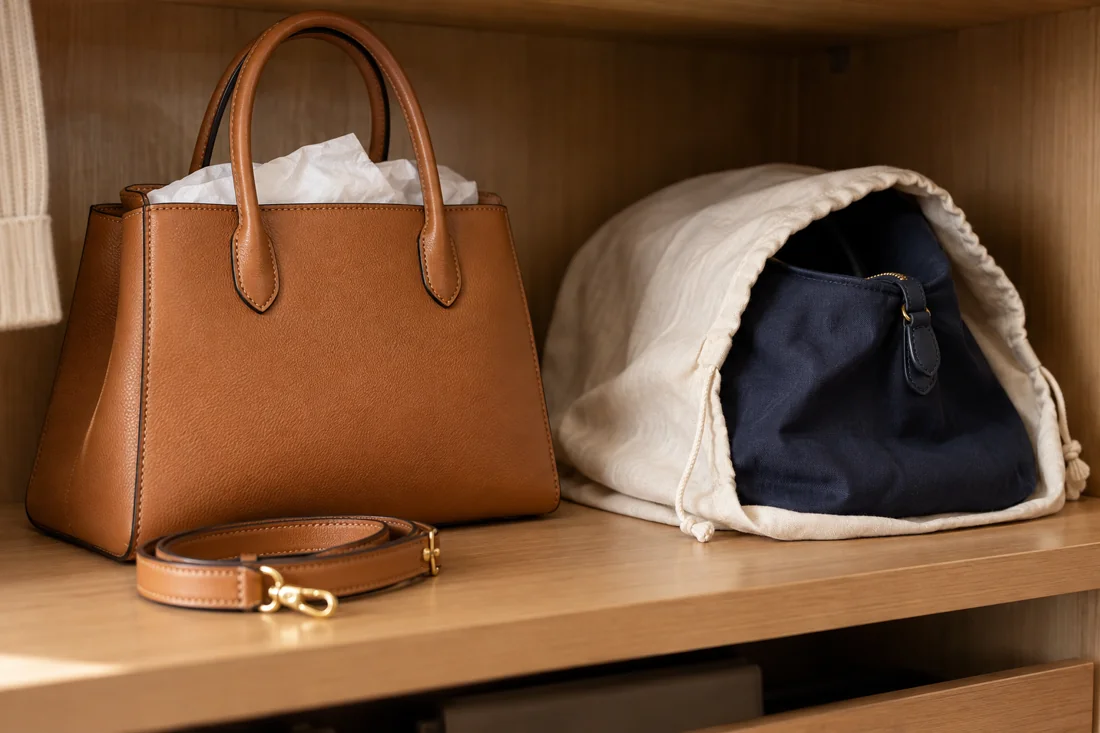
Place a structured bag where heavy objects will not rest on it. Soft designs may store flat, while others would crease awkwardly that way. Judge the construction and available instructions. Any filling should be clean and should not stretch the bag enough to place seams under tension.
Arrange straps and chains so they do not leave hard pressure points against delicate surfaces. Use a suitable supplied cover if available, and do not pack anything damp. Protection from dust does not replace checking that the bag is fully dry and sufficiently clean before storage.
Make bags findable
Keep regularly used bags where they can be reached without rearranging everything. If several other models must move each time, you may default to the same bag every day. A visible photograph or simple label can help with opaque covers.
Store removable straps with their bag without pressing them firmly against delicate areas. Before the next use, check that all required parts are present. The most useful arrangement follows your actual switching pattern: a daily work bag needs a different place from a small bag reserved for occasional evenings.