Solve the most demanding situation first
Choose the combination for the appointment with the clearest requirements. It might be a client conversation or a presentation. Put the trousers or skirt, top, shoes and possible jacket together. This combination determines which other pieces can connect usefully with it.
If the jacket already has a noticeable pattern, two quiet tops are often easier to combine than two further patterns. A plain jacket gives you more room. Try both tops beneath the same jacket while seated as well: a thick collar or a wide sleeve can make the second version substantially less comfortable than the first.
Establish a travel base
A lower garment that you could also wear on the second day can work for the journey, provided it stays clean and comfortable. Treat this reuse as an option rather than a guarantee. A spilled drink or unexpected rain can change the order. A lightweight second pair of trousers provides more backup than several extra tops if both days involve long periods of sitting.
Wear the heavier shoes during travel if they suit the route. A second pair should have a specific job, such as a more formal appointment or an event where the travel shoes do not fit. Two nearly identical pairs consume space without meaningfully expanding your choices.
Develop the evening from the daytime clothes
For an informal dinner, taking off the work jacket may be enough. If you want to change the top, choose one that will also work beneath the jacket the following day. This keeps the bag flexible. A delicate piece intended for just one hour, which must travel flat, requires a disproportionate amount of attention.
Check the invitation or venue before packing a separate evening look. An announced formal event differs from a spontaneous meal with colleagues. When information is unclear, asking a question is easier than packing several precautionary versions.
Take the packing rehearsal seriously
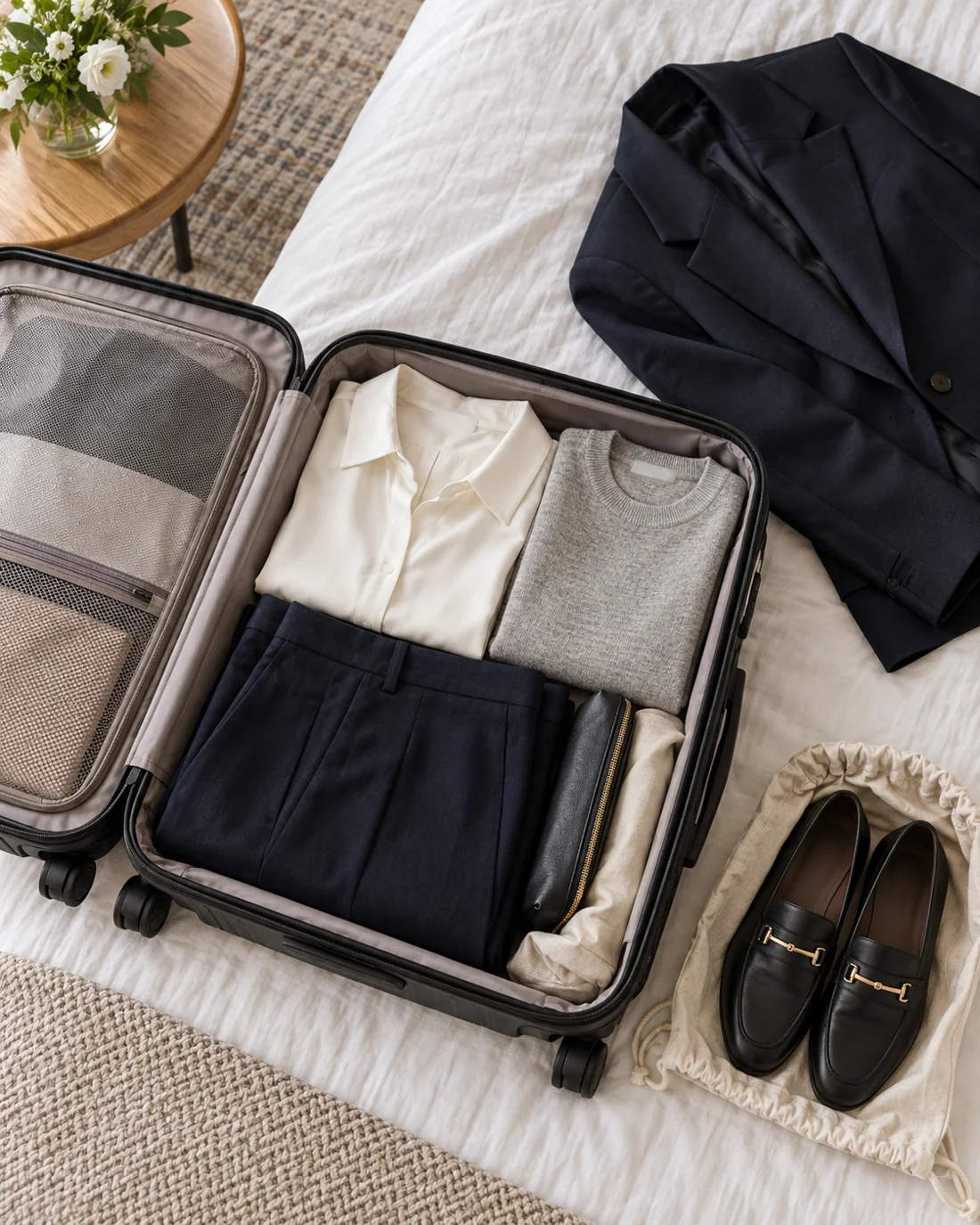
Lay every garment out and assign it to an occasion. Each piece should have at least one clear place in the schedule; reusable pieces may take several roles. Remember underwear, socks and sleepwear too. These small items are easily missed when planning focuses only on visible combinations.
Pack the bag completely and lift it. If you cannot comfortably carry it over the planned route, remove duplicated roles first. Two jackets for the same indoor setting or several similar scarves may be unnecessary. Keep a necessary weather layer, however, even if it looks less interesting in a hotel mirror.
Place clothes needed immediately after arrival somewhere accessible near the top. A flat bag separates worn laundry from the remaining clothes. Pack liquids so a leaking closure cannot spoil your only suitable trousers. Follow the transport requirements for your particular journey.
Review the trip afterwards
Record what you actually wore and which item stayed unused. Were the spare trousers useful, or would a second top have been enough? Was there somewhere to change? These answers are more informative for the next journey than a fixed packing list with a supposedly ideal number of pieces.
Save only combinations that worked while seated, while carrying the bag and during appointments. The next trip may have different requirements. A stored starting point saves decisions, but compare it with the weather, schedule and invitations before every departure.