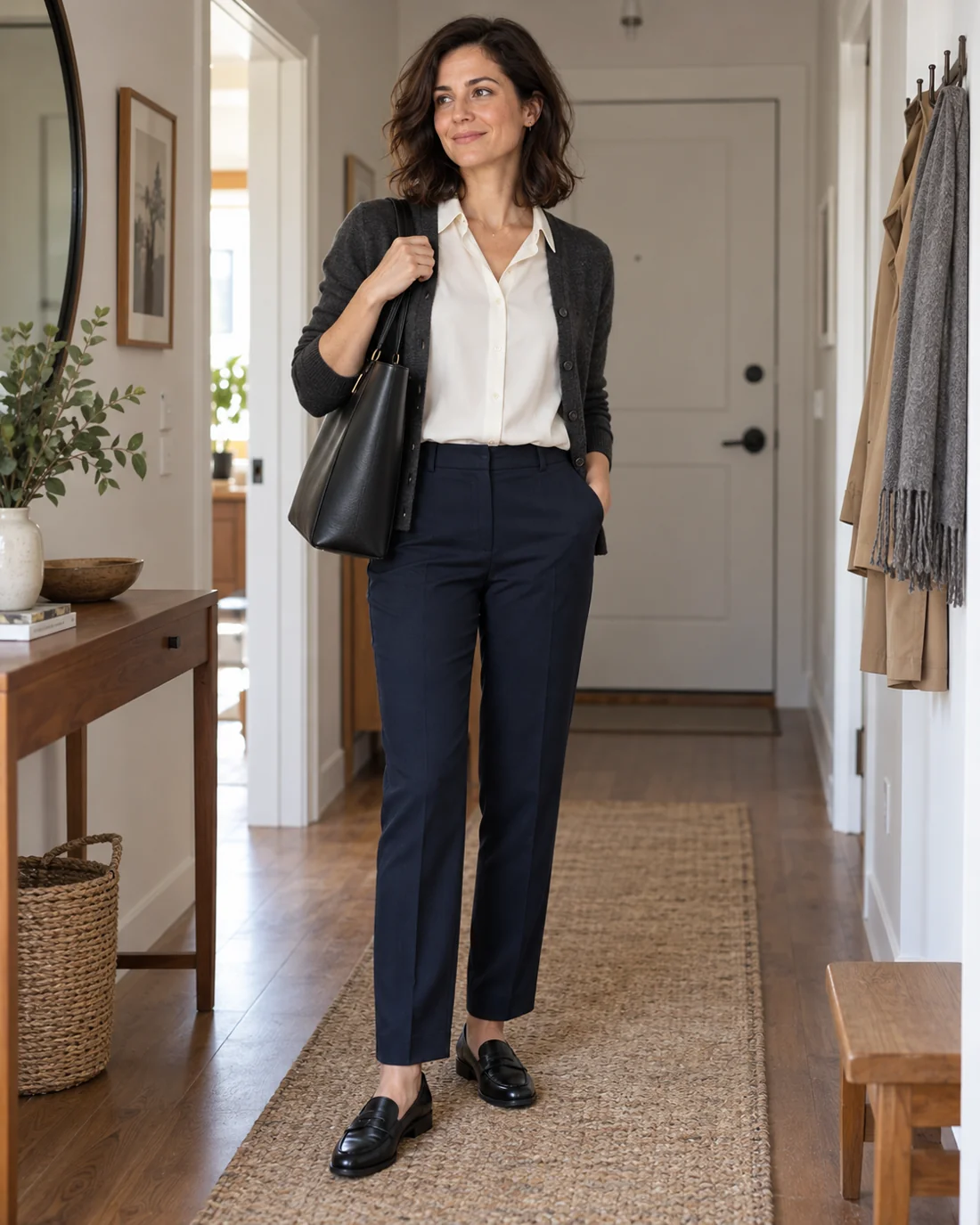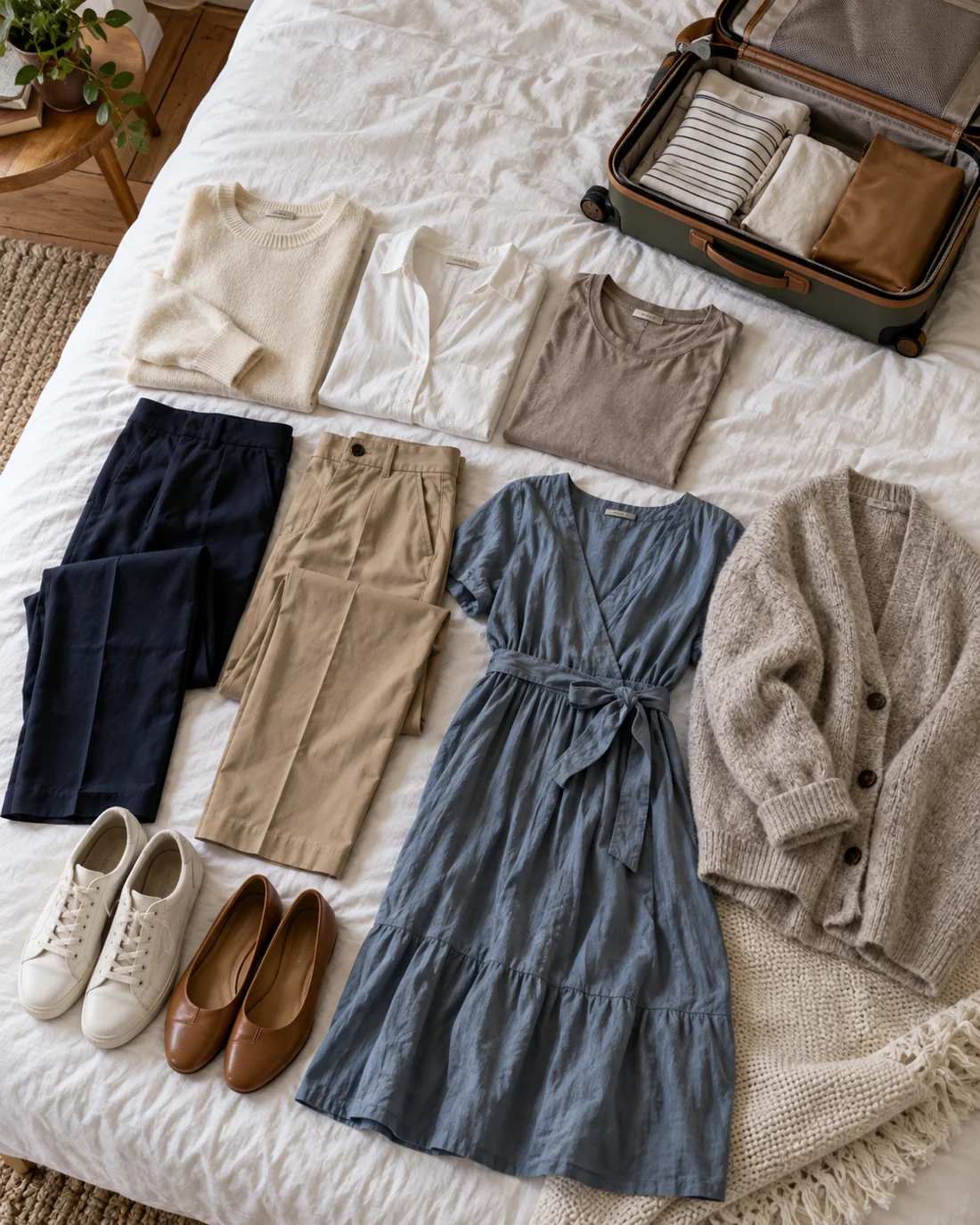
Check the bag's limits first
If you travel with cabin baggage, the relevant provider's size and weight limits apply. Check them directly for your booking. A packing list is unhelpful if it assumes a larger bag. Clothes also share the space with toiletries, chargers and other necessary items.
Set those fixed items aside first. This shows how much room remains for clothing. A second large pair of shoes may occupy more space than several tops. Give it a clearly different job before including it.
Choose combinations rather than individual pieces
Start with two or three lower garments suited to the actual activities. Add tops that each create at least one complete combination. A piece that works only with an unpacked belt or another jacket is not yet a usable outfit.
Try every planned combination with the intended shoes. Trouser lengths can differ in particular. A wide pair that works with the higher sole may drag with the flat spare pair. Decide before packing whether both shoes are necessary or another lower garment would create more connections.
A dress can cover a whole daytime outfit but may need a different outer layer from the rest of the clothing. Test its sleeves beneath the jacket. If it requires an additional jacket, its real space requirement is greater than the single dress suggests.
Plan repeat wear deliberately and flexibly
Trousers can be assigned to several days while they remain clean and comfortable. Still decide what you would wear after a stain or unexpected rain. Spare capacity does not need to mean a complete second outfit for each day. It should cover the most likely shortage.
Tops, underwear and socks need different changing intervals depending on use. Set the quantities according to your own routine. A general number cannot replace personal comfort or the conditions of the trip. If you want to change after an active day, include that in the plan.
Count washing only when there is a realistic opportunity
An available washing machine or planned laundry service can alter the quantity. Check opening times, availability and care labels. A vague hope of finding somewhere to wash is insufficient when the plan depends on it. Drying also requires time and a suitable place.
If you intend to hand-wash individual pieces, do not assume a dry outfit will be ready the next morning. Thick cuffs and layered fabric can stay damp longer. The travel plan should not collapse because a top needs another day. Keep worn and clean clothing separate where your luggage allows.
Let colour come from the wardrobe you have
A limited colour selection simplifies combinations without needing to consist of neutrals. If your existing clothes often connect blue and green, that can form your travel base. Actual compatible outfits matter more than an abstract palette on a screen.
A patterned piece can connect several colours. Use it only if you enjoy wearing it, however. A newly bought connecting piece solves little if its fit bothers you on the journey. Travel is not the easiest time to test several unfamiliar garments for the first time together.
Find the weak point in an example week
Take a trip with four days of city visits, one quieter day visiting someone and two longer outward and return journeys. Assign specific uses to existing combinations first. Comfortable trousers might cover the outward journey and a later visit, provided their condition still allows it. A dress for dinner needs its full combination of shoes and outer layer even if worn only once.
Then identify where the plan depends on a single item. Perhaps every top works only with the same trousers, or the only suitable underlayer is scheduled for every day. Another pair of trousers or a second suitable underlayer may solve more problems than three decorative tops. The reserve now has a defined purpose rather than being chosen because luggage space remains.
Finally, test a change in the schedule: a planned wash is unavailable or a day is much wetter than expected. Can you reassign a combination you have already checked? If not, adjust the selection before travelling. This example does not prescribe an item count; it shows how to assess your own list through the things it depends on.
Do not automatically fill the last space
Pack everything and carry the bag. If room remains, it can stay empty. You may need it for a removed layer or something acquired during the trip. Another jumper without a specific role does not necessarily improve the selection.
Photograph the combinations and note which days they cover. After returning, mark unworn pieces and genuine gaps. Each journey then creates a more accurate starting point. Keep it adjustable: a week of hiking requires different clothes from a week of city visits and evening events.