Include the journey to the hotel
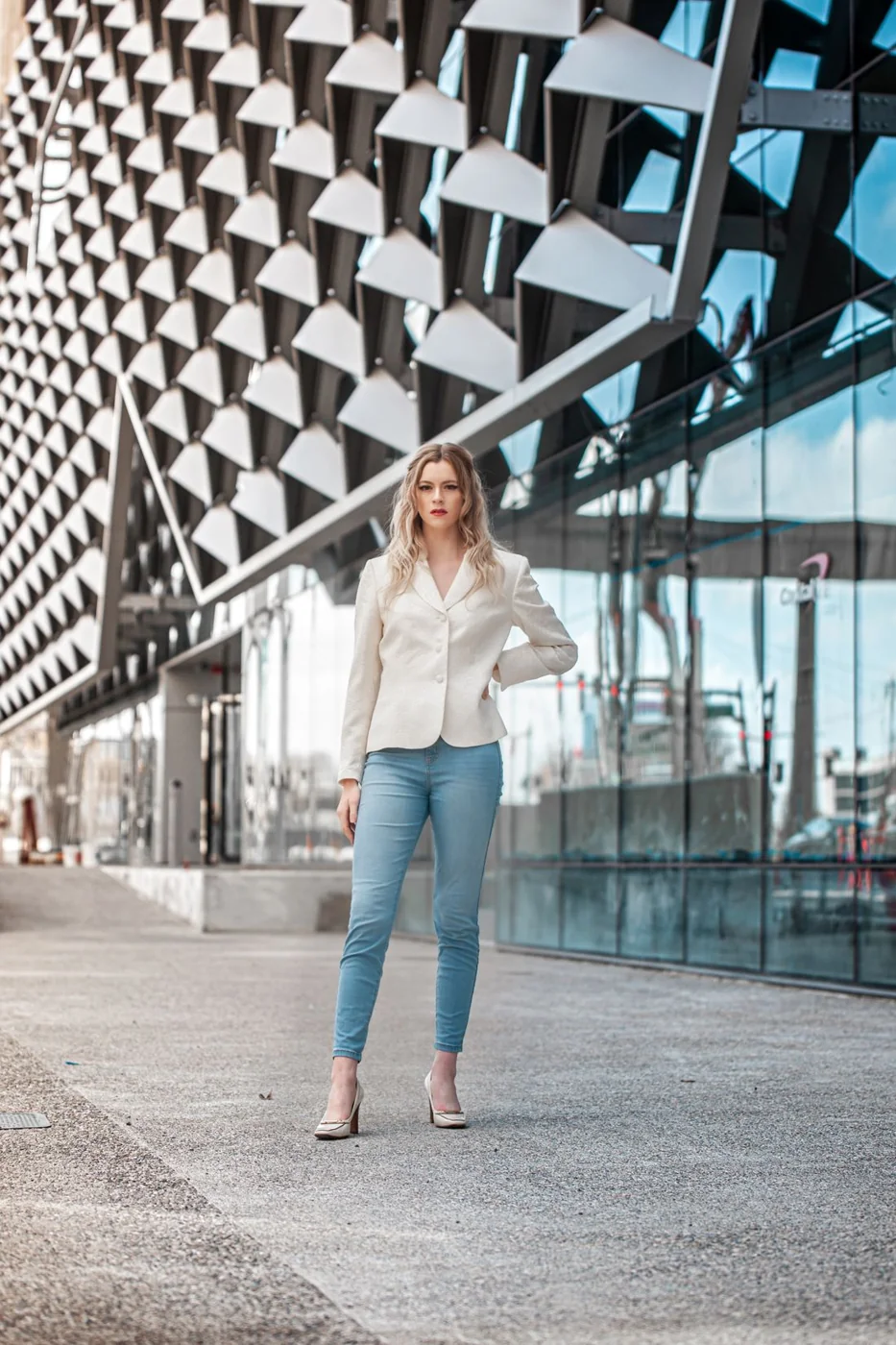
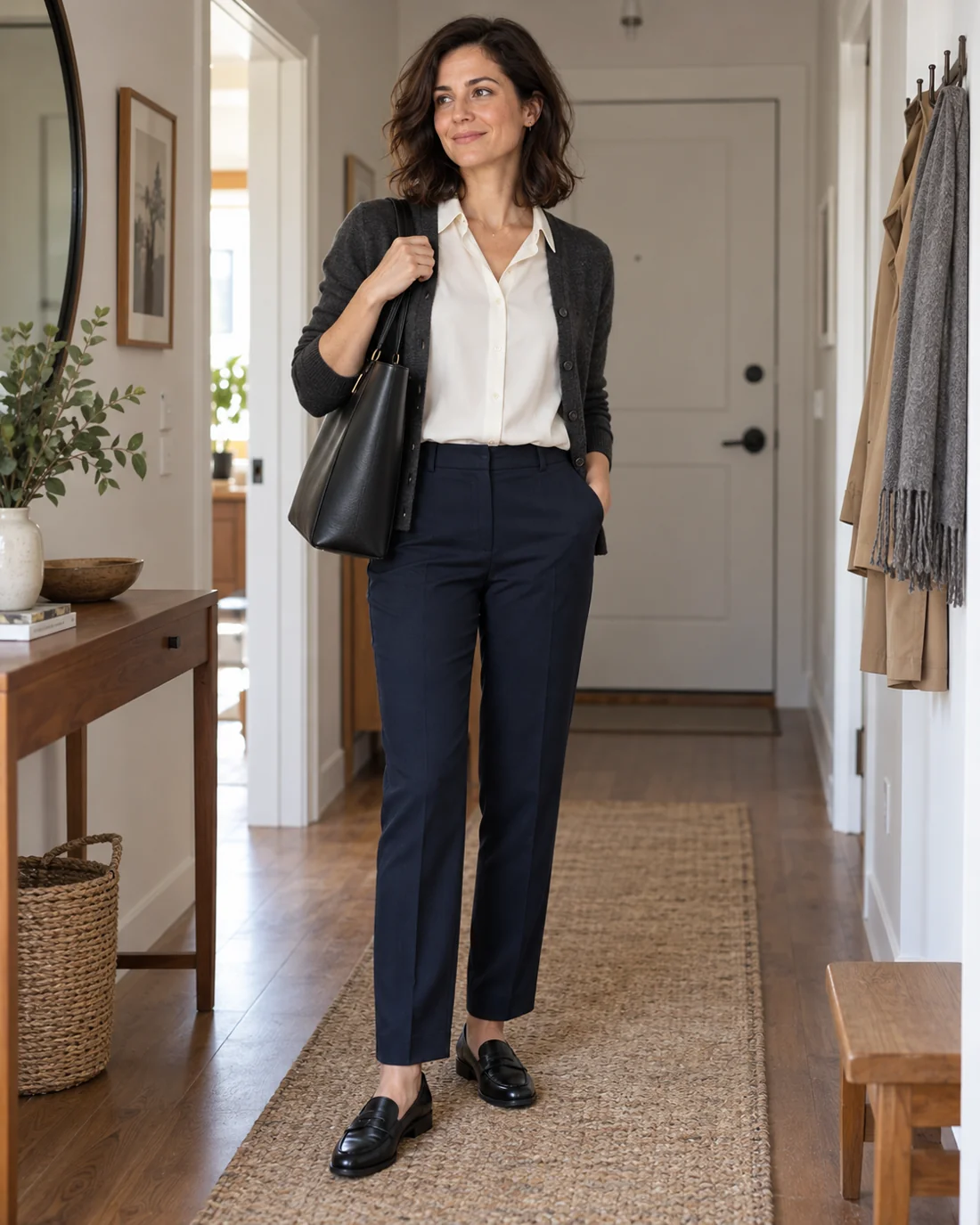
The travel outfit already counts as an outfit. Choose shoes that could also work for the next day's planned distances. If you wear the heaviest jacket, it still needs to suit the temperature and transport. Wearing a warm coat simply to save packing space is unhelpful if you end up carrying it the entire way.
Check whether you will be out before checking in. Anything needed during that stretch must be accessible. A clean top at the bottom of the bag is of little use without an opportunity to change. Build the first day around the travel combination instead.
Create a manageable connection
Lay two lower garments beside the selected tops. Every piece need not work with every other piece, but each planned combination should be complete. Try the second pair of trousers with the same shoes in particular. Different leg lengths can turn a theoretically compatible pair into an unusable travel outfit.
A shared colour direction simplifies packing without reducing everything to black. Navy and cream, brown and pale blue or other combinations you already own can serve the same purpose. Choose colours from your wardrobe instead of buying a new travel palette.
If a dress has several jobs, test it with both intended layers. A jacket that fits comfortably over a T-shirt may bunch over wide dress sleeves. Flat packing lists easily overlook these differences.
Treat evening plans as specific requirements
A booked restaurant with a clothing requirement needs a definite place in the plan. A potentially nicer dinner without further instructions does not automatically justify a second collection of shoes. First check whether your daytime outfit works with another top or one layer removed.
If you pack a separate pair, give it a clear role and test walking in it. You may need to get from the hotel to a station or restaurant. Shoes that feel comfortable only on a flat bedroom floor can make the evening unnecessarily complicated.
Put spare capacity where it is needed
Underwear and socks are part of each day rather than decorative extras. Plan them for the length of the trip and the washing facilities actually available. Do not assume a hand-washed piece will dry overnight. Fabric, room temperature and hanging space vary between places to stay.
An extra top can cover a spilled meal. On a trip with extensive outdoor walking, a second pair of trousers may matter more. Decide according to the most realistic shortage. Several almost identical spare pieces use space without solving every problem.
Test the full bag
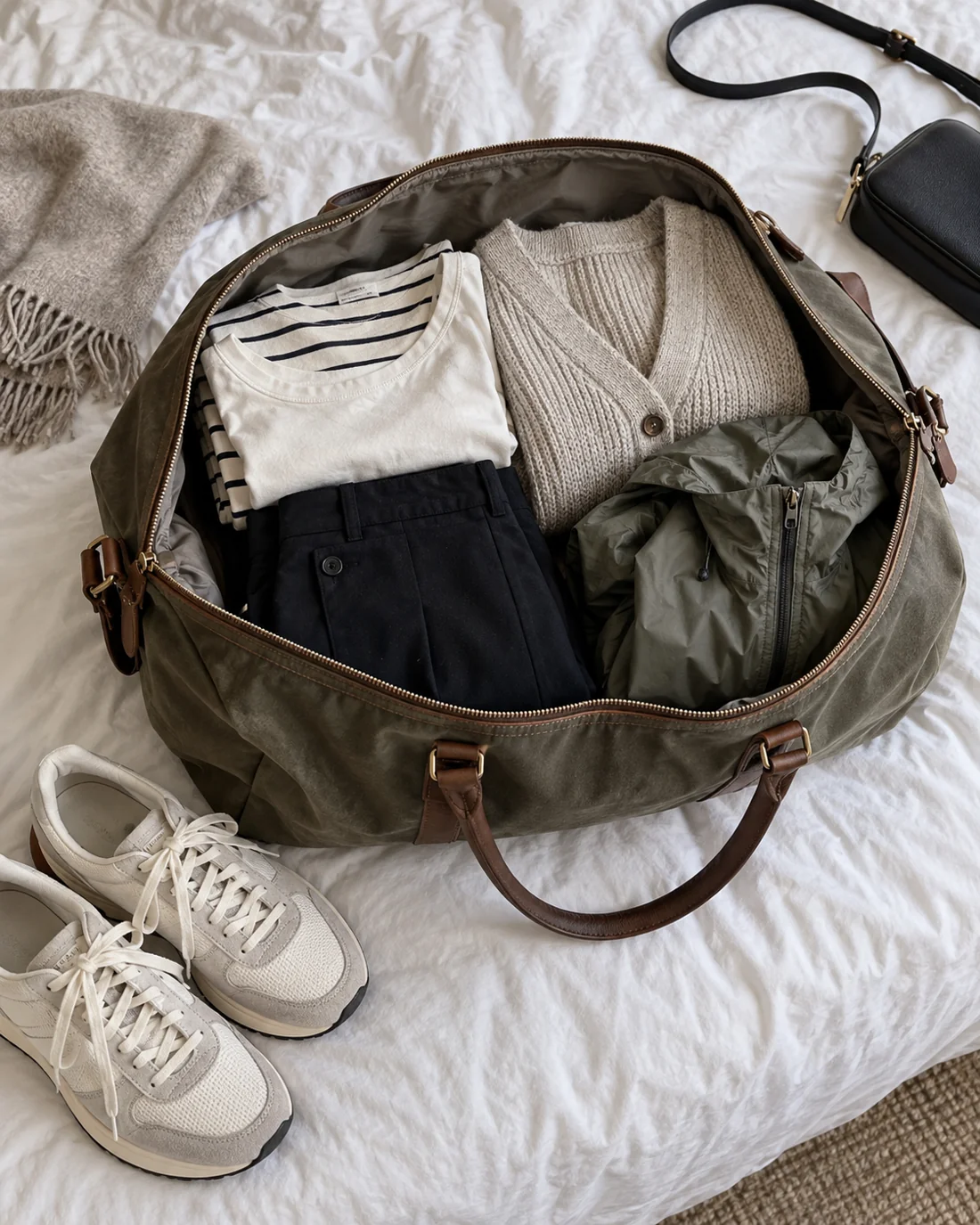
Pack toiletries, chargers and travel documents as well. Carry the bag for several minutes and check that you can lift and put it down yourself. Clothing accounts for only part of the weight. Remove pieces without an assigned use first, rather than automatically removing the only weather layer.
Photograph the finished combinations if that saves decisions in the morning. The pictures need no elaborate arrangement. After the trip, add notes about what remained unworn and what was missing. This creates a packing starting point grounded in the journeys you actually make.