Find the shared requirements
Write down how much you will walk, where you will sit and whether there is a specific dress code. Choose shoes for the longest actual distance. Trousers or a dress whose hem works only with another pair are less suitable for a day without a changing opportunity.
Then check the base while seated. An outfit that feels pleasant while walking may become awkward in the evening because of a firm waistband or stiff seam. Test both states at home before adding details.
Change the effect through one layer
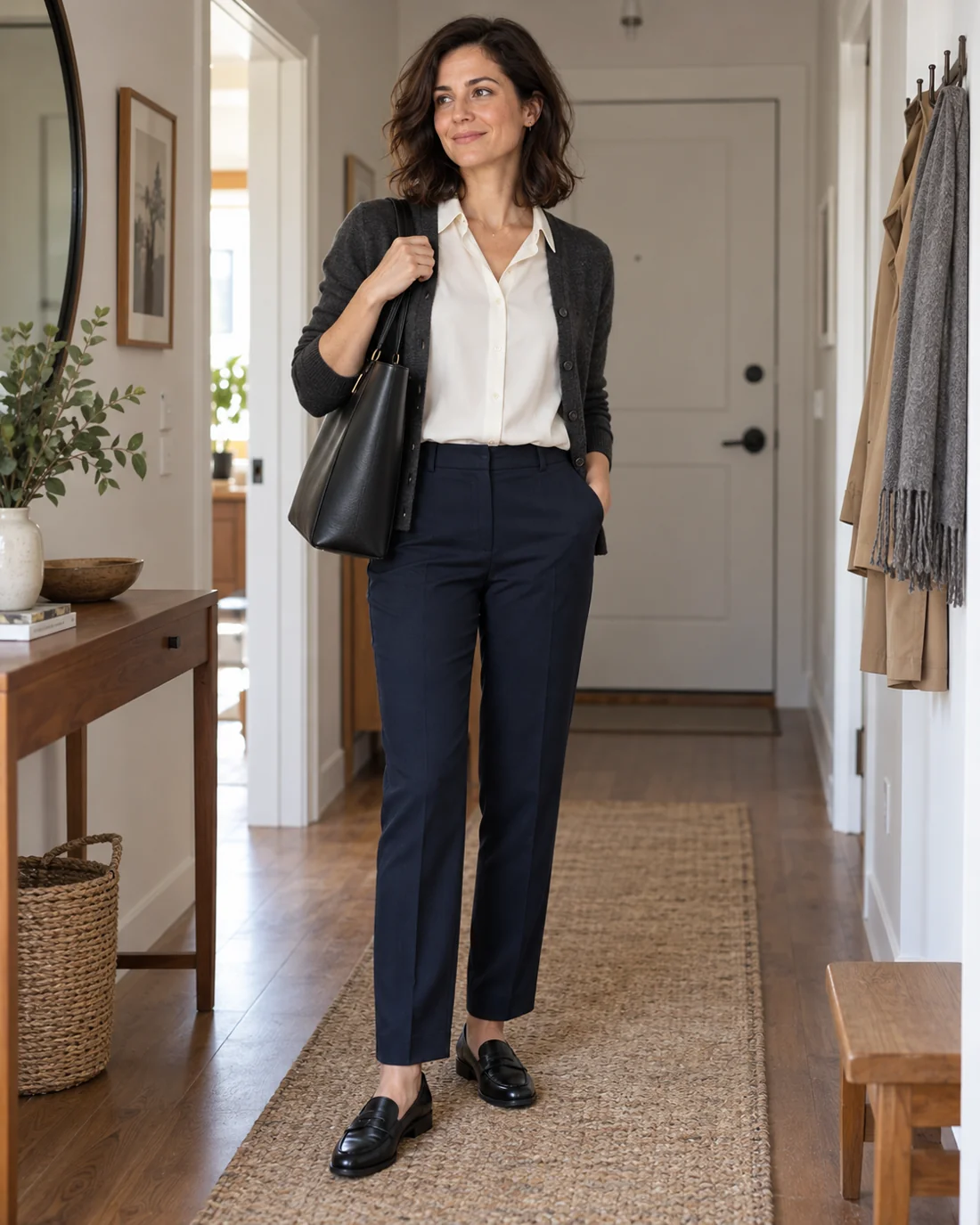
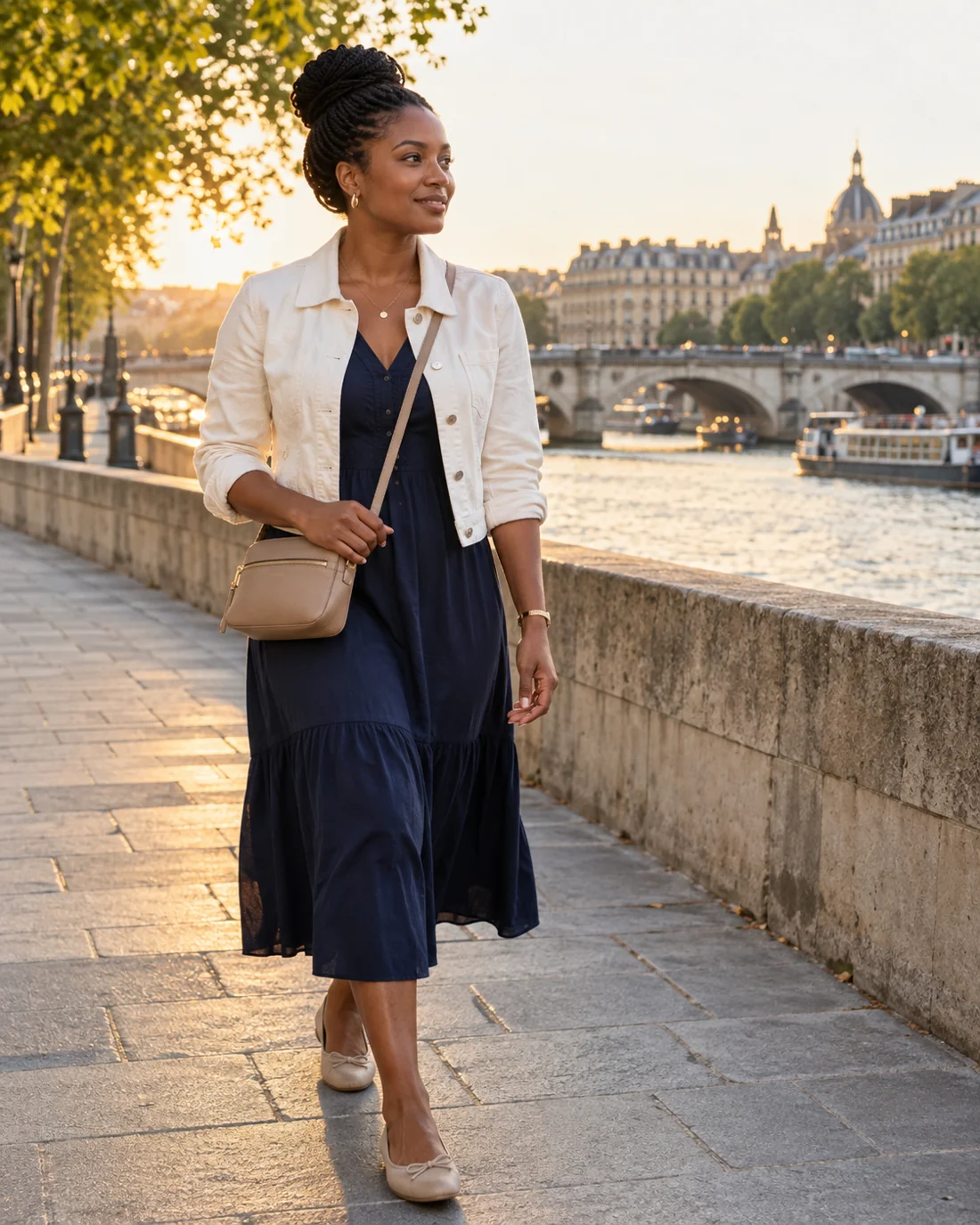
A removable jacket can change the outfit between stages. Wear it open or put it away during the day, then add it again in the evening. The top underneath should still work alone. A layer used only to hide a neckline you dislike limits flexibility.
If you want to add jewellery, one small piece that fits securely in the bag is enough. A broad change of necklaces, belt and bag requires somewhere to organise everything. Without a changing area, an already complete combination is more dependable.
Treat luggage as part of the outfit
The daytime bag will still be present in the evening. Choose one that holds what you need without occupying excessive room while seated. An additional tiny bag does not solve the larger bag's problem if you still have to carry it.
Plan for the outside temperature on the return journey too. A light layer can stay in the bag during the day and become more useful than a decorative detail later. If the combination works well, record the actual schedule alongside it. You will then know what kind of day it really suits.