Consider the garment's weight
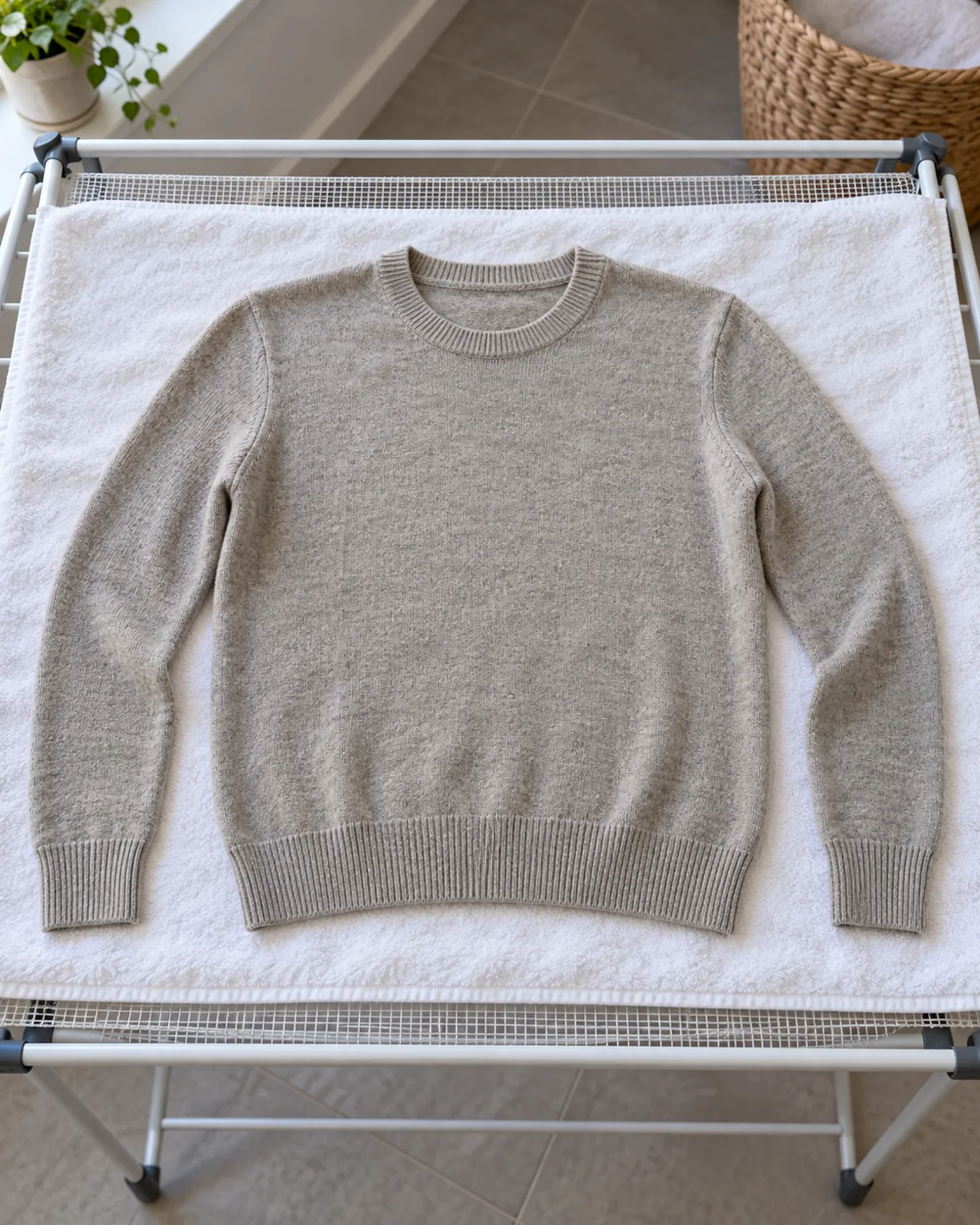
A heavy, soft knit can concentrate its weight at a few points on an unsuitable hanger. Folding may be a better option where it agrees with the item's care and storage guidance. Avoid placing it under a very heavy stack if that presses decoration or delicate surfaces.
A structured jacket often needs support across its shoulders instead. Choose a hanger suited to the actual shoulder width, without hard ends pressing into the fabric. A narrow wire hanger is not appropriate for every heavy garment. Recheck the shape after a while rather than keeping the first storage decision indefinitely.
Use construction details thoughtfully
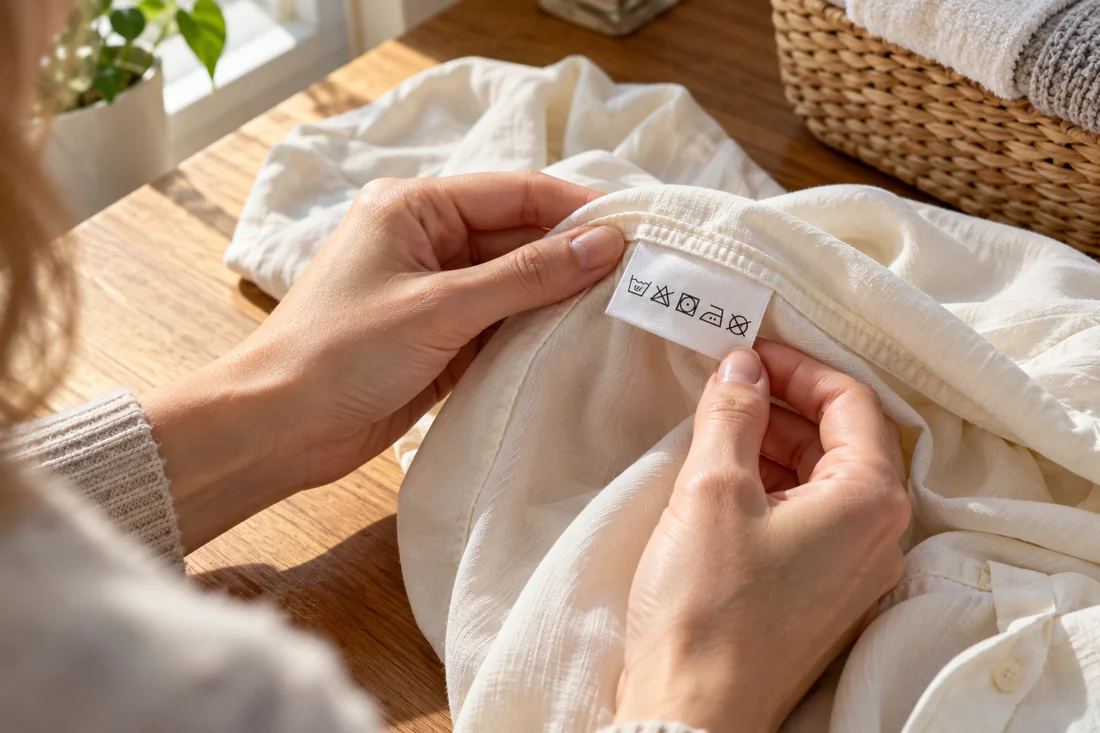
Hanging loops may be intended to distribute weight differently. Look at how they are attached to the particular garment and use them in a sensible position. Straps that stretch significantly when hung should not be left carrying the whole weight. Manufacturer guidance can help with delicate or unclear constructions.
In folded clothing, buttons, buckles and decorative elements should not continually press into another vulnerable surface. Arrange those details with protection and without tight creases where possible. A tidy-looking stack is not automatically gentle if hard components press against each other inside it.
Plan access and space together
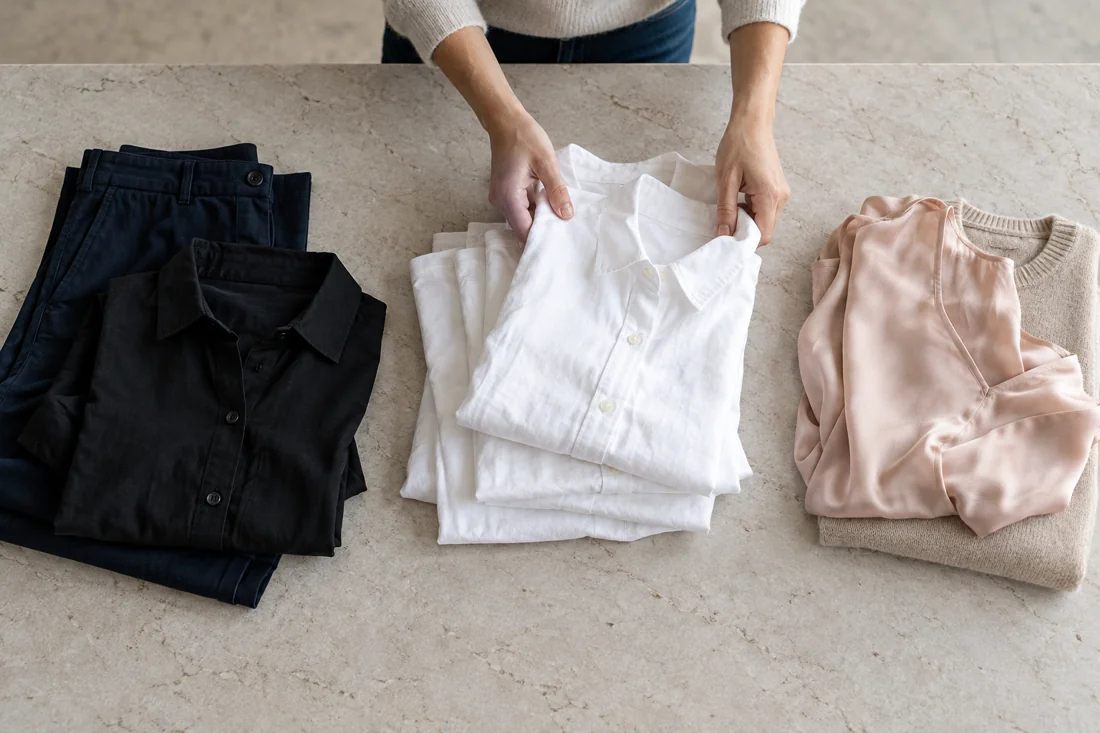
Allow enough hanging space to remove one piece without pulling on several neighbours. An overfilled section can create fresh creases through the daily search alone. Fold frequent-use pieces so they remain identifiable, and label opaque boxes only where that genuinely helps you find things.
After a few days, check which arrangement works in practice. A jumper repeatedly pulled from the bottom of a tall stack may need another location. Storage should support both shape and access; it does not need to look identical for every garment or follow one prescribed organising system.