Look in good light first
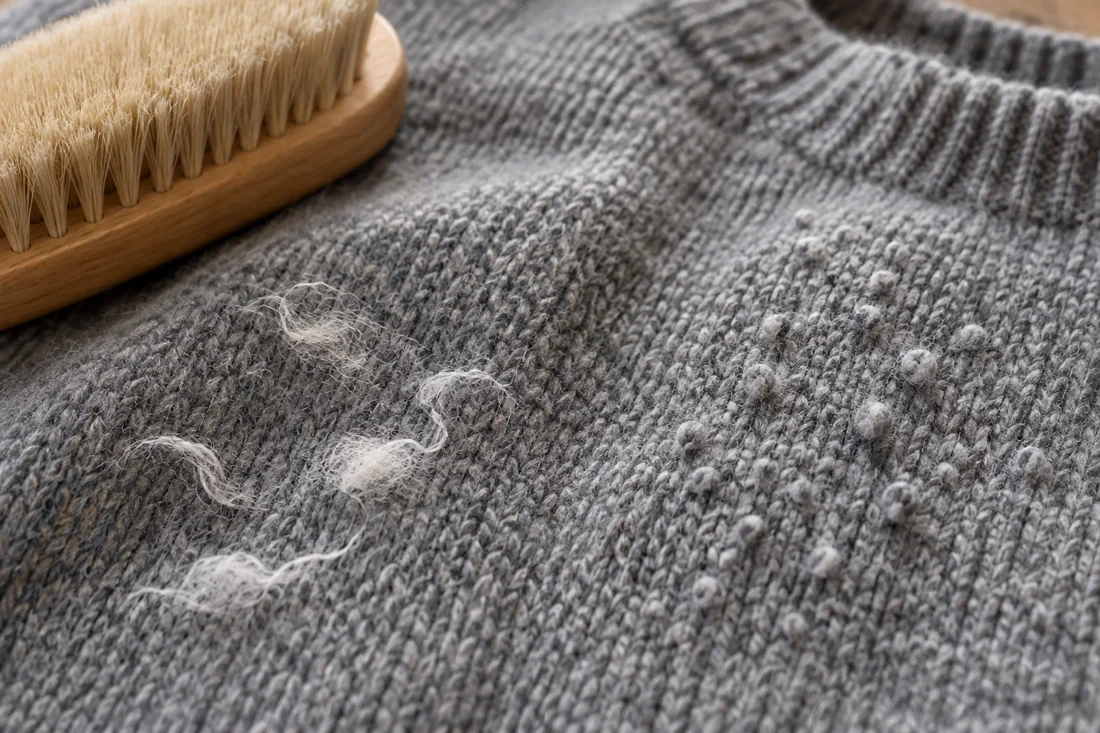
Lay the garment flat and inspect a small area. Is there a loose particle resting on the cloth, or a firmly attached little ball? Also check for a pulled loop or thread. Pulling one of those can have a very different result from removing loose lint.
Woolmark describes pilling as small fibre balls forming on the surface, with friction contributing to their development. On a jumper, look at areas such as the inner sleeves or beneath a bag strap. Their presence alone does not establish which removal method suits that particular fabric.
Do not assume one tool suits every garment
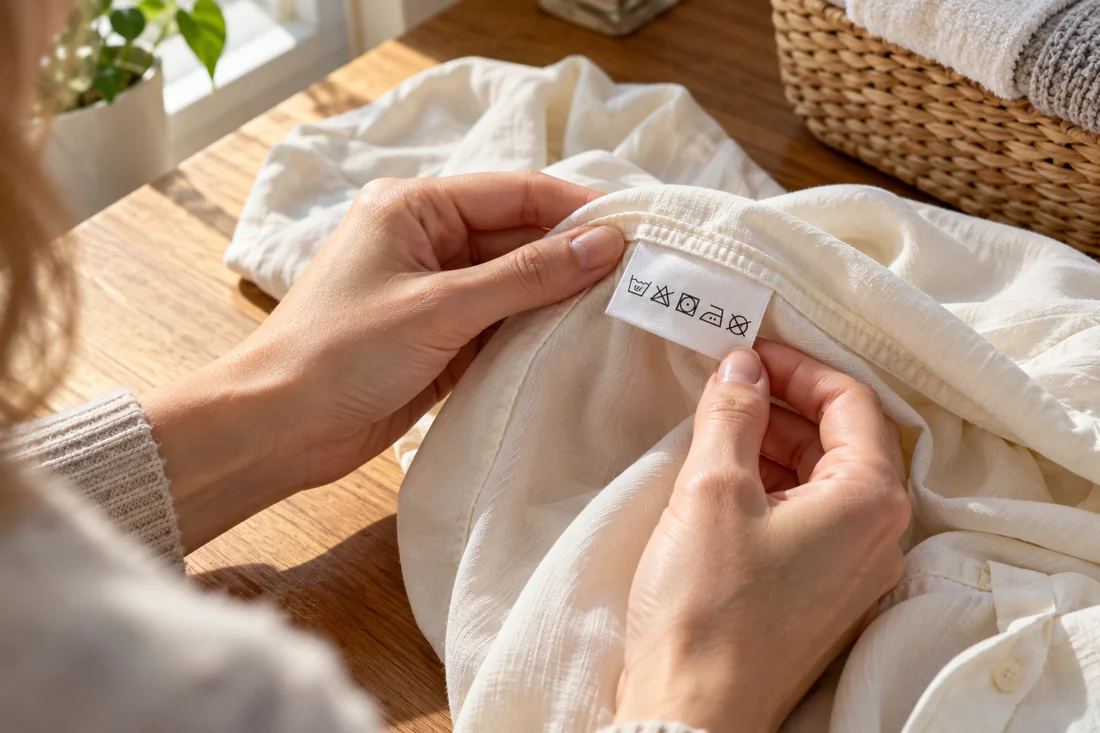
Read the care guidance and the instructions for any tool you own. A lint roller, brush and pill-removal device contact fabric differently. Delicate, open or decorated materials need particular attention. Where a method is suitable, test it carefully on an inconspicuous area first and inspect the result.
Avoid pressing progressively harder when something does not disappear immediately. A thread belonging to the knit should not be removed accidentally. If you cannot tell whether a change is merely superficial or already involves damage, have it assessed. The quickest visible smoothing is not automatically the gentlest treatment.
Observe what happens during wear
If the same area repeatedly changes, consider the friction there. A rough bag strap or particular outer layer may contribute. That does not mean every occurrence is preventable, but it may reveal a combination you can adjust.
Treat only areas that need attention and inspect the condition afterwards. Clothing does not need full-surface treatment before every wear. Keep a note of a suitable method if useful so the next occasion does not become another experiment with several tools. Where damage is visible, resolve the repair question before continuing to work on the surface. A clearer understanding of what you are seeing is more useful than treating every small mark as the same problem.