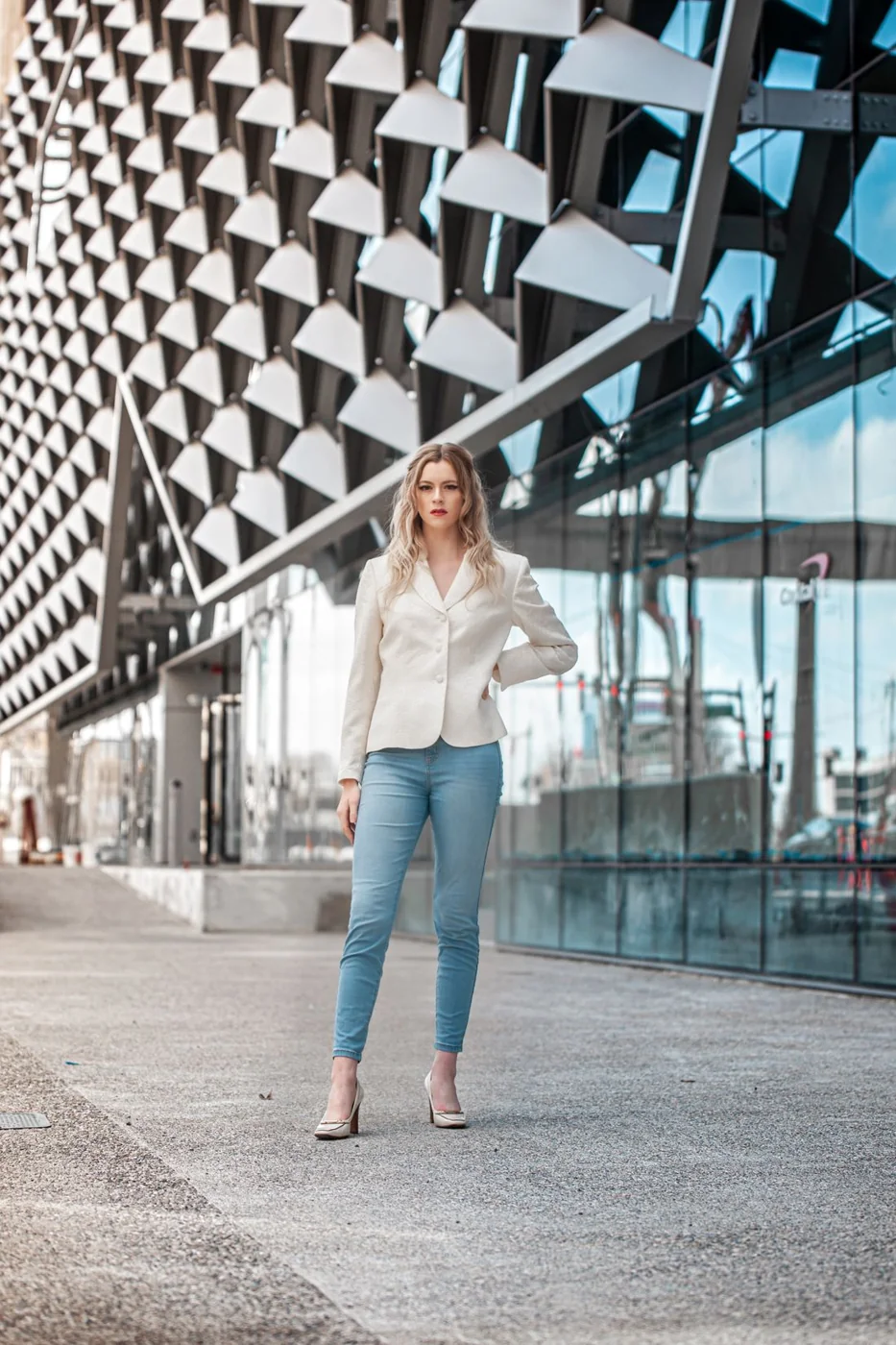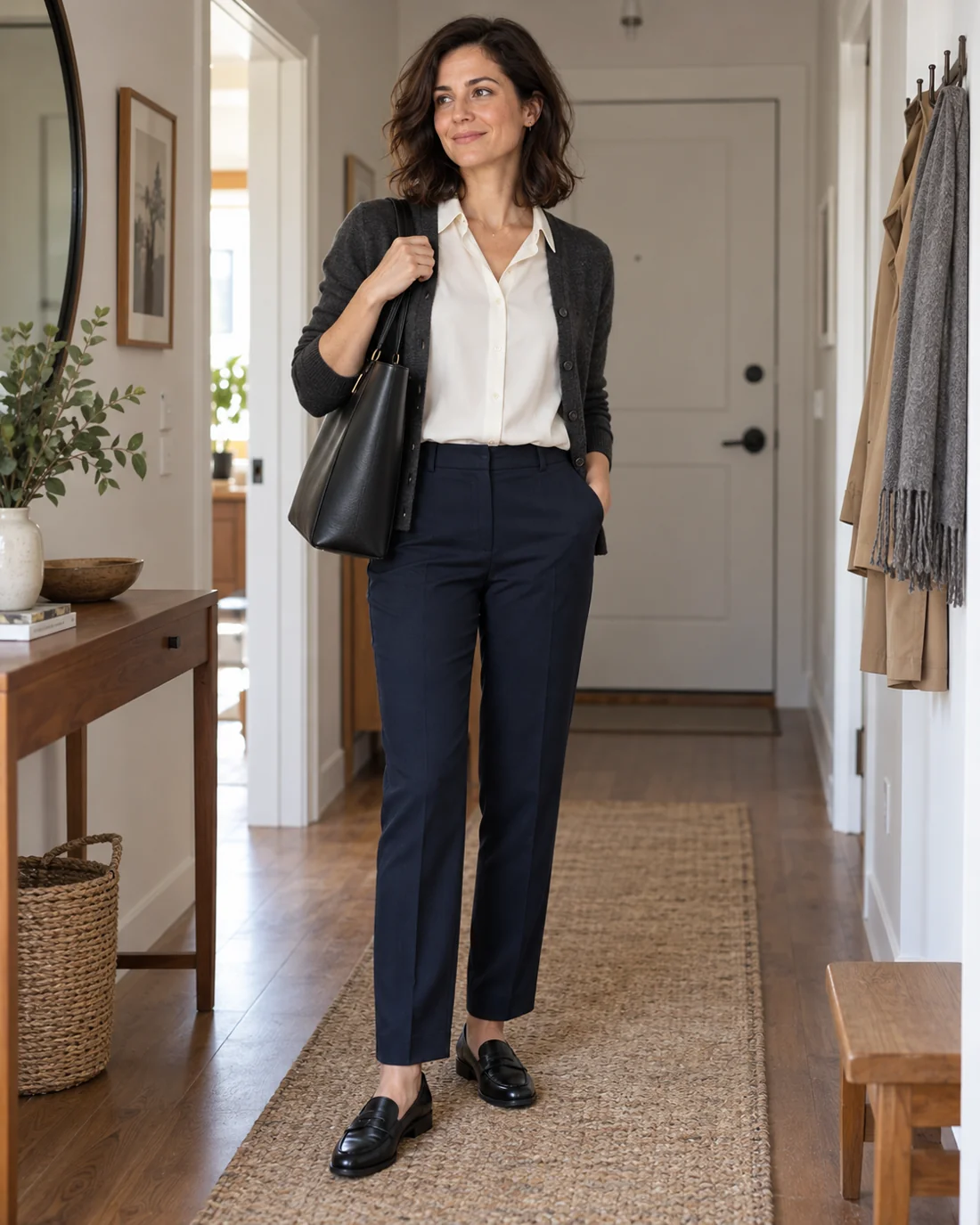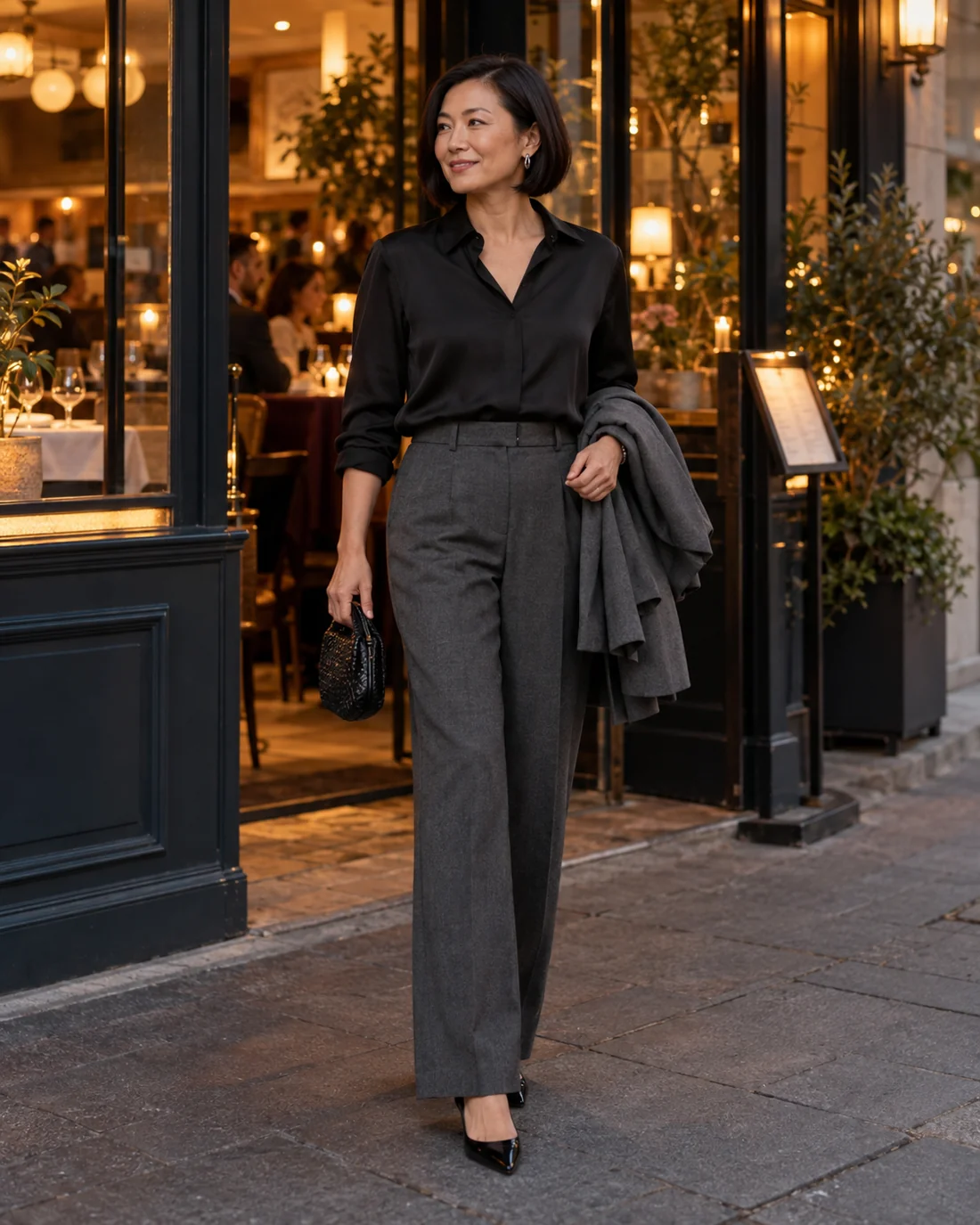
Share the same base
Plain trousers with a shirt or a solid-colour dress can cover both situations. Choose something you can still sit in comfortably after a long day. A very firm waistband will not become more pleasant at dinner simply because the outfit looks good while standing.
If you need a jacket during the day, check the top without it. Removing the jacket may be enough in the evening. Alternatively, an existing light jacket can give a very casual daytime outfit a more defined shape. Decide at home rather than in a cramped toilet cubicle.
Prepare a single change
Choose at most one change that you actually want: a different top, for example, or a small earring instead of a longer pendant. Several replacement pieces must be carried, and the removed pieces need somewhere to go. An additional pair of shoes only makes sense if you have a reliable changing place and enough room.
Try the evening version with the bag you will carry all day. A large work bag does not disappear when you change your jewellery. If you can put it aside at the restaurant, that is usually straightforward. Do not rely on a cloakroom you have not checked, however.
Check freshness and arrangement before adding accessories
After work, a quick look at the collar, hem and sleeves often helps. Straighten twisted seams and check for marks. A spare top can be useful for a longer occasion, but it should work with the same trousers without triggering further changes.
Finally, consider the journey home. The evening temperature and a walk to the station may make an extra layer more valuable than a visible change at the restaurant. If you remove the jacket during the day, keep it somewhere accessible for the return journey.