Show the complete combination
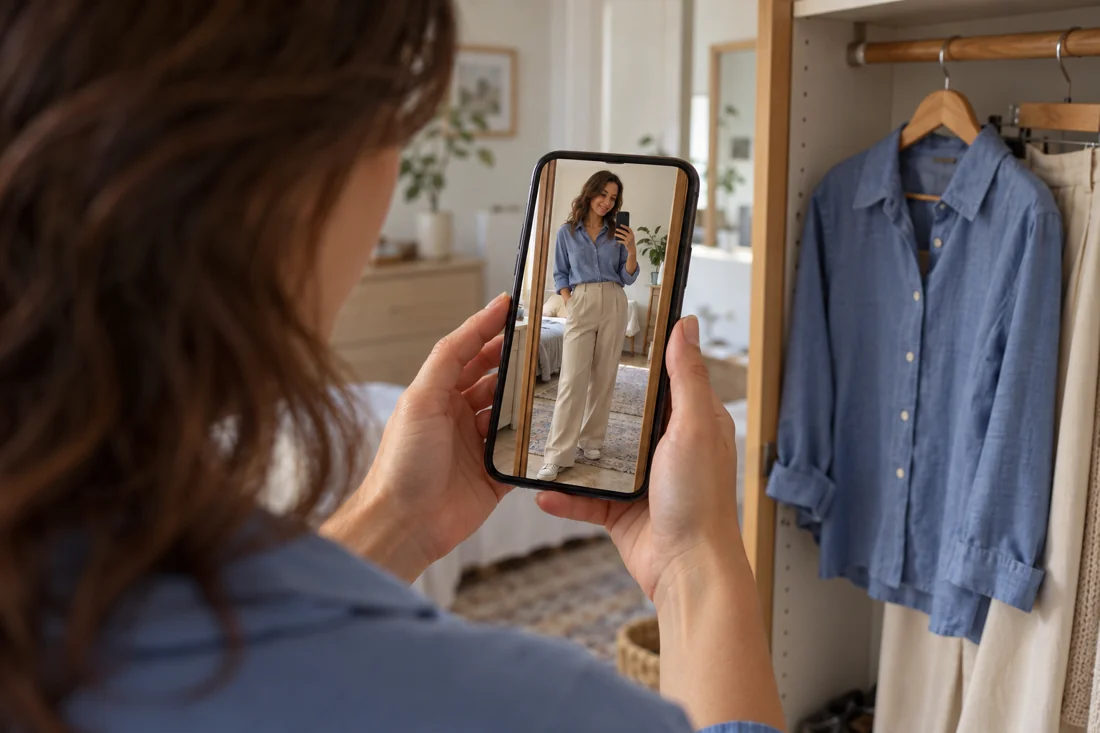
Include shoes and the outer layer where they belong to the outfit. A close-up of the top helps little if the later question concerns trouser length or the right bag. Use reasonably similar lighting so apparent colour differences do not come only from the photograph.
The background does not need special styling. Simply check that confidential papers or other people are not included unintentionally. A private folder is sufficient when the image is only for your own use. Publishing is not a requirement for keeping the combination as a reference.
Add a short note where the image cannot help
Record only details the photograph does not show: comfortable for prolonged sitting, another jacket needed for the journey home, or a particular underlayer required. A picture cannot tell you whether shoes became distracting later or a waistband pressed while seated. That experience may be more useful for repeating the outfit than the exact pose.
Name the image after an understandable occasion or combination, such as work with jeans and a white shirt. A date can help but need not be the only search clue. Avoid so many categories that maintaining them takes longer than finding the outfit.
Keep the collection small and current
Remove duplicates and images that are no longer helpful. If a garment has been passed on or the combination proved unsuitable, mark or delete the reference accordingly. Otherwise the collection becomes full of ideas that can no longer be assembled from your own wardrobe.
Use a photograph as a starting point rather than a prescription. Another bag or warmer layer can adapt the same idea to today. Its purpose is to reduce repeated decisions while leaving room for weather, comfort and changing preferences. A useful reference helps you get dressed; it does not require the next outfit to reproduce every detail of an earlier day.