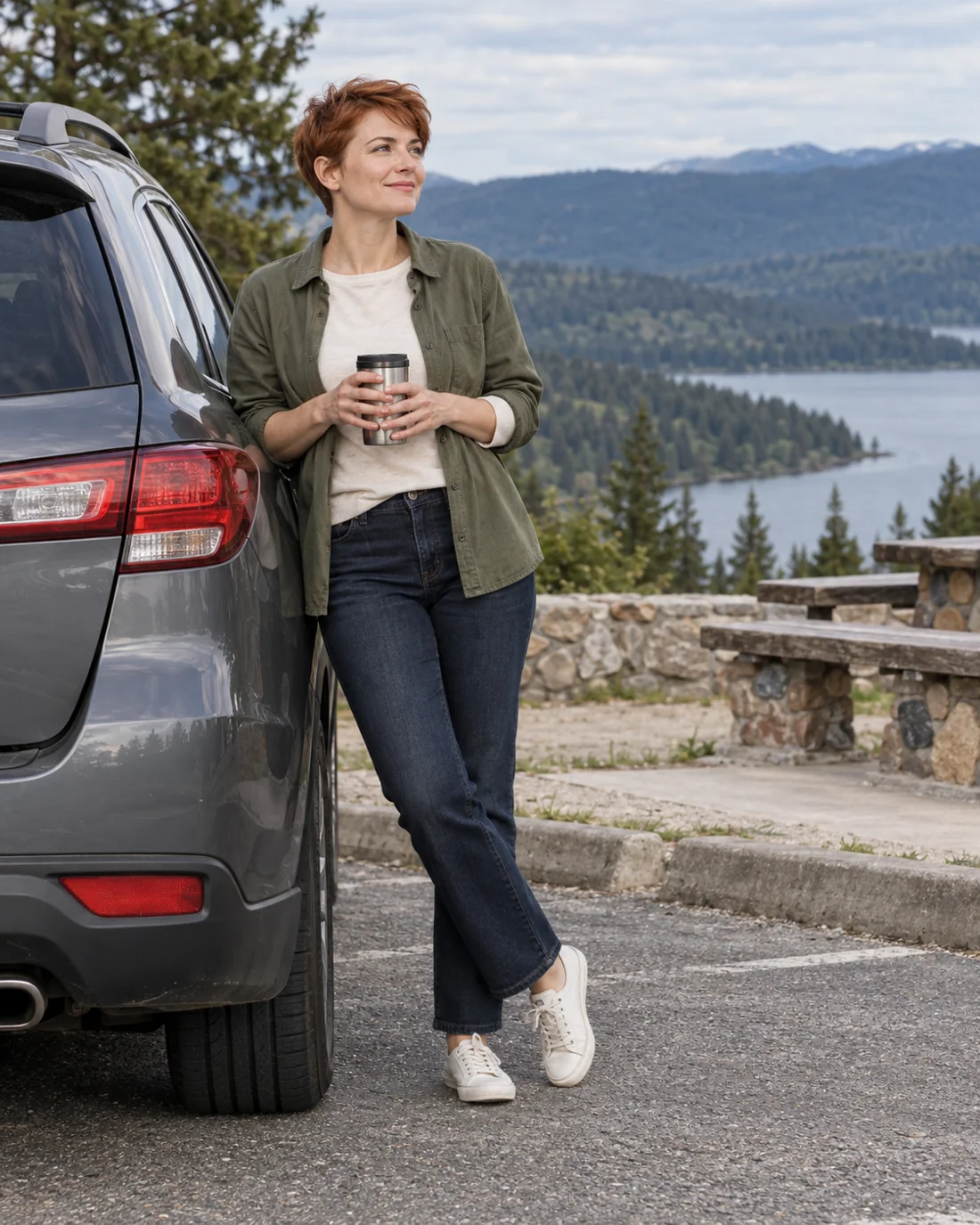
Let the seated position inform the choice
Sit in the complete combination before departure. A large belt fastening, firm objects in pockets or several layers at the waistband can become uncomfortable over time. Empty back pockets and check whether you can wear a top more loosely before replacing the entire outfit.
A short jacket may be easier to manage in the car than a very long layer. If you remove it, the top underneath should work for stops. Put the removed clothing somewhere it cannot obstruct controls or visibility. Loose items should not simply be placed wherever there is space.
Include realistic stops
A brief stop might involve fuel, a walk or a meal. Choose shoes suitable for the planned walking that do not interfere with safe driving controls. If you need to change shoes, do so at an appropriate stop and put the other pair away properly.
With trousers, check whether the hem stays pushed up after prolonged sitting or falls to the ground when you get out. A skirt should move as you want while entering and leaving the vehicle. Try these movements calmly before the journey.
Keep a spare layer accessible
Put an additional layer for cooler stops somewhere reachable. It is of little help if you must unpack the entire boot to find it. On a longer journey, a spare top may be useful after a spilled meal; choose one that works with the same base.
If you are visiting someone immediately on arrival, plan the travel combination for that too. A small change may be possible, while rebuilding an outfit in a car park is often awkward. Decide according to the available time and a real changing place rather than hoping an opportunity will appear.