Start with recent dressing difficulties
For several days, note specific problems. The existing jacket may not fit over a blouse, the only suitable trousers may be in the wash, or comfortable shoes may be missing for a longer walk. Do not record only that an outfit felt boring. Name what you wanted to do and which piece was missing or obstructive.
A repeated situation provides stronger evidence than one unusual event. A daily commute deserves a different priority from an unspecified possible occasion. This does not exclude special clothing; it simply makes the reason for its place on the list visible.
Check existing possibilities fully
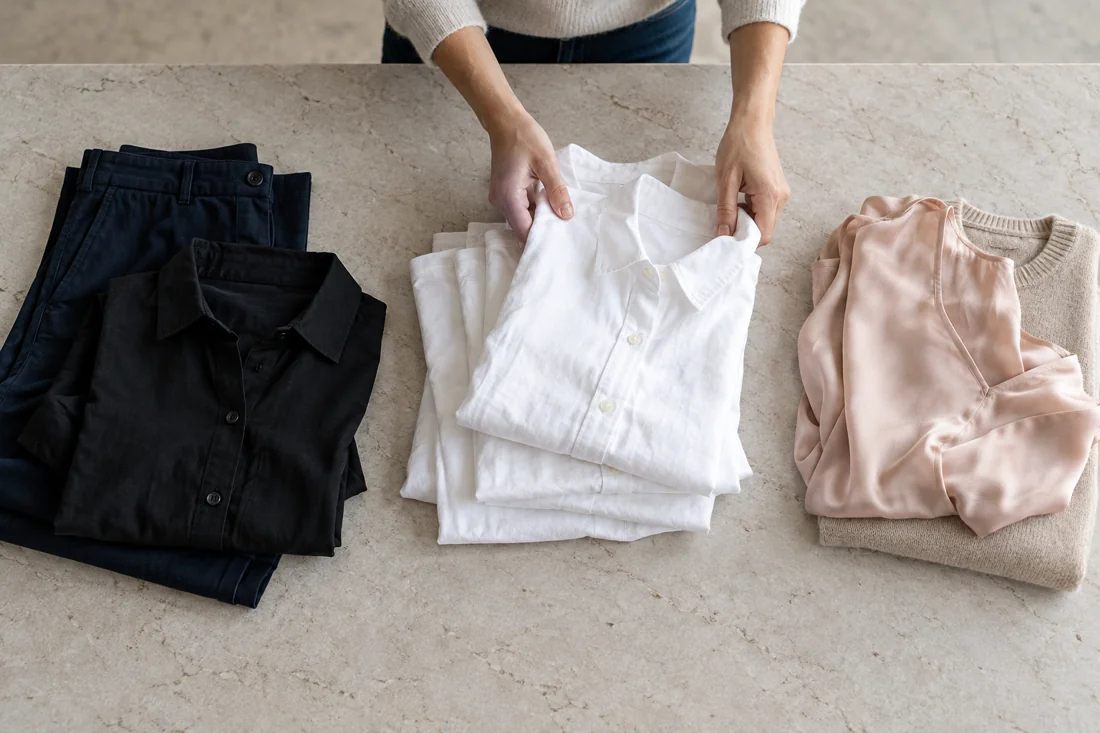
Look beyond the pieces hanging at the front. A rarely worn cardigan may fit over the blouse, or shoes may remain untested only because their colour feels unfamiliar. Try complete outfits. A mismatch on a hanger may disappear when the pieces are worn.
Check whether an existing garment is temporarily unavailable too. A loose button, overlong trousers or a missing belt may block an outfit without requiring a new main piece. List alterations or repairs separately and realistically decide whether you will arrange them. An unfinished repair list is not a usable wardrobe.
If something is uncomfortable, do not automatically count it as a solution you already have. Shoes avoided because they press do not reliably cover a long walk. The inventory should reflect actual use rather than the number of objects owned.
Describe the job before naming a product
Initially phrase a gap as a requirement: a fastened upper layer that fits over two particular blouses; trousers for existing flats; a bag holding daily belongings without excessive bulging. Possible shapes and colours follow afterwards.
This description makes alternatives comparable. A cardigan and light jacket may perform the same job despite sitting in different shop categories. Conversely, a similar-looking product may miss the gap if sleeves, length or fastening do not work with existing pieces.
Create a short list with testable criteria
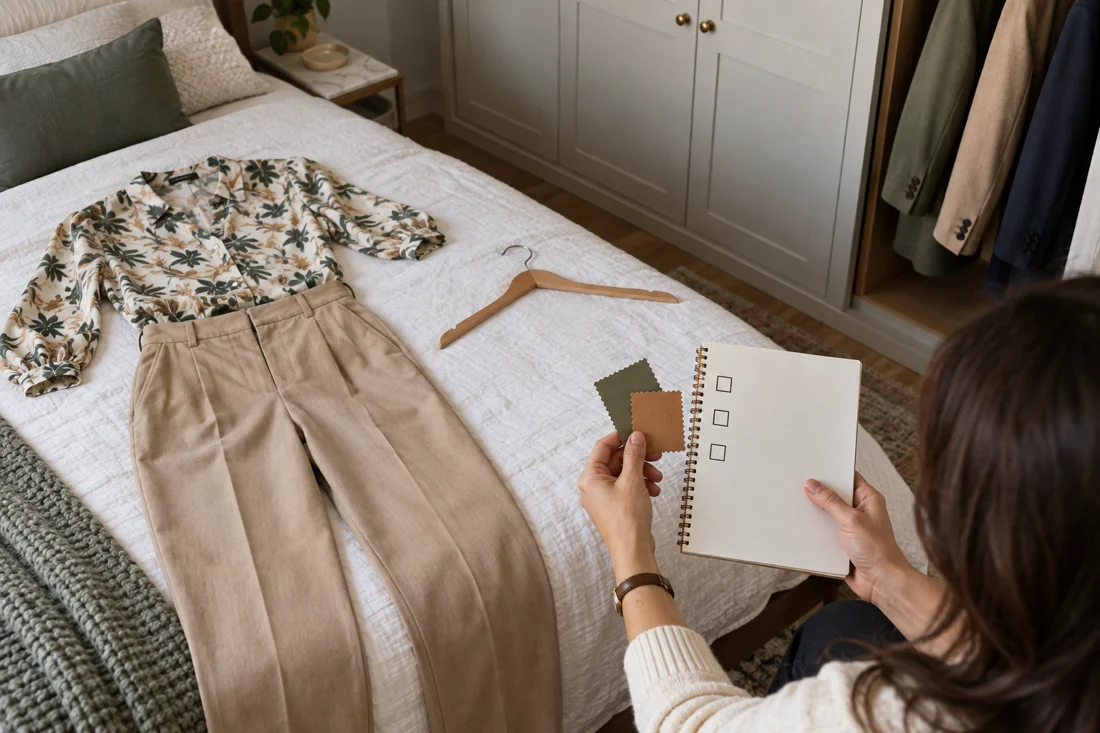
For each entry, record its use, the existing clothes it needs to accompany and the main limits. With trousers, these might include desired movement, hem length for two shoe pairs and manageable care. Add colour when it follows from concrete combinations rather than a generic list of supposed basics.
Limit criteria to what really decides the choice. Too many small preferences can obscure the search. Clearly mark essential points instead: a bag fastening or particular amount of movement may matter more than an exact preferred button.
Then set an order. Frequent use, lack of alternatives and existing outfit possibilities are understandable reasons. A low price alone does not make an item urgent. An expensive piece need not rank higher merely because it has been considered for longer.
Revise after trying things
When possible, bring relevant existing pieces to a fitting or test the combination at home within the applicable shopping conditions. What matters is whether the described job is fulfilled. If an attractive garment only works with further purchases, it may belong on another wish list rather than the list of current gaps.
Remove an entry when an existing solution is found. A useful list does not have to be completed through purchases. It can become smaller because you understand your needs more precisely. Keep the original situation as a brief note so that a later idea can be distinguished as solving the same problem or simply adding another wish.