Open over a simple top
Start with a top whose neckline remains clear beneath the shirt. Two similar neckline edges very close together can look accidental. Open the shirt further or try another neckline shape. The two fabrics should not repeatedly push into one another as you move.
A longer shirt over straight trousers creates a different line from a short shirt over a wide skirt. Check the side view. If there is a lot of fabric over the hips, leave the shirt open, fasten part of it or try a shorter version. None of these is universally correct; choose the shape you want to see.
Buttoned as a surface of its own
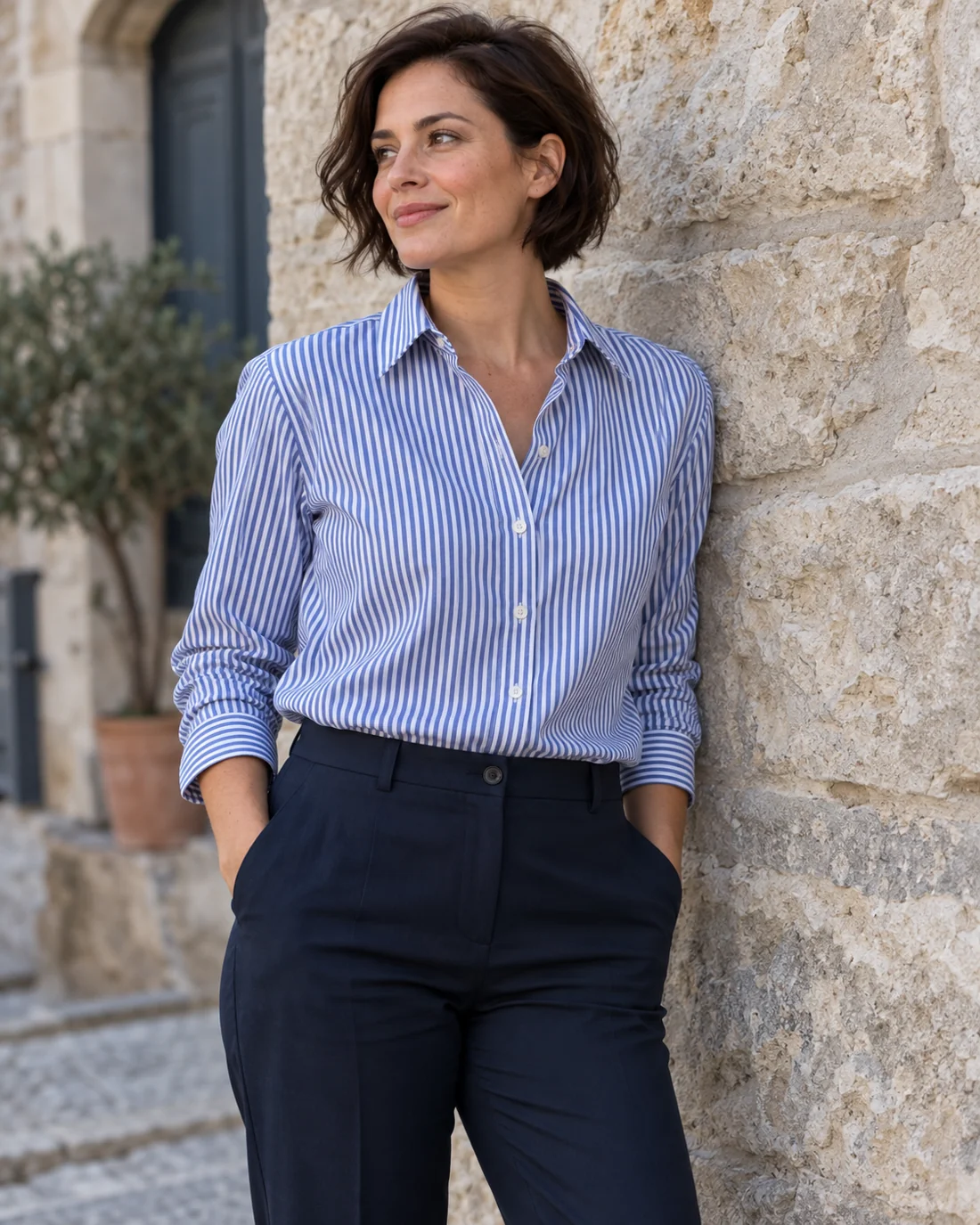
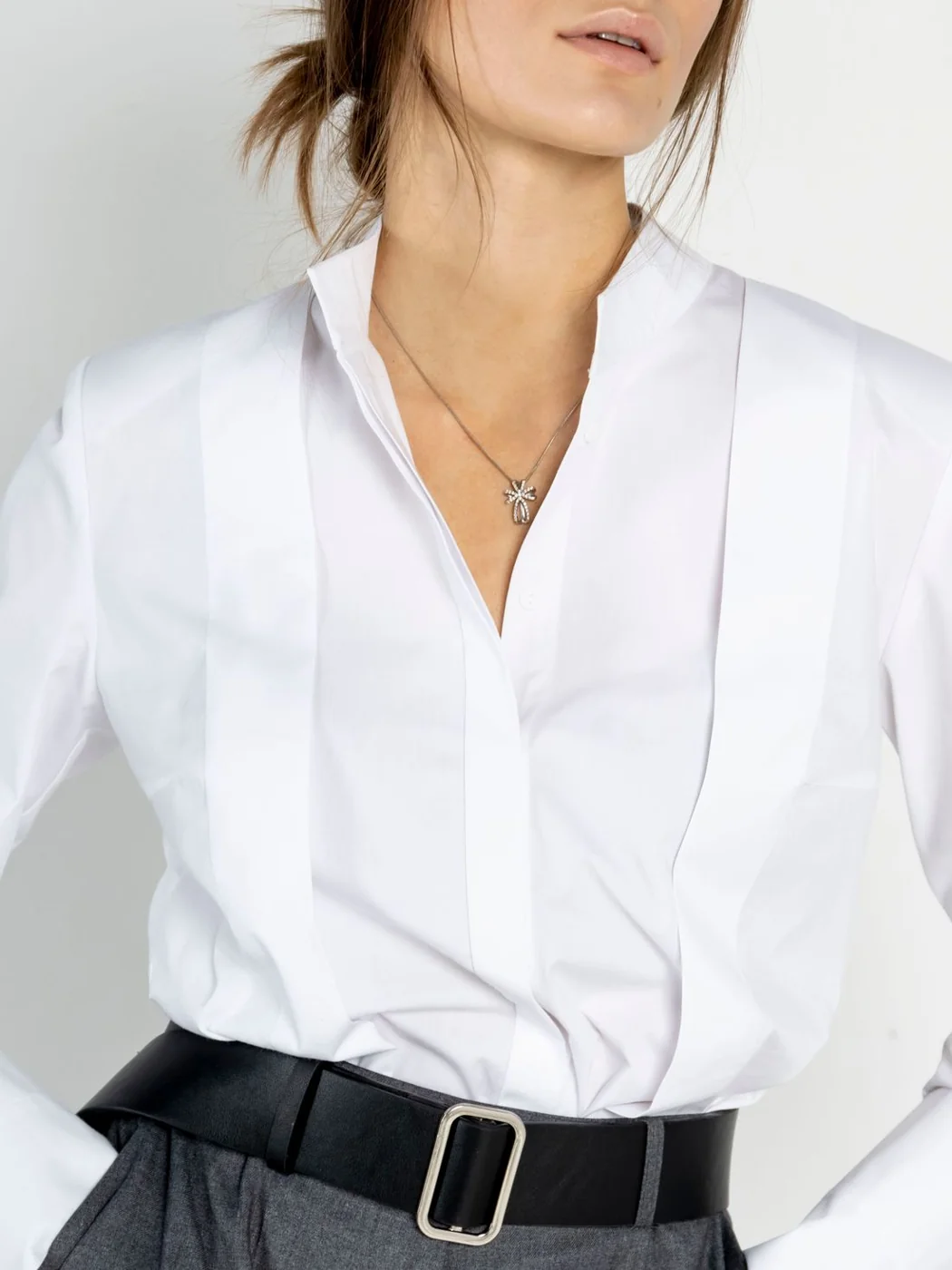
With the shirt closed, the collar, button opening and hem define the effect. Sit down and check whether the opening pulls. Another size or cut may be more useful than repeated adjustments. If you tuck the shirt in, distribute the fabric deliberately and leave enough room to move.
White can provide a clear connection beside patterned trousers. With pale trousers, it creates a more continuous area. Look at both fabrics in daylight: warm cream beside cool white is not a mistake, but looks different from an almost uniform colour.
Beneath knitwear
Smooth the shirt first, then add the jumper. Check that the sleeves have enough room and that the button opening does not show more prominently through the knit than you want. Thick shirt fabric needs more space than thin fabric. A roomier jumper often helps more than pulling everything downward firmly.
Show only the edges you deliberately want visible. Collar, cuffs and a long hem do not all need to appear at once. Try the collar alone, then add the cuffs. This gradual fitting shows when the combination feels complete to you.
The same white in a different shirt fabric
If you own two white shirts, do not compare them by colour alone. Wear each with the same bottom and observe whether the hem falls softly or holds a more defined edge. A firmer fabric may create a clearer outer line when open, while a softer shirt behaves differently beneath knitwear. The observed shape of the actual garment matters more than a general ranking of materials.
Also test what happens when the shirt is tucked in. A longer shirt adds more fabric at the waistband; a shorter one may pull free when you raise an arm. Look again after sitting without rearranging everything completely. This shows whether the effect survives ordinary use or exists only immediately after careful dressing.
The three ways of wearing a shirt do not need to suit every shirt equally. You can use one mainly open and another beneath knitwear. That division is often more realistic than expecting a single white shirt to perform every possible role in the wardrobe.
Check the white fabric in real light
Look at the shirt's transparency with the intended underwear and without an additional jacket. Fabric may appear different beside a window from how it does in the hallway. Decide whether to add a layer underneath or let light transparency remain part of the combination.
Keep a photograph of the version that works with existing clothes. Three ways of wearing a shirt do not require three separate shirts. One model with suitable width and fabric weight can often serve several roles.