Start with the shape already present
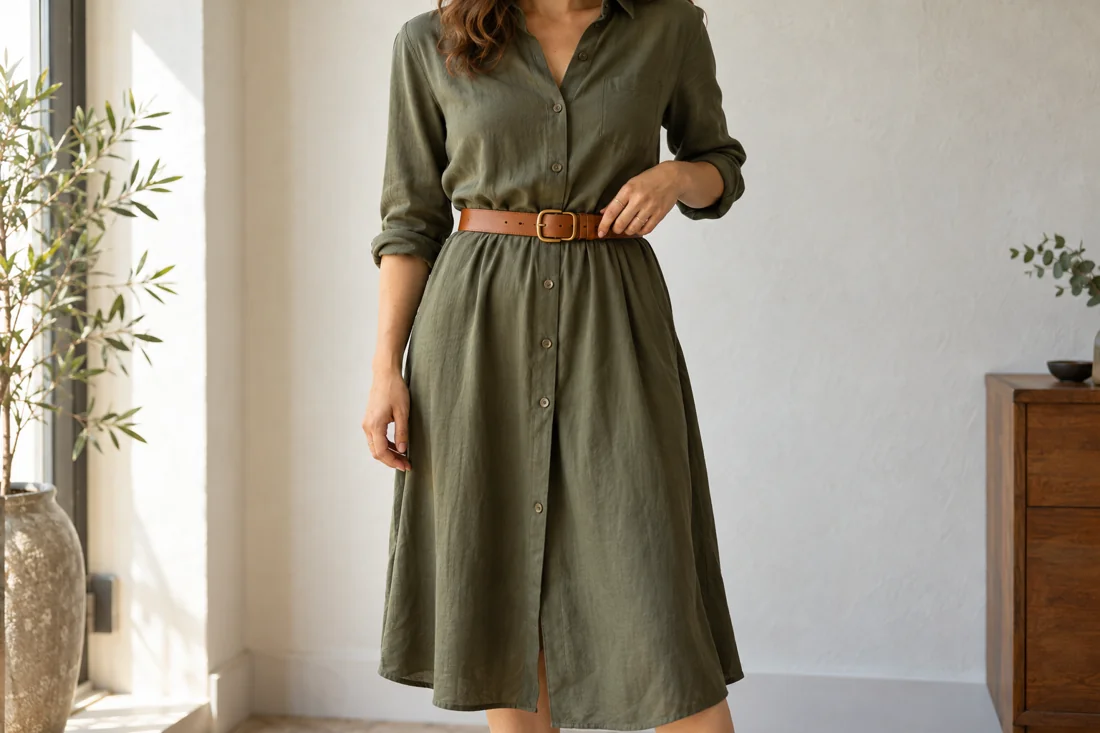
On a shirt dress with belt loops, their position is an obvious starting point. Still check that the belt feels comfortable there and leaves the button placket straight. Avoid tightening it until the fabric pulls between buttons. A dress without loops offers more freedom, but you need to test whether the belt stays where you put it as you walk.
If there is a defined waist seam, try placing the belt over it. When it repeatedly slips beside the seam, the combination can look less settled than the dress alone. This is not a problem with your proportions; the belt and dress simply are not holding a stable line together. A soft fabric tie may behave differently from a rigid leather belt.
Look at width, buckle and fabric together
A wide belt covers more of the dress and becomes a substantial area in its own right. That may be welcome against plain fabric, but it can hide part of a print or an interesting fold. A narrow belt leaves more fabric showing, although it may disappear between folds on a very full dress. The particular combination matters more than a prescribed width for a particular figure.
Check the back of the buckle for rough edges before letting it rest against delicate fabric. A heavy buckle can pull a soft material downwards. Sit for a few minutes with the belt fastened and lean forward gently. Looking good while standing does not resolve pressure or discomfort when sitting.
Compare two versions before adding more accessories
Try the dress without a belt and then with one you already own. Keep the shoes and bag unchanged so you can see whether the belt itself makes the difference you wanted. Only then compare another colour or width if you still need to.
For a long day, an arrangement that stays in place after sitting and standing is useful. If you constantly pull fabric back out from beneath the belt, try less tension or wear the dress without it. An accessory is not a compulsory finishing step simply because the outfit has room for one.