Start with the right layer
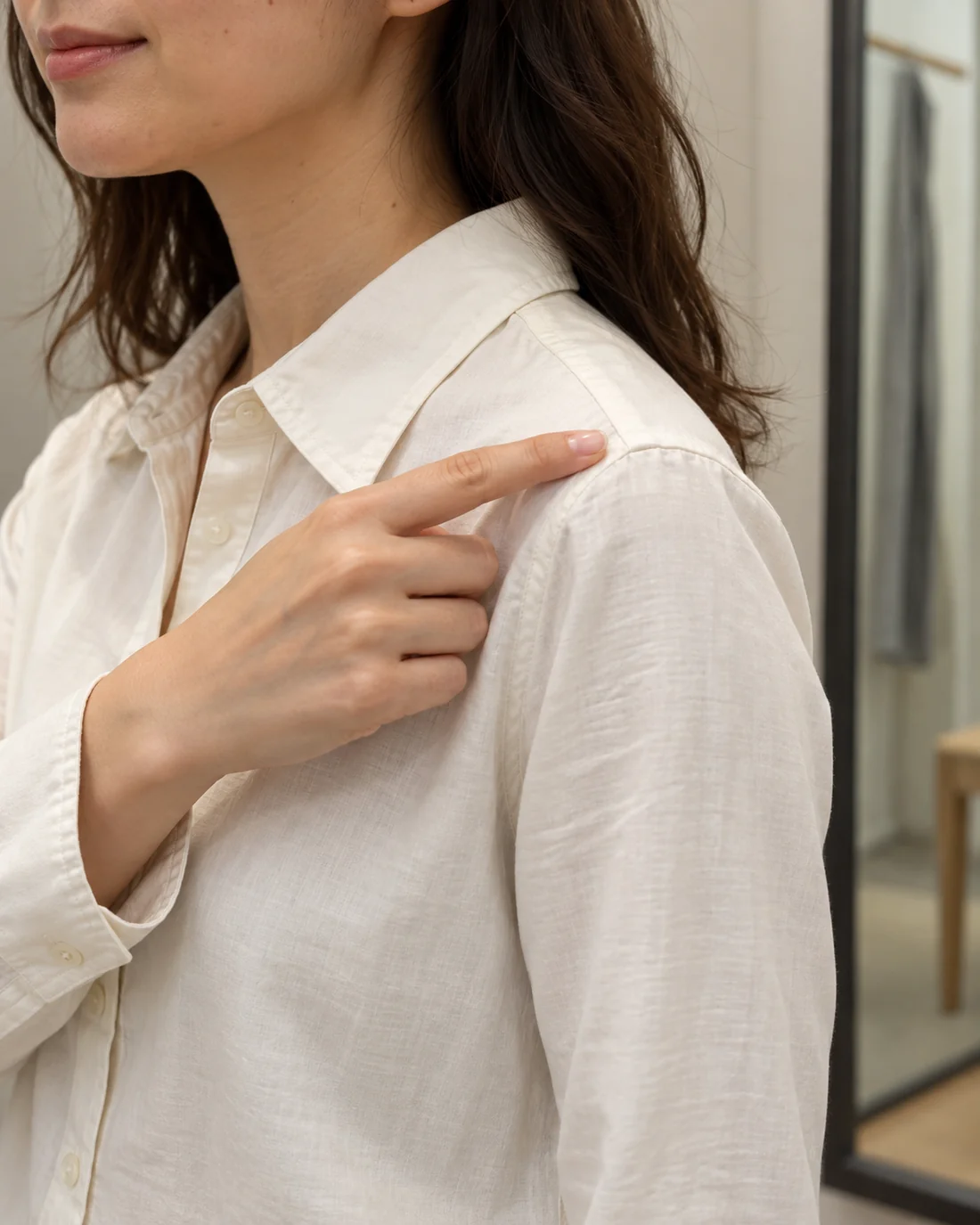
A blazer over a thin T-shirt can feel different from one worn over a blouse with fuller sleeves. If you intend to use both, try both. Settle the lower layer inside the sleeves and arrange the shoulders without pulling hard on the jacket. Folds caused only by a twisted underlayer should not be mistaken for a problem with the blazer's cut.
Empty the pockets for the first comparison. A heavy phone or bunch of keys changes the drape. Once you have assessed the basic fit, add the items you really intend to carry there. You can then distinguish a change caused by the jacket itself from one caused by its contents.
Look at it open and fastened
Wear the blazer open first if that is your usual arrangement. Notice the lapels, front edges and how it sits at the back of the neck. Then close the intended fastening. Do the front panels need pulling together substantially, or do strong tension lines appear? A design that feels comfortable only when open may still be a deliberate choice. It should not, however, be planned as a jacket that also works comfortably fastened.
Look at the back as well. A fold in one place does not automatically tell you which size is needed. When comparing two sizes, notice whether improvement at the front comes with excess fabric at the back or sleeves that are too long. Different cuts distribute their room differently.
Try the desk position
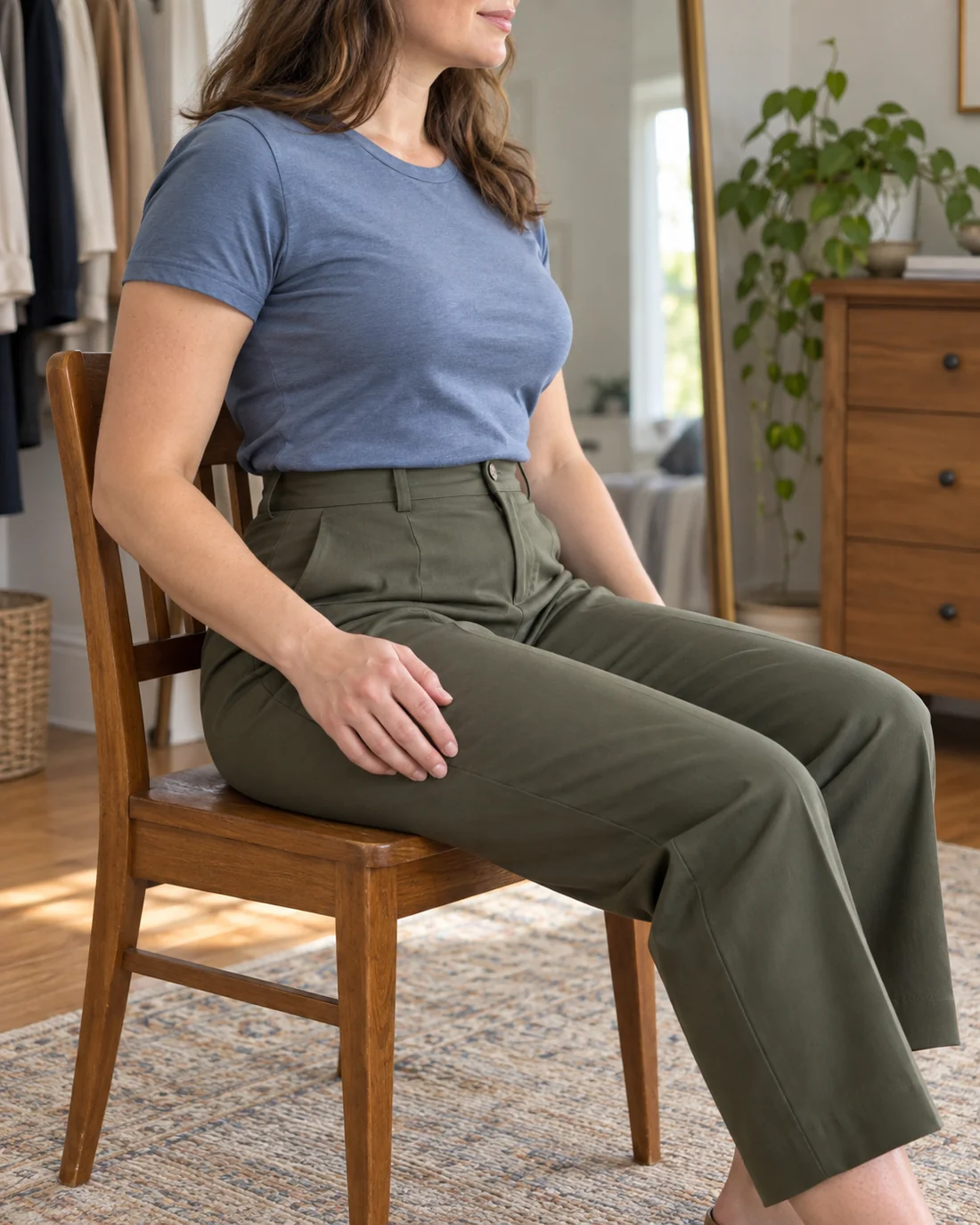
Sit down and reach forwards as though writing or typing. Remain there briefly. Notice pulling across the upper back, pressure inside the elbows or sleeves that rise considerably. A blazer is allowed to move with you. It does not need to resemble its freshly arranged standing appearance in every position.
Next, reach towards an imaginary shelf at a comfortable height and lower your arms again. Check how much rearranging is needed afterwards. If the collar moves well away from the neck or the whole jacket twists after every movement, compare another cut. A nearly motionless day is not a sensible requirement for an everyday jacket.
Compare length with your existing bottoms
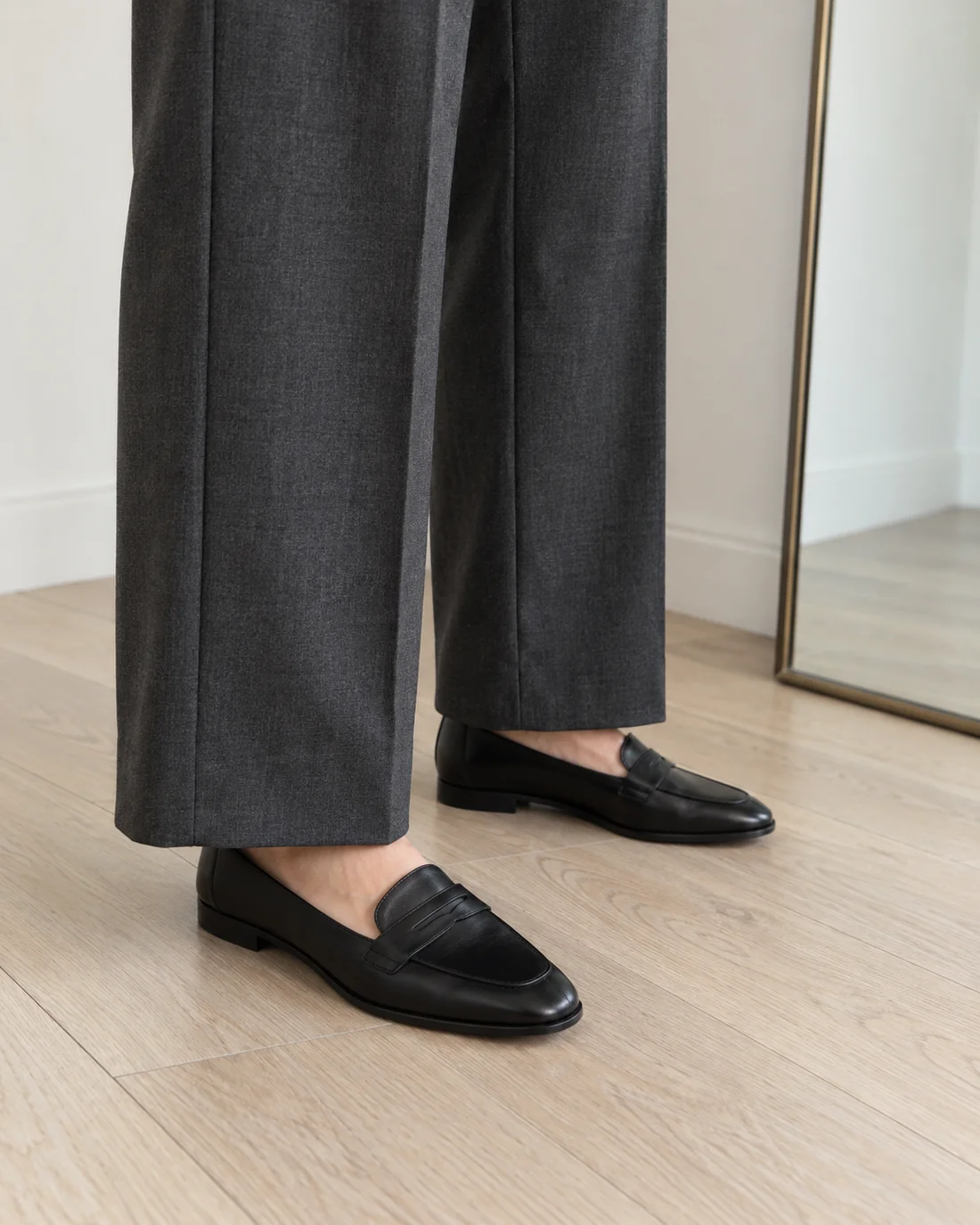
Try the blazer with the trousers or skirt you expect to wear most often. A long blazer covers different areas from a short jacket and changes which pockets or waistband lines remain visible. There is no single correct length. What matters is whether you like the combination and can sit and walk comfortably in it.
Over a full skirt, a close-fitting long blazer may affect movement differently from the same jacket over narrow trousers. Trying it with one bottom therefore does not establish every intended use. Choose two frequent combinations as your reference rather than expecting unlimited versatility.
Alteration or another cut?
A small sleeve adjustment is a different proposition from changing shoulders or lapels. Working buttonholes, lining and distinctive seam details affect the work involved. Have a proposed alteration assessed before buying rather than assuming a long sleeve is automatically simple to correct.
Finally, note two or three observations: comfortable when seated, enough room when fastened, sleeves that work over your own blouse. These details are more useful for comparison than saying that a blazer should generally be tighter or looser. The decision comes from your use and the actual construction, not from an aim to wear a particular size label. If another design meets the same needs with fewer adjustments, that is a meaningful difference even when both jackets look similar on their hangers.