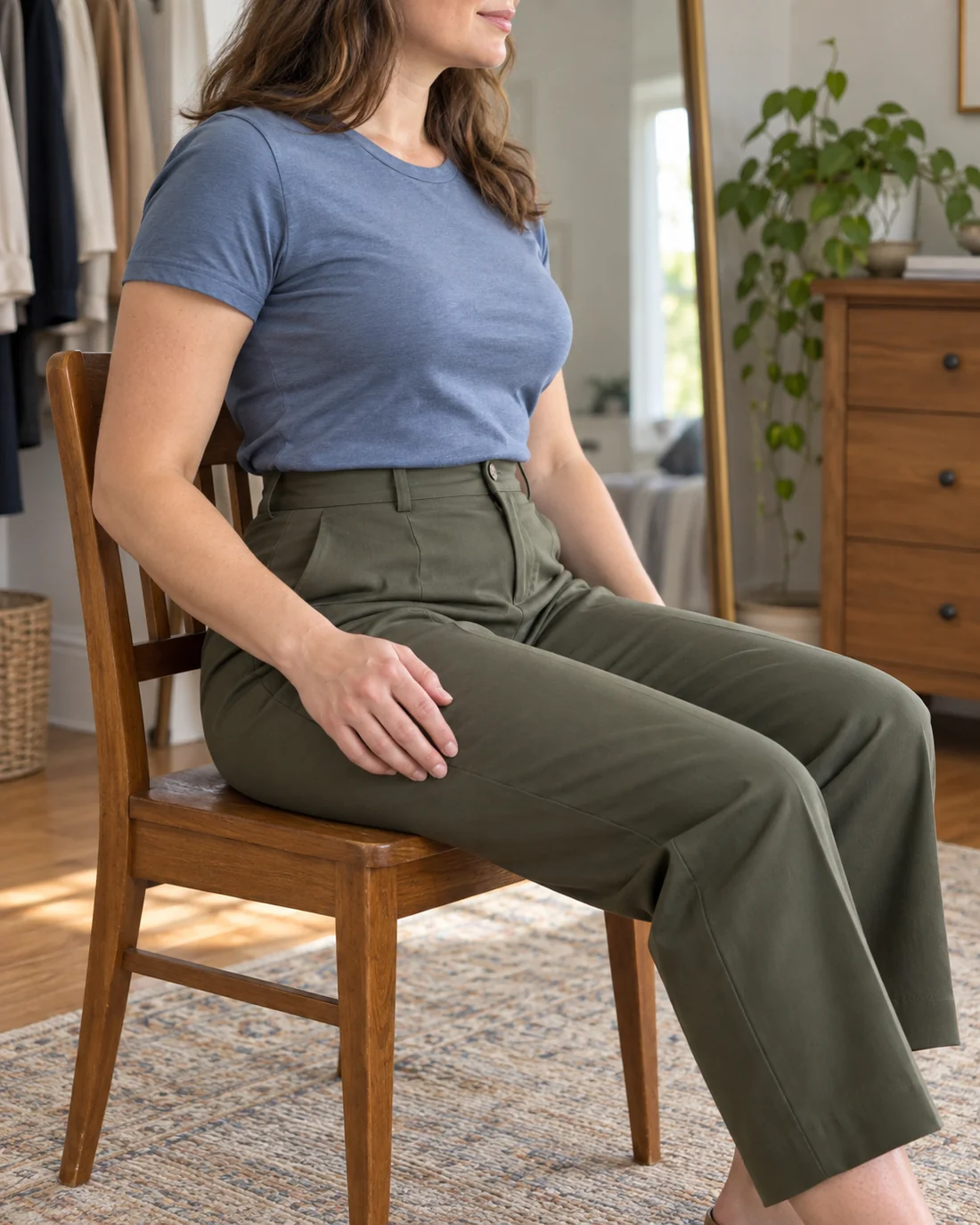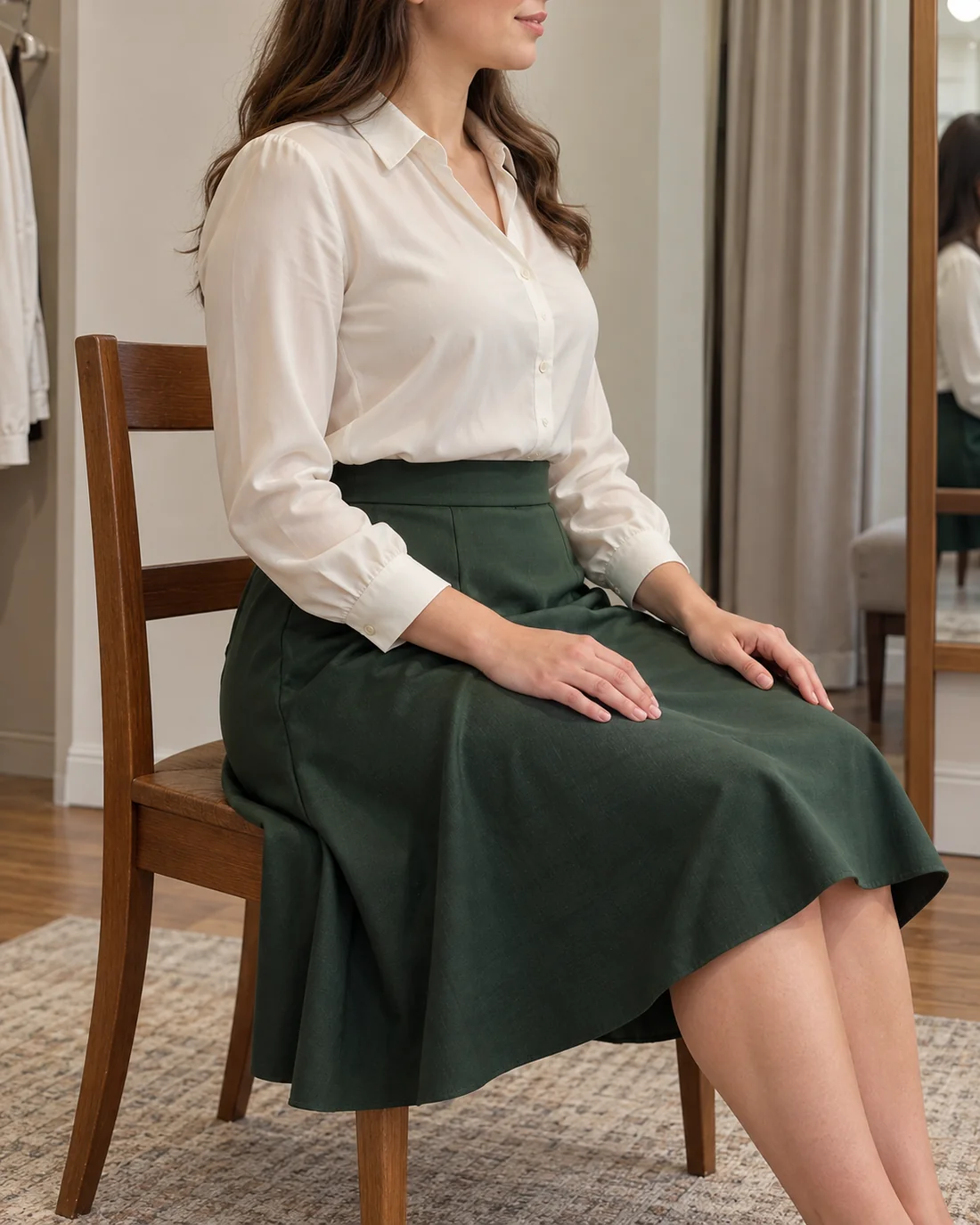
Recognise the intended construction
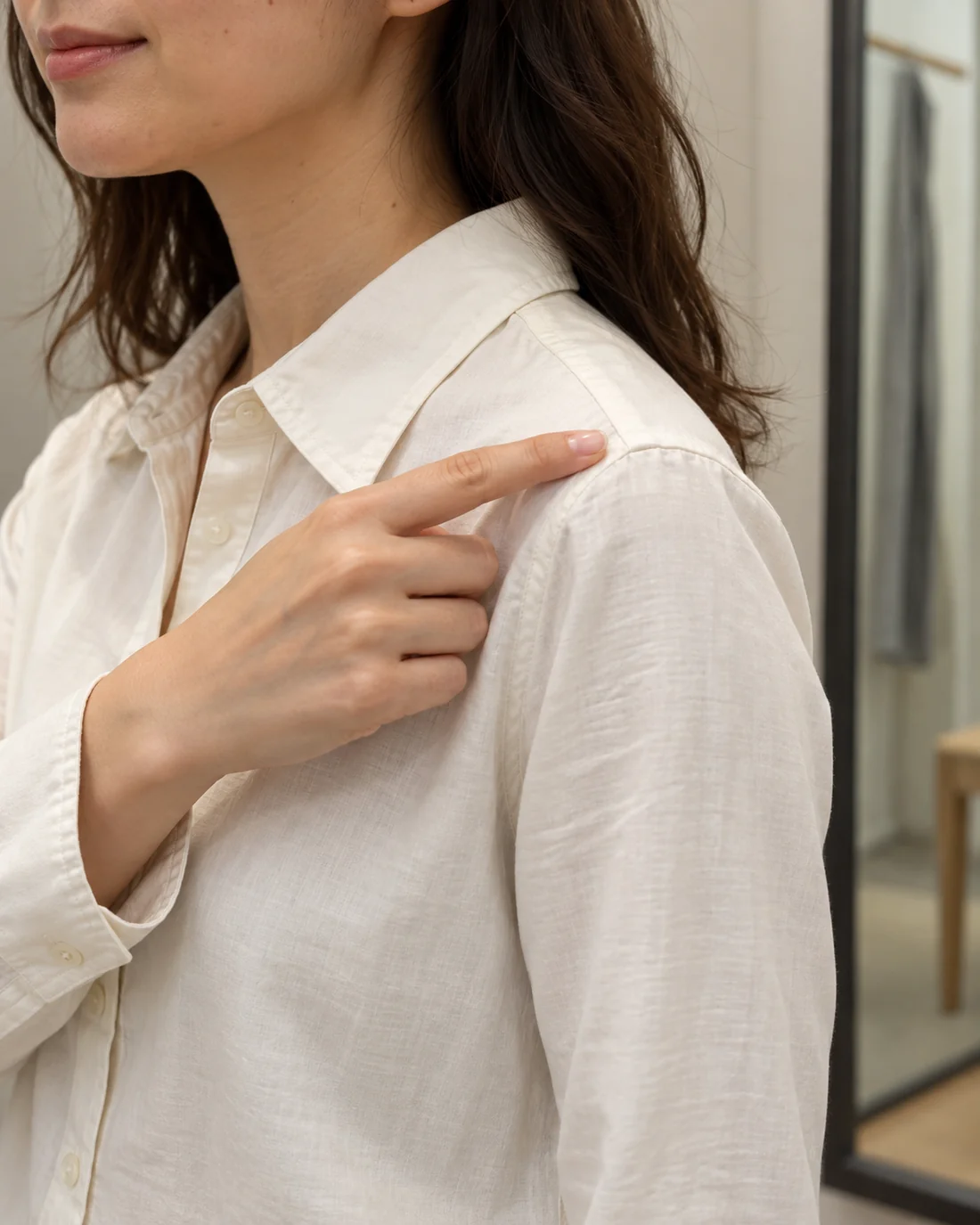
Compare the front and back and check whether both shoulders are constructed similarly. A deliberately roomy T-shirt may place the seam well down the upper arm. A closer-fitting shirt generally places it higher. What matters is whether that arrangement works with the rest of the cut, not whether every seam meets the same point on your body.
Settle the top normally and let your arms hang loosely. Do not pull it backwards just to move the seam to a preferred position. If doing so raises the front or makes the neckline uncomfortable, you have merely displaced another area. Compare another size or a differently constructed garment instead.
Move your arms
Reach forwards as though holding a steering wheel or using a keyboard. Strong pulling lines across the back or a sleeve that rises considerably may indicate insufficient room somewhere. The shoulder seam alone does not explain it; back width and armhole shape contribute too.
Raise one arm and lower it again. Notice whether the top settles by itself or needs substantial rearranging. A relaxed garment is allowed to move. The useful question is whether that movement feels comfortable for the intended activity and avoids repeatedly shifting the collar or button placket.
Compare rather than correcting one point alone
Where possible, try an adjacent size in the same design. If the shoulder becomes more comfortable while the neckline and body become much too loose, another cut is often the clearer comparison. A larger number on the label cannot resolve every construction issue.
Finally, assess the top over the layer you intend to wear underneath. An extra T-shirt can change the available movement. Remember whether you prefer a set-in or dropped shoulder rather than memorising one supposedly correct seam position for all tops. That observation is easier to use the next time you try something on.