Judge weight and fabric together
First hold the brooch against the proposed position without fastening it. A heavy design can pull thin fabric downwards. If even gentle positioning creates a noticeable distortion, another garment may be more suitable. Visual placement matters less than preserving the fabric's condition.
The pin may leave visible marks. Do not test suitability randomly across several prominent areas. For valuable or delicate garments, seek informed advice or avoid that fastening. Coated technical outerwear should not simply be pierced because its colour coordinates well.
Lapel, upper chest or collar
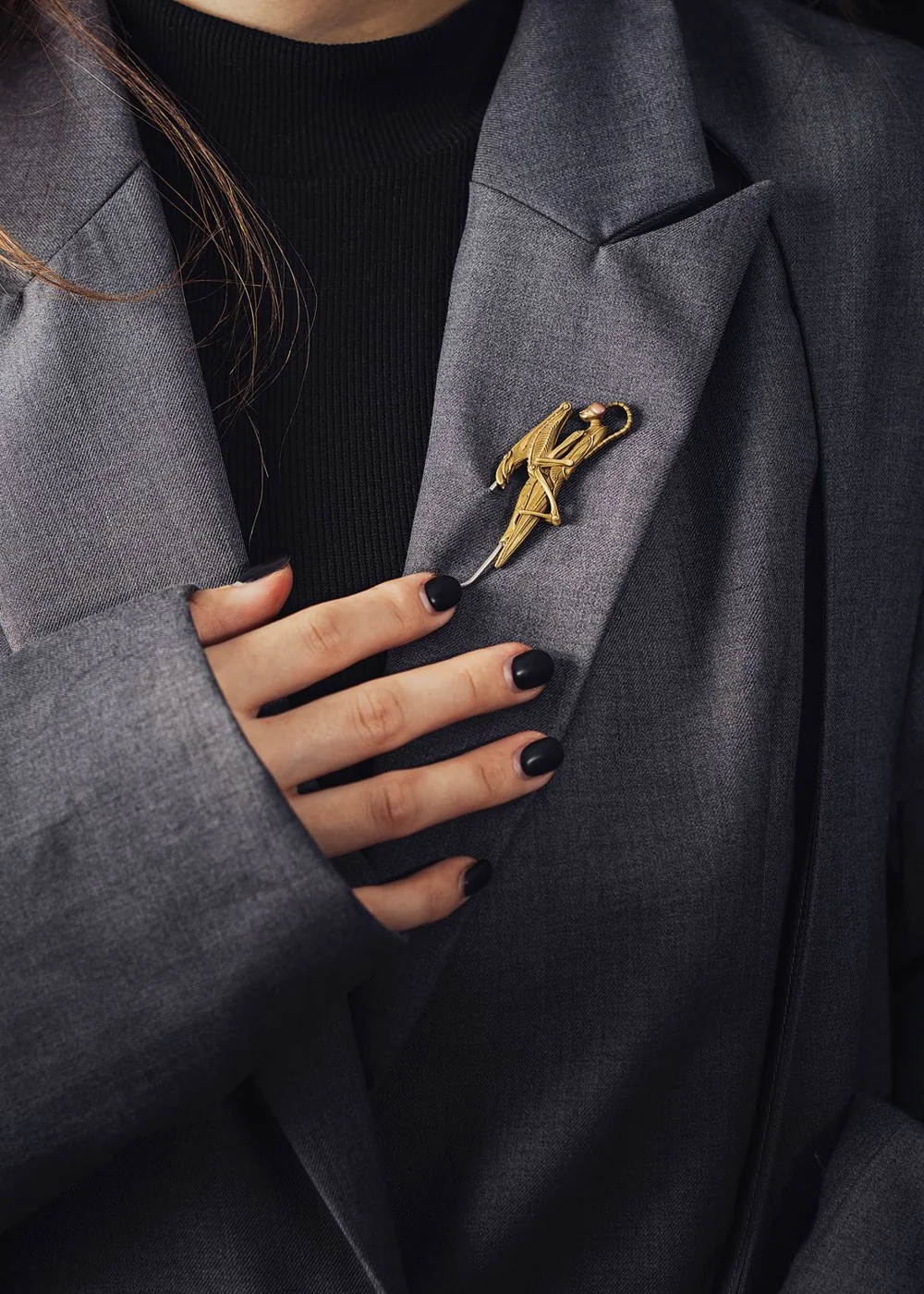
A jacket lapel provides a clearly bounded area. Check whether the brooch lies entirely within it or projects over an edge. A protruding point may catch a scarf or bag strap. Open and fasten the jacket to see whether its position changes.
On a top, the brooch can sit nearer the centre or shoulder. No side is compulsory. Choose by existing seams, neckline and any layers worn above. A backpack strap may make an attractive position unusable in daily life.
A collar needs sufficient stability for the weight. If it twists or drops, stronger fastening is not automatically the answer. A lighter brooch or another position may preserve the garment's shape better.
Try positions without additional pinholes
Before fastening, photograph two possible positions while simply holding the brooch gently against the clothing. Compare images taken from similar distances. This lets you choose between a higher lapel position and one further inward without repeatedly putting a pin through visible fabric.
Include the bag in this comparison. A crossbody strap may conceal the brooch or brush it during walking. Moving the strap aside only for the photograph leaves the everyday problem unresolved. Another placement or accessory is then a clearer decision.
With a very small brooch, a quieter fabric area may be useful. It can become almost invisible against a dense print despite appealing details up close. You may enjoy precisely that subtle effect. Decide deliberately whether it should stand out from conversation distance or be discovered only close up.
Compare it with other details
Begin without other large jewellery. You can then identify what the brooch changes alone. A prominent button placket or print may already attract attention. Several details can coexist, but choose deliberately which ones should remain visible.
Metal colour need not match clothing exactly. A dark brooch on pale fabric creates a different accent from a light one on a similar background. View it from normal distance: fine details interesting close up may almost disappear within the whole outfit.
Check before wearing
Inspect the clasp after fastening as intended and move carefully. The pin should be securely covered and nothing should press uncomfortably against the skin. Add another jacket if it belongs to the day and check possible contact points.
Remove the brooch before cleaning the garment unless the relevant instructions specify otherwise, and store it separately so its point cannot damage other items. Photograph a successful position. Next time you will not need to test several locations again.