Translate the day into a few movements
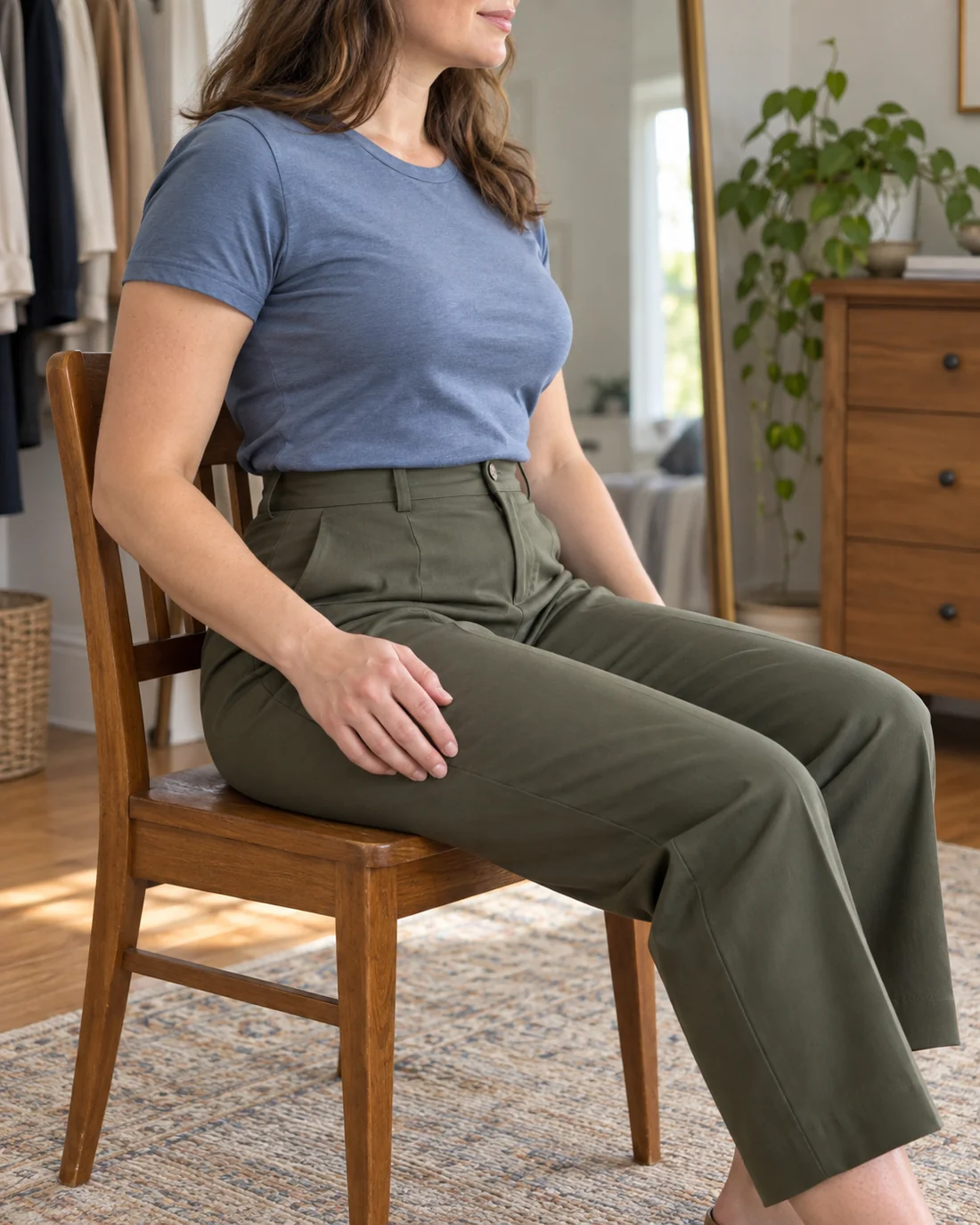
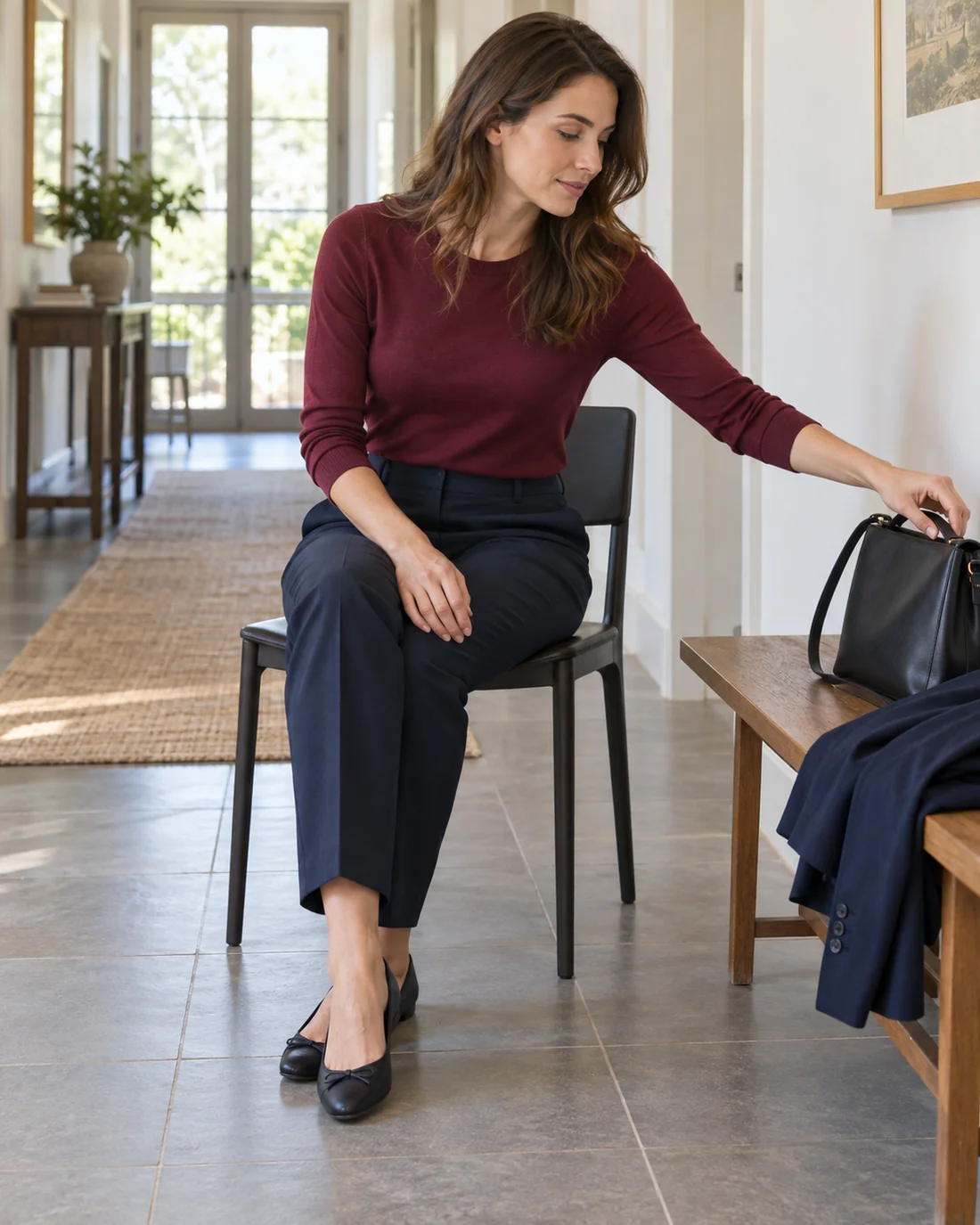
Consider the situations that will actually occur: prolonged sitting, a walk, stairs or several transitions between indoors and outdoors. Choose a few ordinary movements to represent them. Sit with the waistband fastened, reach forwards and walk around with the packed bag.
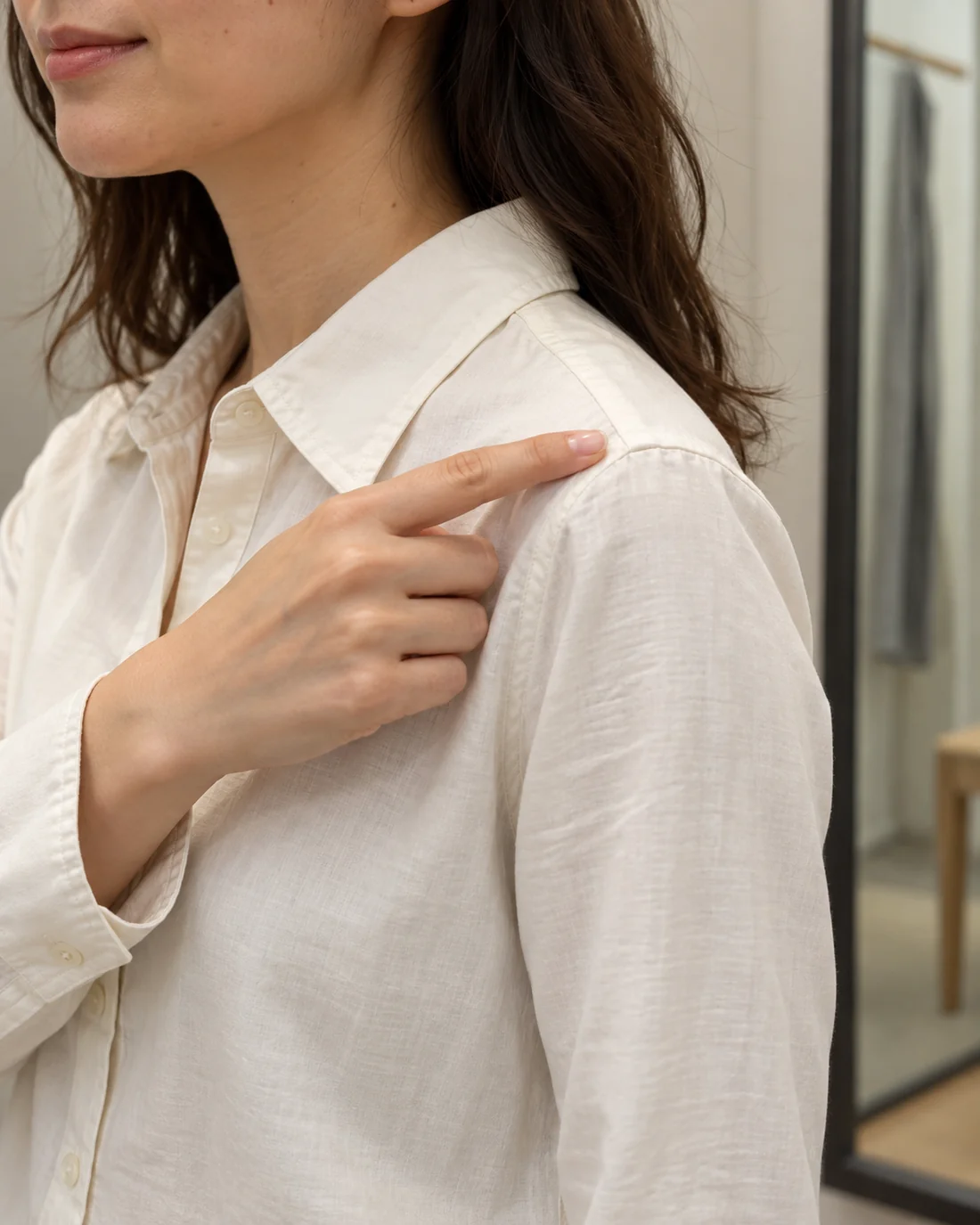
Notice areas that immediately demand attention. Does the top pull out, does a buckle press or does a sleeve need repeatedly pushing back? Identify the specific cause. Movement alone does not make an outfit unsuitable; the question is whether it interferes with the activity or requires constant correction.
Test the complete shoes and layers
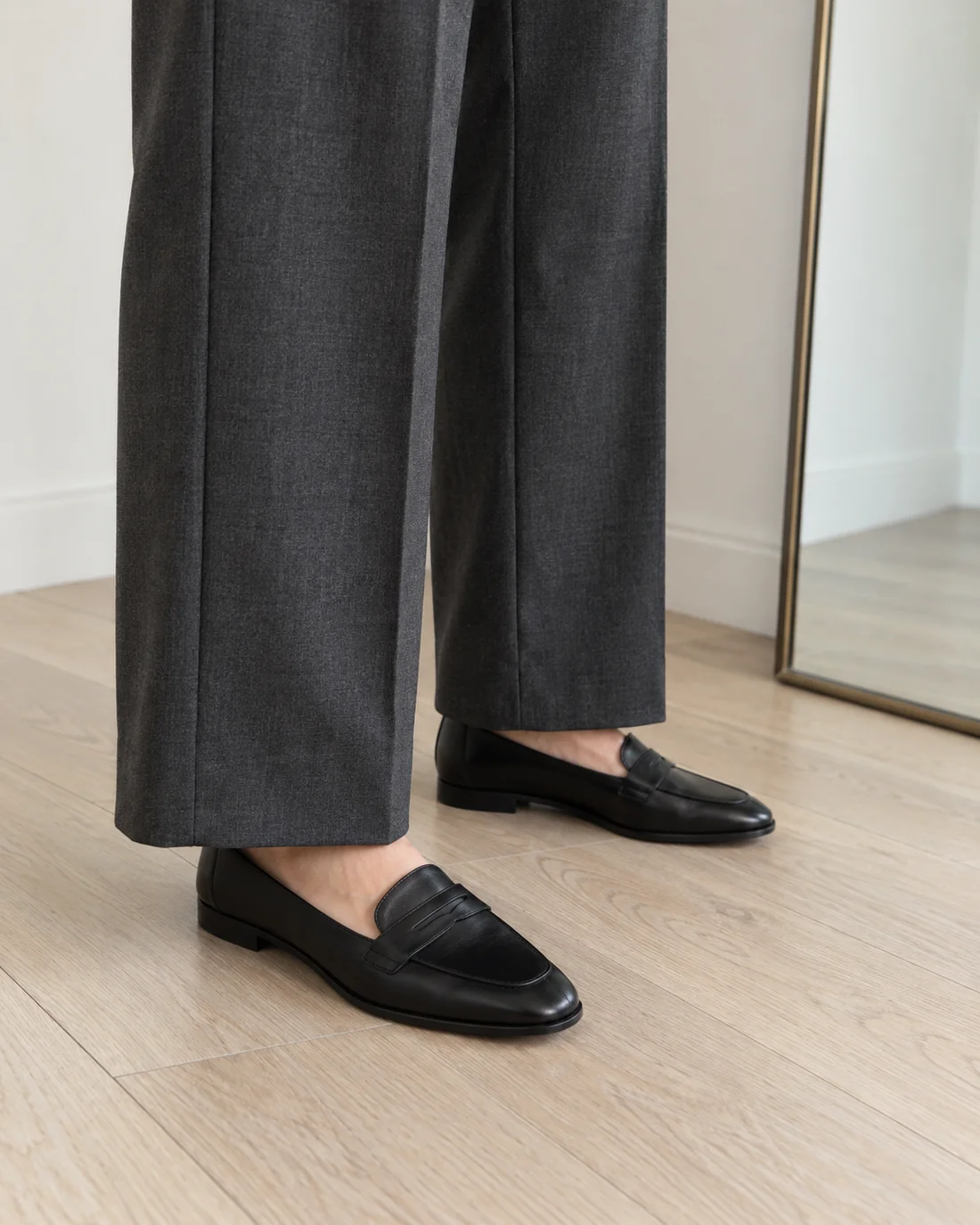
Wear the intended socks and shoes. Another sole height changes a trouser hem, while a thicker sock changes the space inside a shoe. Also put the jacket over the actual top. A comfortable jumper may suddenly leave little arm room beneath a close-fitting jacket.
Remove a layer and consider where it will go during the day. If you already carry a bag, check its available capacity. An additional jacket provides flexibility only if you can wear or store it when needed. A theoretical temperature plan is less useful when both hands are already occupied.
Try small adjustments first
Sometimes a different belt setting, a smoothly arranged lower layer or fewer bag contents is enough. Change one thing and repeat the movement that caused difficulty. This shows whether the adjustment helps rather than merely looking different briefly.
If a garment remains clearly uncomfortable, choose a familiar alternative for that day. A long appointment does not need to become a trial for a combination that already causes problems at home. The new piece can be tried again later under more suitable circumstances.
Remember a combination that works
A quick outfit photograph and a note about shoes or layers are often sufficient. Record if a particular bag or underlayer was important to comfort. That makes the combination easier to repeat accurately.
At the end of the day, assess the points you actually noticed. Perhaps the waistband was comfortable but the bag was too full. Keeping those findings separate avoids rejecting the entire outfit for one problem. Comfort comes from how the pieces work together during a particular day, rather than from a fixed list of universally correct garments.