Build a work outfit from existing pieces
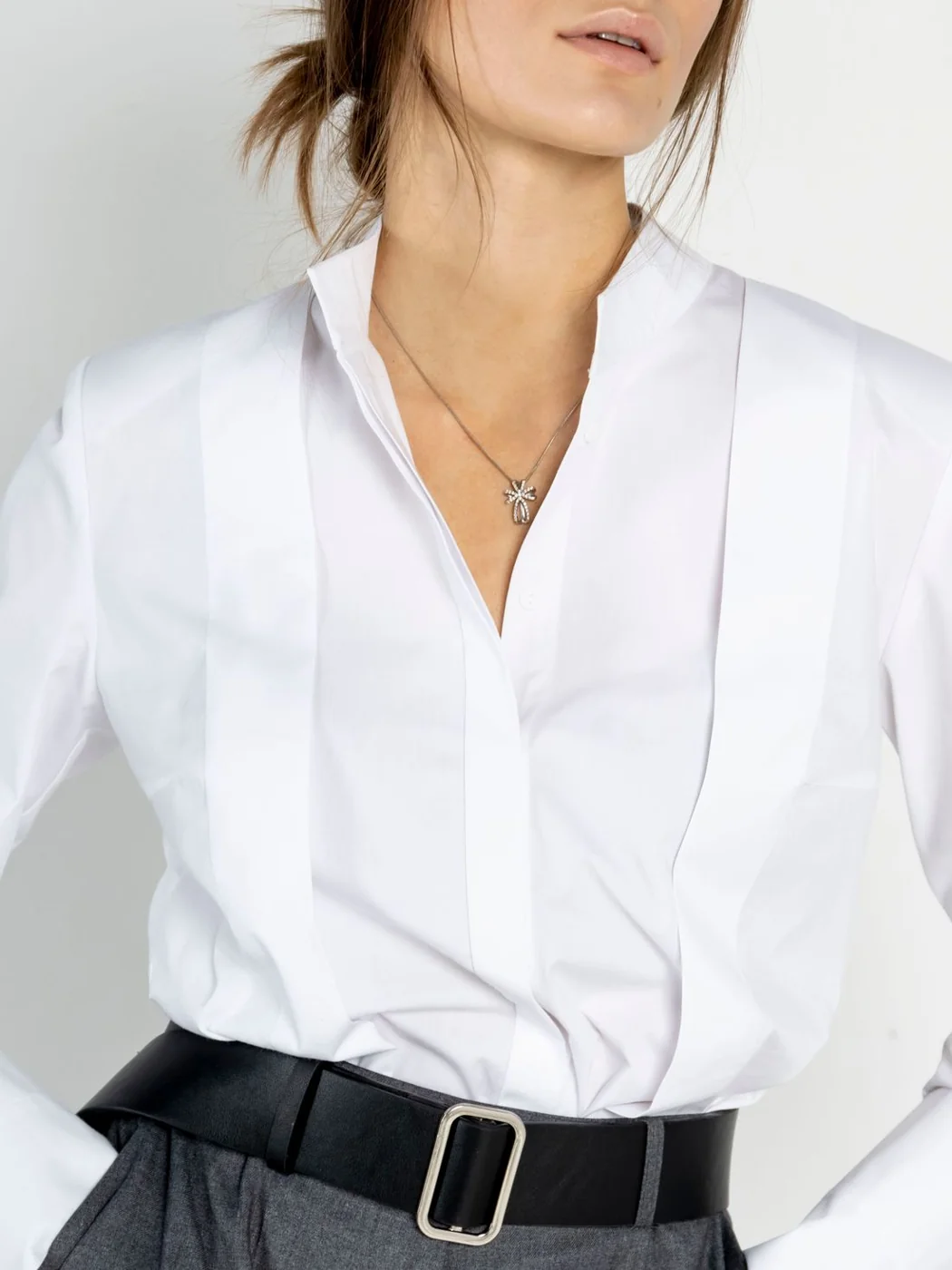
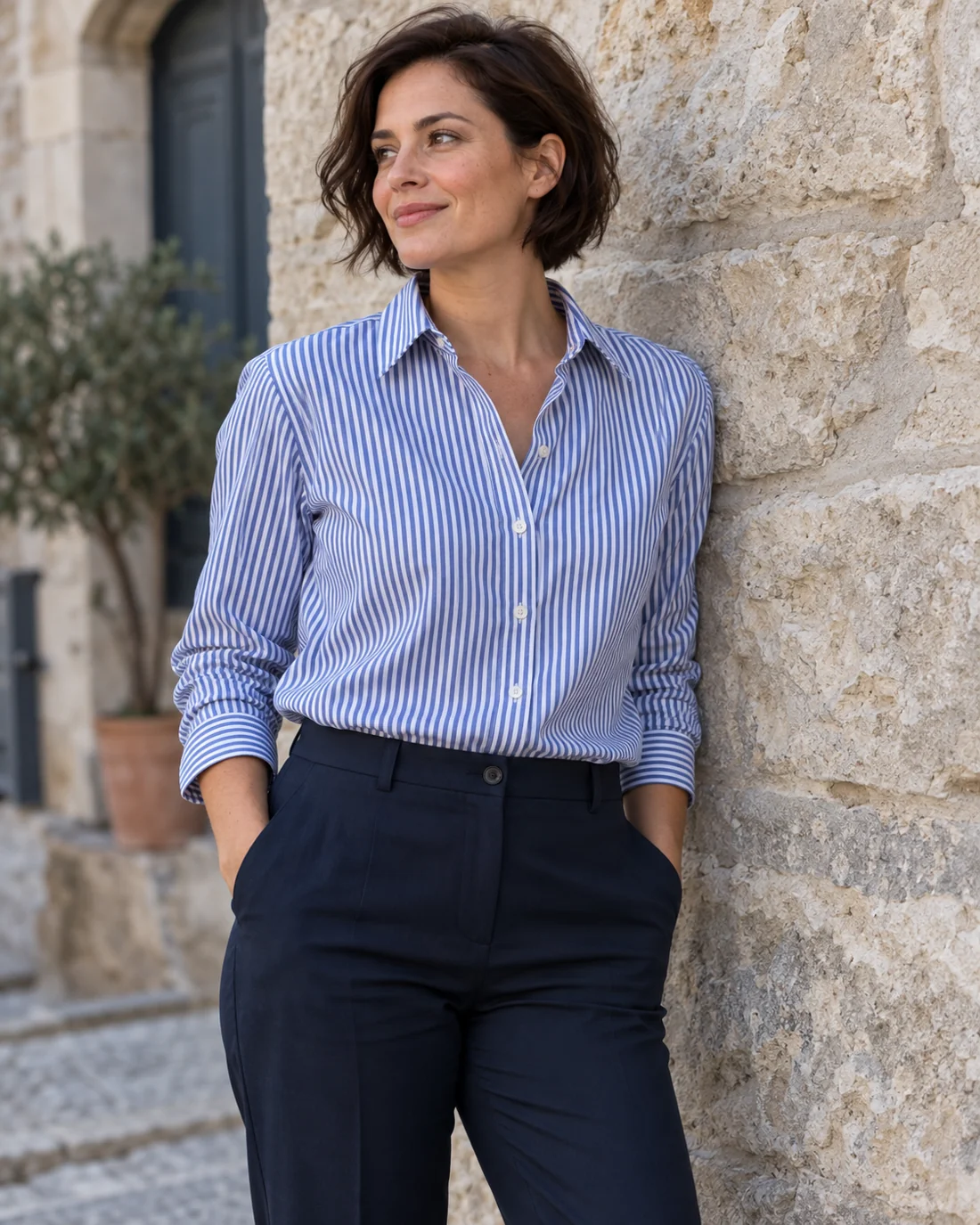
Start with trousers you can sit in for several hours and a shirt or fine jumper. With a high waist, a shorter top hem can be easier to arrange than a large amount of tucked fabric. A longer shirt can work too; distribute the fabric around the waist rather than gathering it at the front.
A smooth blazer complements corduroy without repeating its ridges. Look at the combination in daylight: some dark cords appear lighter or darker as the direction of the pile changes. The blazer therefore need not match exactly. Navy with brown or grey with cream can make a clearer connection than two nearly matching beige shades.
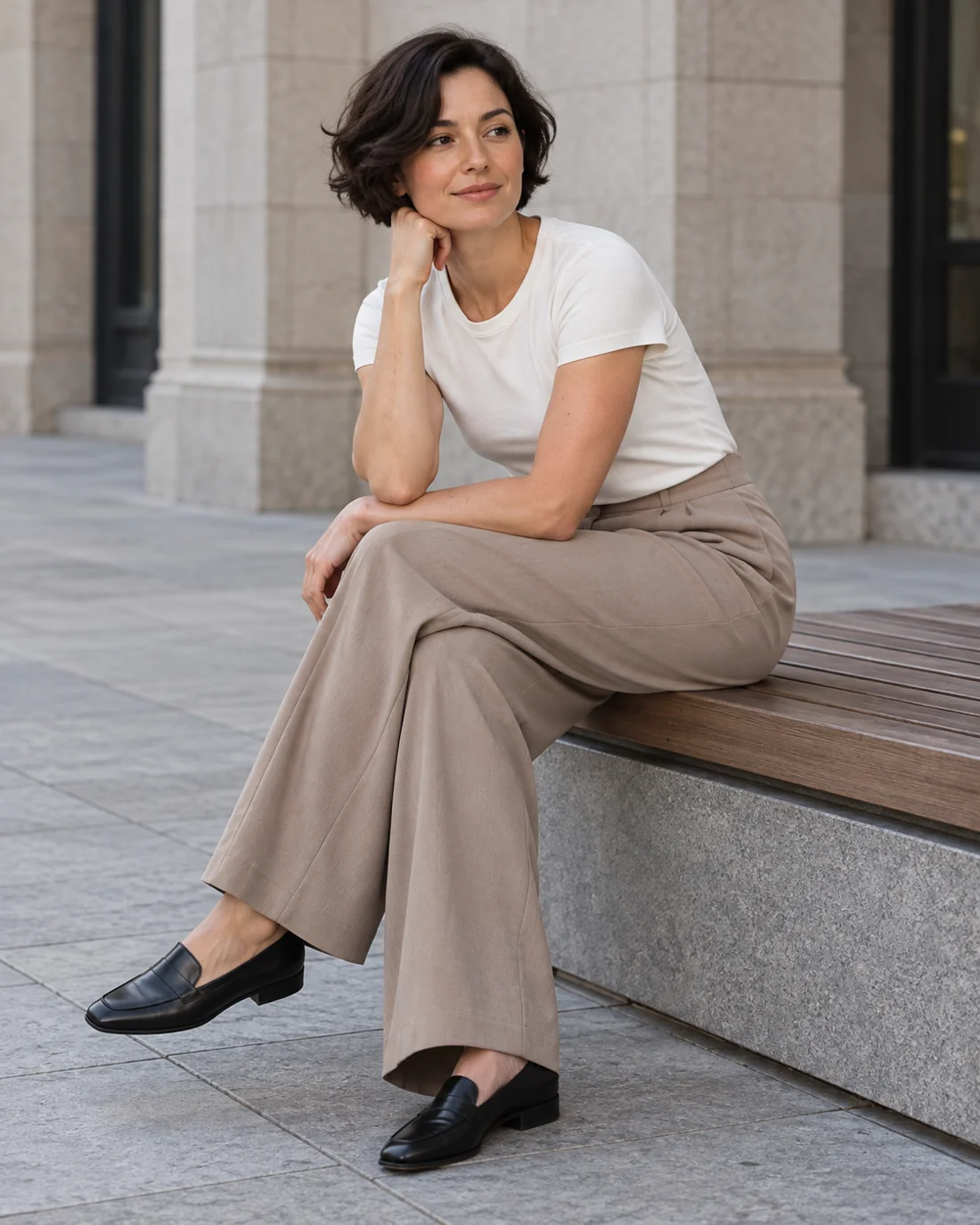
Choose footwear whose upper edge does not repeatedly catch inside the trouser leg. With a narrower leg, a tall shoe shaft can push the fabric upwards. With a wider leg, the main question is whether the hem clears the ground.
Change one element for the weekend
First replace only the top with a T-shirt and cardigan or a plain sweatshirt. This shows whether the trousers are flexible without changing every shoe and accessory at once. A short jacket reveals more of the pockets and waistband, while a long coat gives the outfit a larger continuous surface.
If you add chunky knitwear, keep the other surfaces simpler at first. This is not a ban on combining textures; it helps you identify whether you like that particular pairing. A small smooth bag can provide contrast between the ribs and stitches.
Dark and pale corduroy in the same arrangement
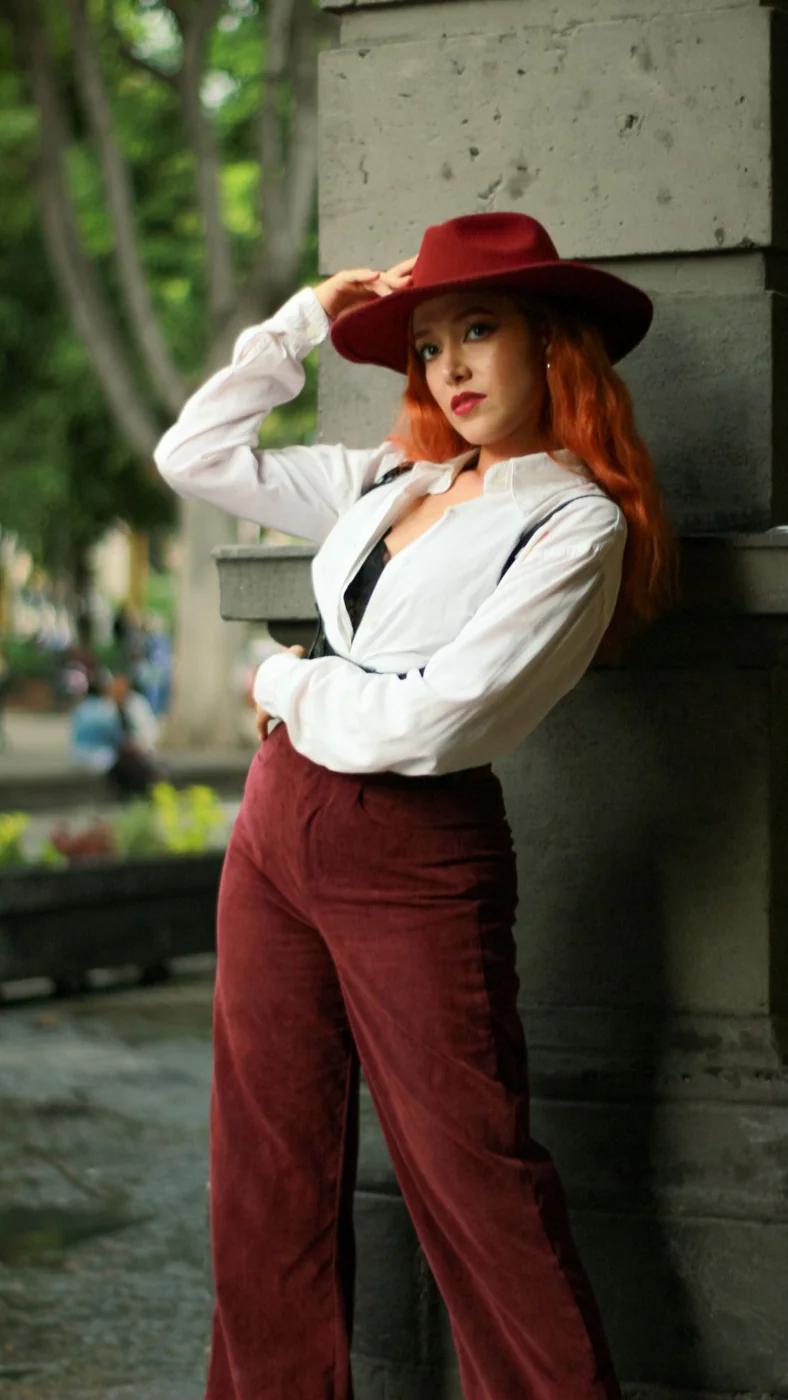
Compare dark cords with a pale shirt and pale trousers with a dark top if you already own both. Reversing them changes where the large light area sits. The same shoe may contrast strongly in one version and recede in the other. This does not mean you need two entirely new sets of accessories.
With rust-brown trousers, a cream shirt might reveal the texture clearly. A fine navy jumper would keep the whole combination darker. Test the same simple jacket with both versions. If it works with only one, record that specific outfit rather than classifying the trousers as universally difficult.
Broad corduroy ribs remain visible in dark colours, especially under side lighting. Adding a large knit pattern changes the effect again. Do not inspect the garments only directly beneath a lamp; view them from normal distance. The surface belongs to the complete outfit rather than merely an enlarged fabric detail.
Separate hem decisions from care
Turn up a long trouser leg only as a trial. Several thick layers of corduroy at the ankle can feel heavy and shift while walking. If the trousers need permanent shortening, mark the length with your usual shoes and consider professional alterations.
Care decisions belong to the label in the specific pair. The word corduroy alone does not establish a wash programme or ironing temperature. Save a successful combination as an outfit photograph, but do not treat that as care guidance for other corduroy fabrics.