Create a fabric contrast with trousers
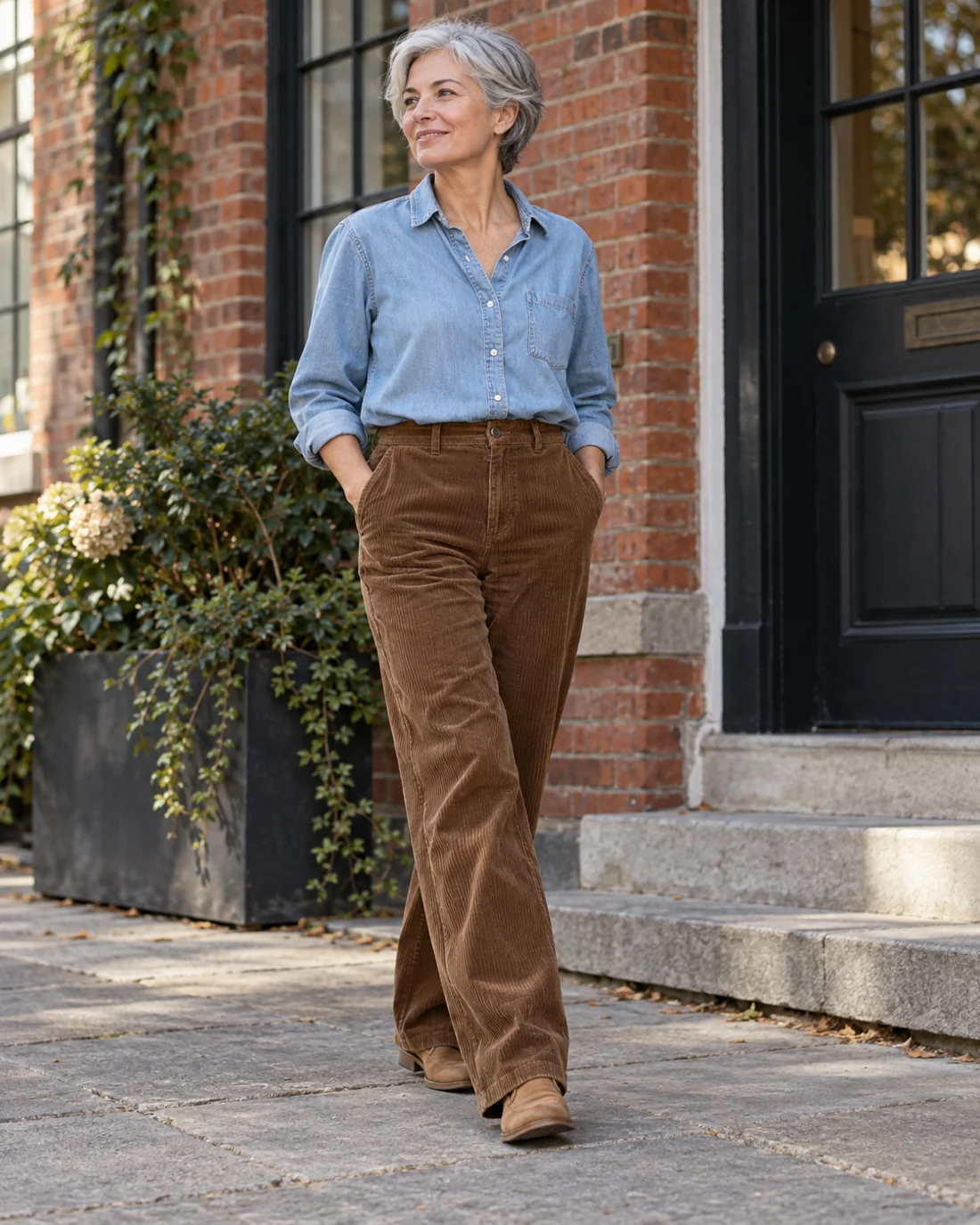
Smooth trousers beside a denim shirt make the different surfaces visible. With wide trousers, begin by loosely tucking just the front of the shirt and leaving the rest outside. Then check the side view. A bulky lump of fabric should not collect directly over a trouser pocket.
Straight or narrower trousers can also work with the shirt completely untucked. Length matters here. If it ends at the widest part of a patch pocket, those two edges may overlap awkwardly. A slightly shorter shirt or a different pair of trousers changes that detail without requiring a general rule about body shapes.
Compare denim with denim
For jeans and a denim shirt, there are two clear starting points: similar washes or noticeably different levels of lightness. Two nearly identical blues may look accidental if one leans grey or green. Put the garments together in daylight, then look at the outfit from a little distance while wearing it.
A visible white or dark T-shirt between an open shirt and jeans interrupts the broad denim area. If you want to button the shirt, a belt can provide a similar division. Neither break is compulsory when you like an uninterrupted blue combination.
Consider softer fabrics and sleeves
Above a fluid skirt, a denim shirt has a different effect from denim beside corduroy or firm cotton. Start with little additional decoration so that you can judge the fabric contrast. A large collar, several prominent buttons and a patterned bag may all compete for attention.
Roll the sleeves to a height that stays in place during your activities. A thick, repeatedly folded cuff can press beneath a jacket, so sleeves may be better left down when another outer layer is needed. Test the finished combination with the jacket you will actually take, rather than considering the denim shirt only as a standalone top.