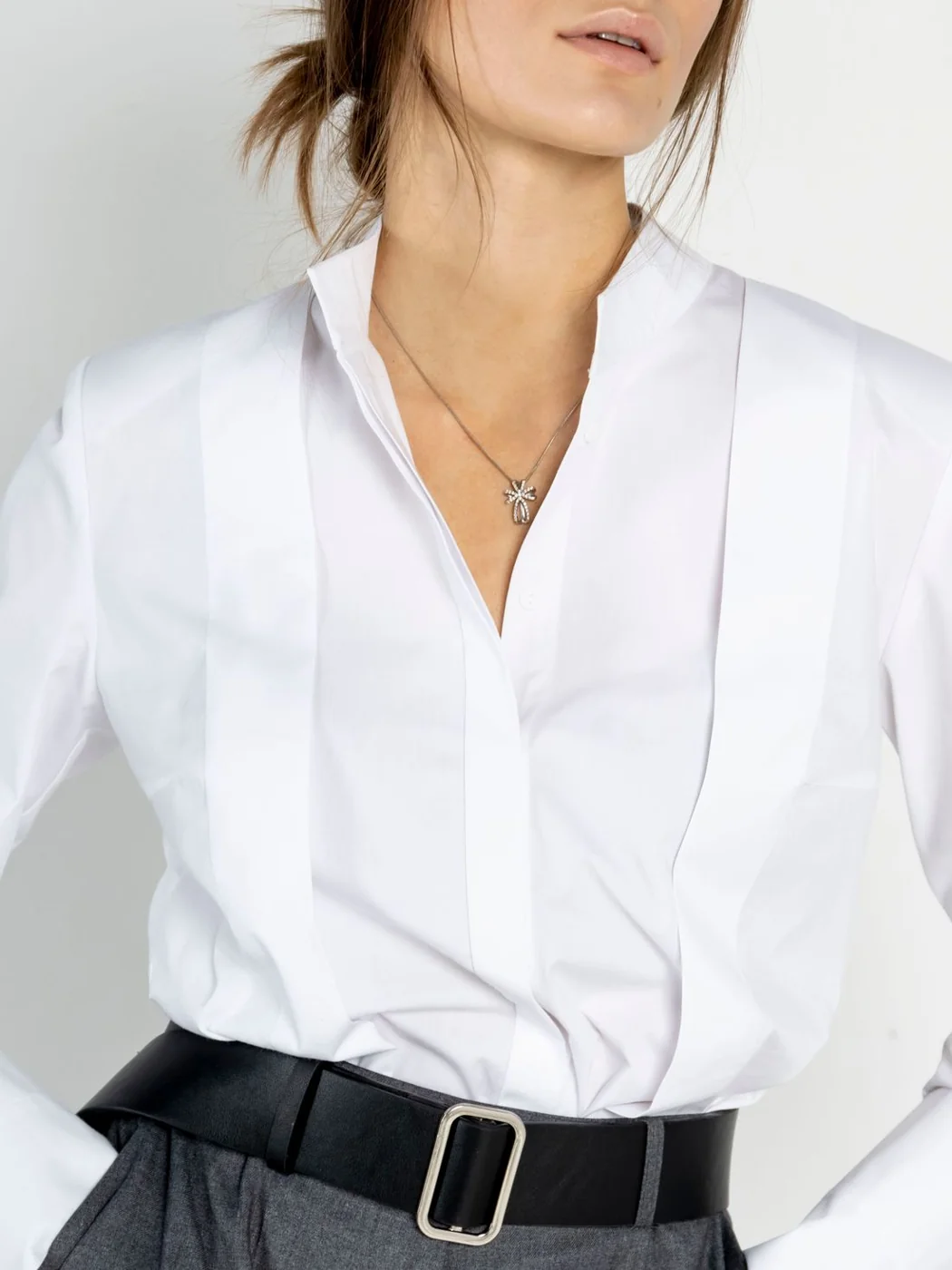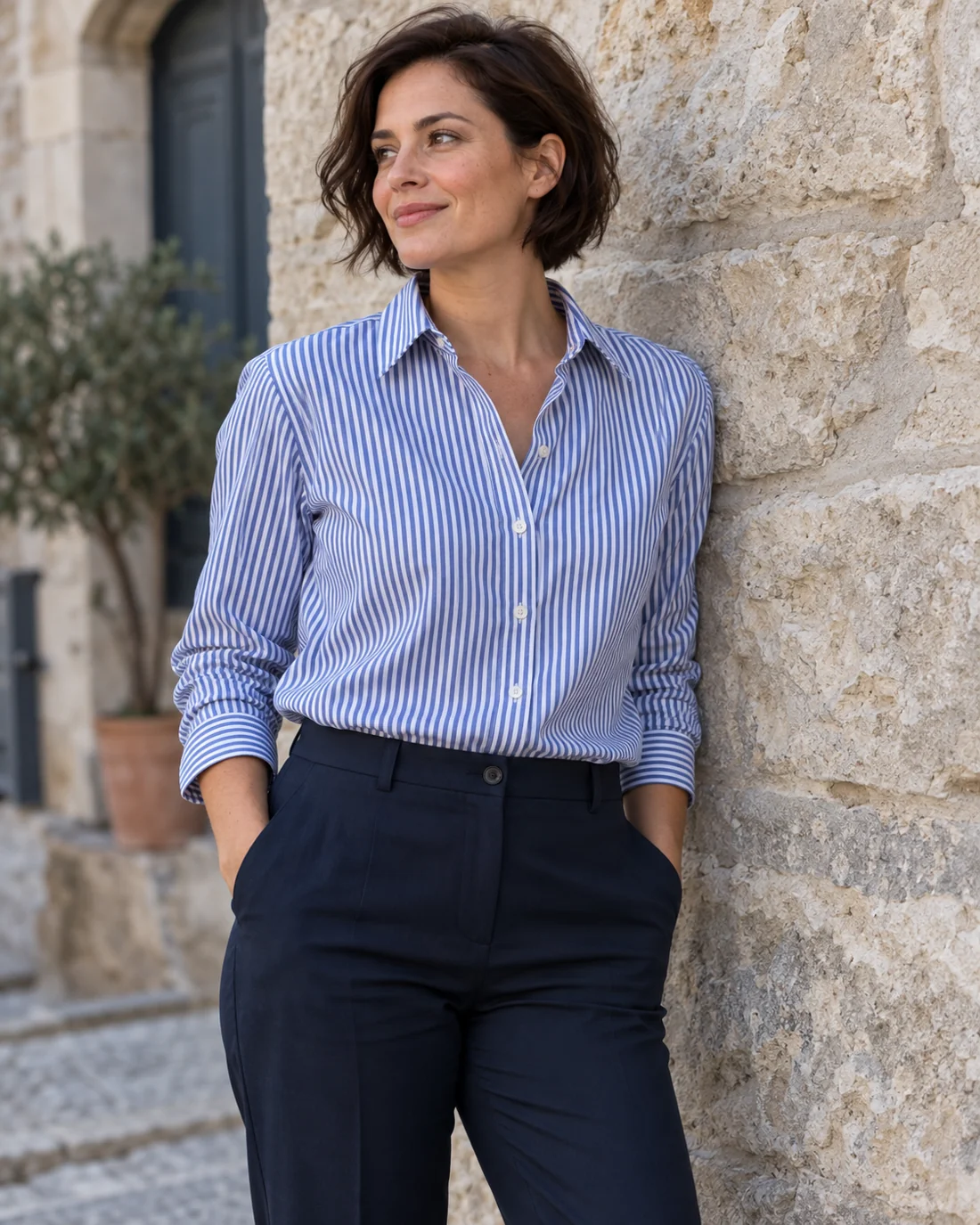
Start at the neckline
A shirt collar can stand clearly above a V-neck vest. Fasten several buttons first, then change only the top one. This lets you see whether the collar should sit over the knit or remain inside the opening. A very soft collar may disappear beneath a heavy knitted edge and does not need to be forced outwards.
With a round vest neckline, a T-shirt often creates a narrow second edge. Similar lightness keeps that join quiet; a strong colour difference emphasises it. Check the actual width in the mirror. An edge that appears accidentally on only one side may be resolved by a different neckline shape.
Leave space beneath the arms
Lift your arms and reach forwards. The vest should not push the shirt sleeves into tight bundles of folds. A wide sleeve needs larger armholes or a more generously cut vest. A fuller chest or different shoulder width does not dictate a particular style; it calls for enough room in the actual garment.
A smooth long-sleeve tee can lie more easily beneath a close opening than a blouse with gathered shoulders. If those gathers are exactly what you want to show, choose the vest around them and treat the sleeve volume as an intentional part of the outfit.
Decide what shows at the bottom
A long shirt beneath short knitwear creates another horizontal line. It remains distinct above narrower trousers, while wide trousers introduce several larger areas together. Try tucking the shirt before deciding that the vest itself is unsuitable.
For a restrained example, combine a grey vest, white shirt and dark blue straight jeans. To introduce colour, change only the shirt first. Add an outer jacket last: it needs to fit over both the vest and sleeves without pulling at the shoulders. That final test reveals whether the combination works outside the house as well as in front of a mirror.