Connect the neckline with the next layer
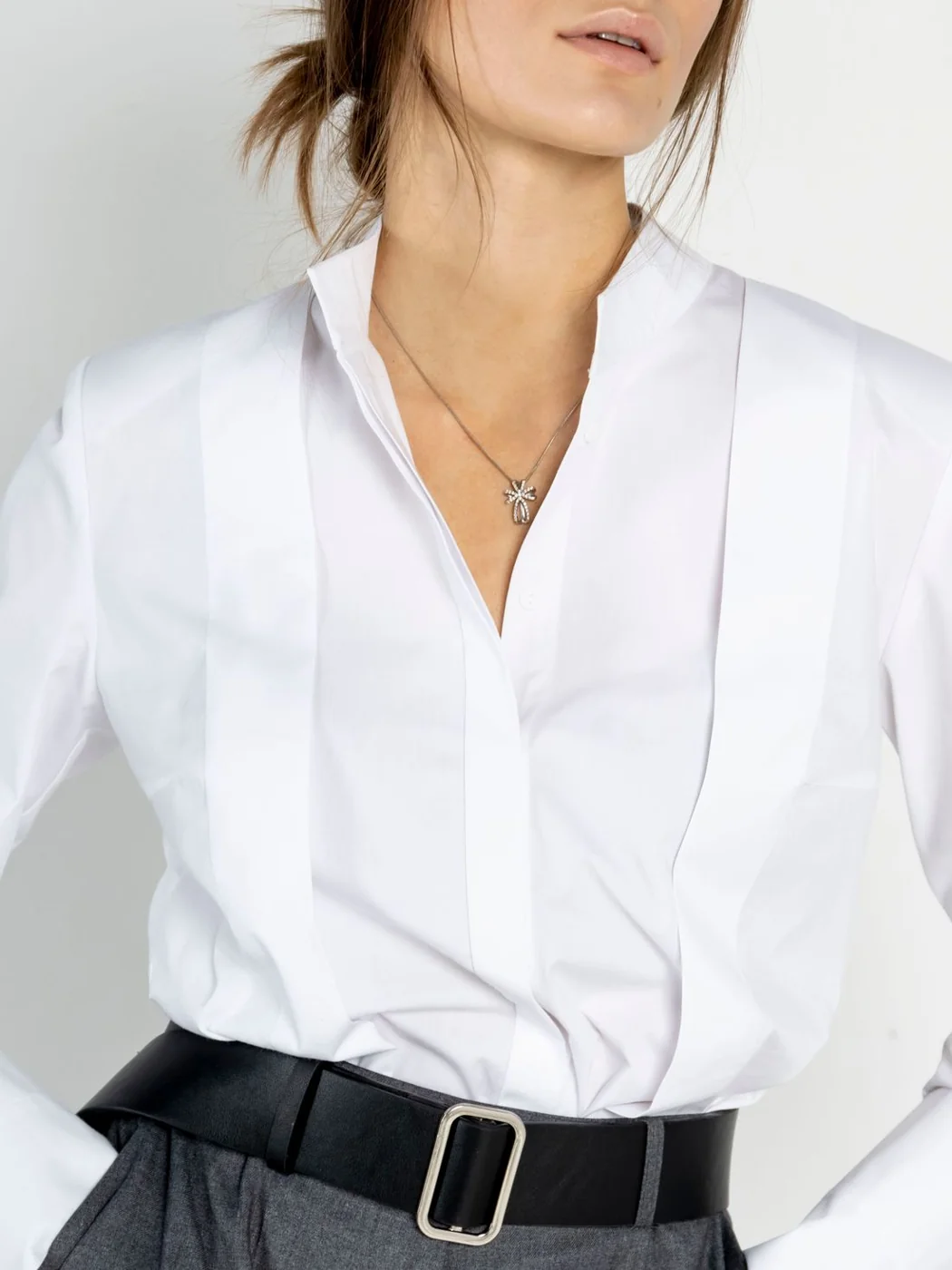
Beneath an open shirt, the T-shirt neckline remains clearly visible. If the two edges lie very close together, open the shirt further or choose another neckline. Beneath a blazer, a higher opening can create a continuous area, while a lower one shows more skin between the edges. Either is a design choice.
Check the shoulder seam. A strongly dropped sleeve can bunch beneath a narrow jacket. If you mainly want the T-shirt for layering, test that use first. A comfortable shirt on its own is not automatically the most comfortable underlayer.
Use the hem as a visible line
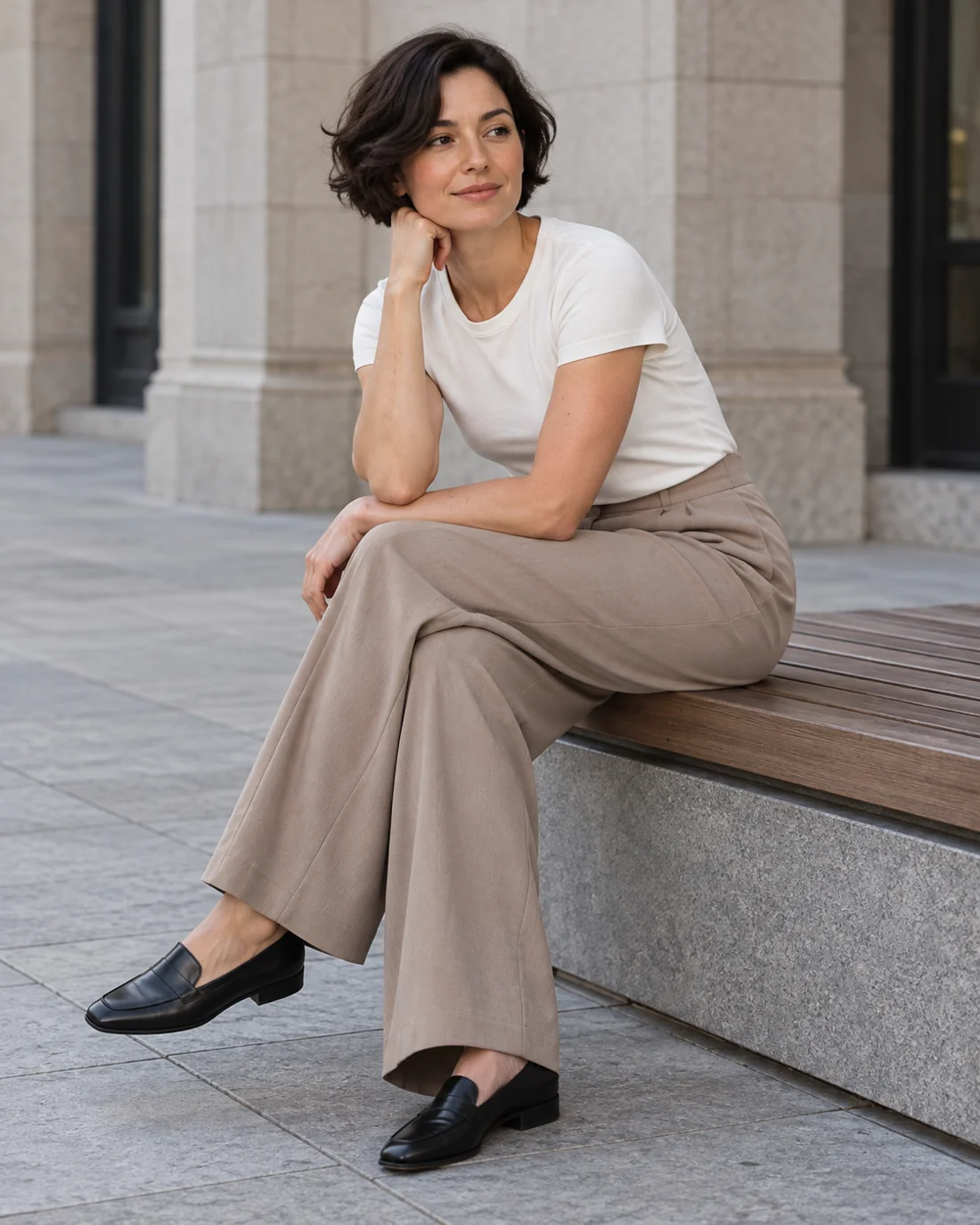
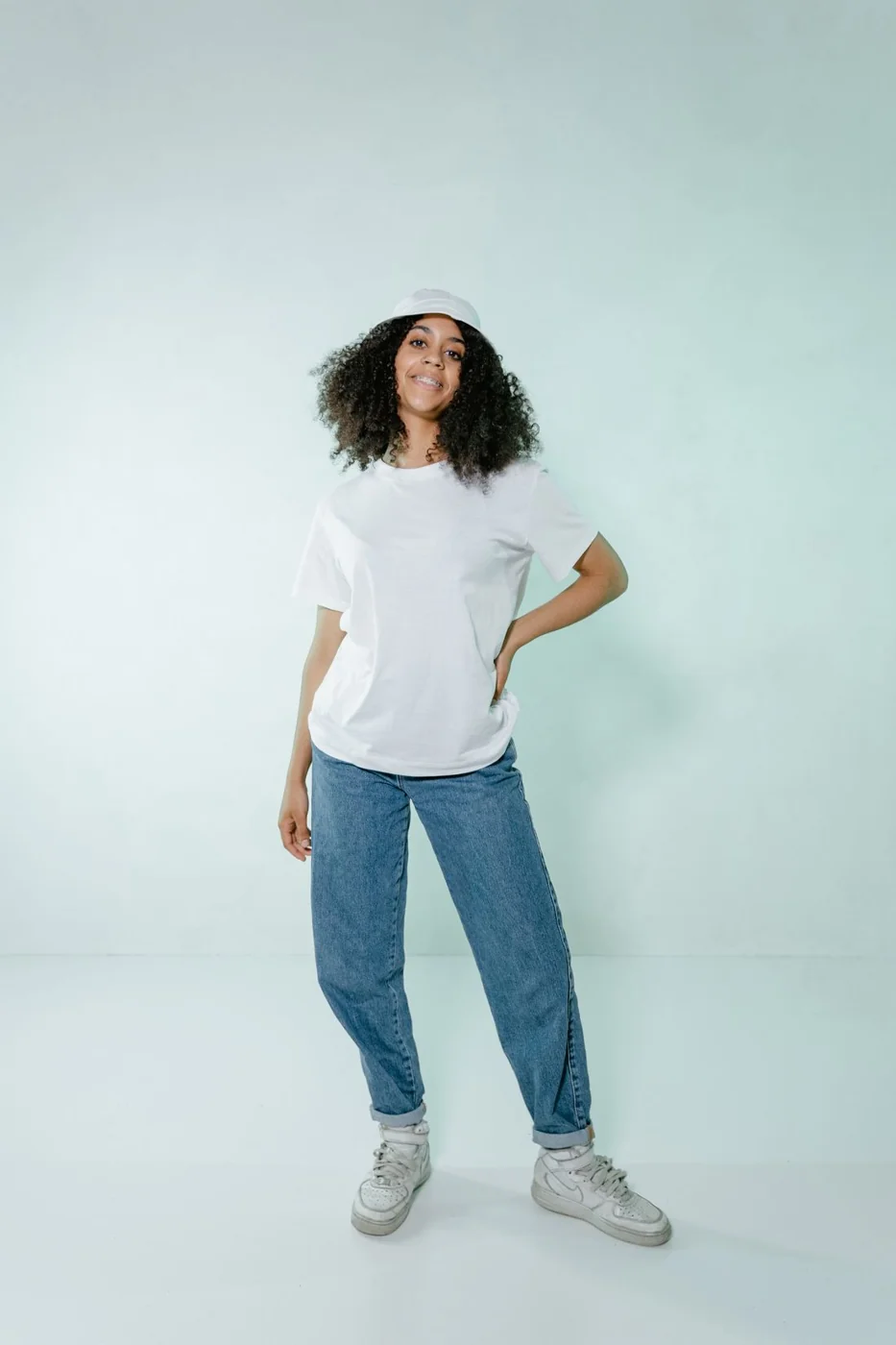
A short hem reveals the beginning of trousers or a skirt. A long hem covers it and changes the proportion of visible fabric areas. Do not automatically tuck every T-shirt in. Thick fabric may feel better loose, while thin fabric distributes more easily.
After tucking, sit down and raise your arms. The shirt can move, but should not need complete rearrangement after every movement. A partially tucked front can provide an intermediate version if you like that appearance.
Begin with one specific partner
With patterned trousers, repeat one colour from the pattern. With plain trousers, a coloured T-shirt can become the focus itself. Hold the pieces together in daylight. A colour seen in a product photograph or under warm room lighting may look different.
Add shoes and the bag afterwards. A plain T-shirt does not automatically demand noticeable jewellery. If the combination already feels complete, leave it that way. Before wearing, check twisted seams, visible marks and the level of transparency you want. These details matter more than searching for a universally perfect basic T-shirt.