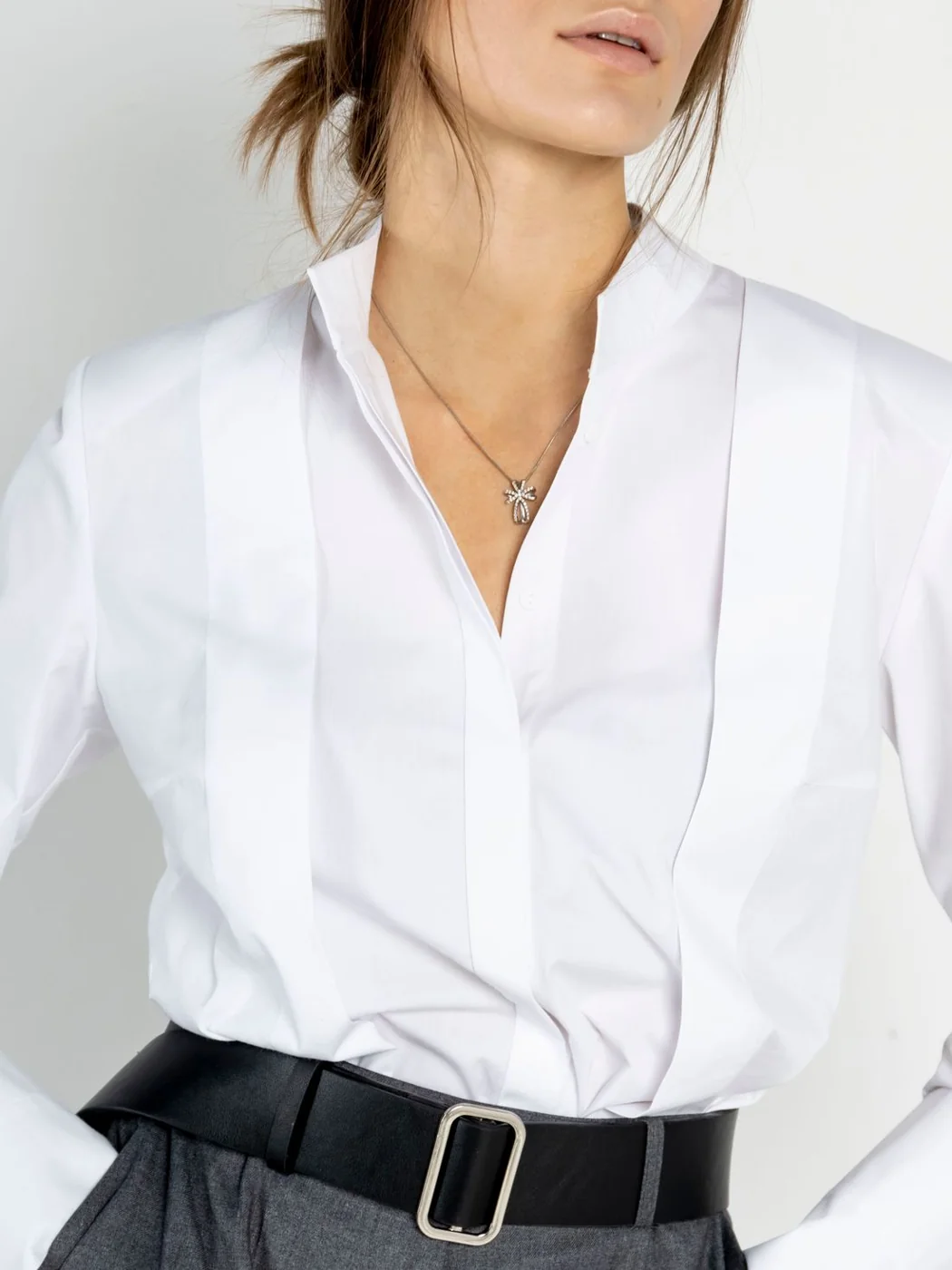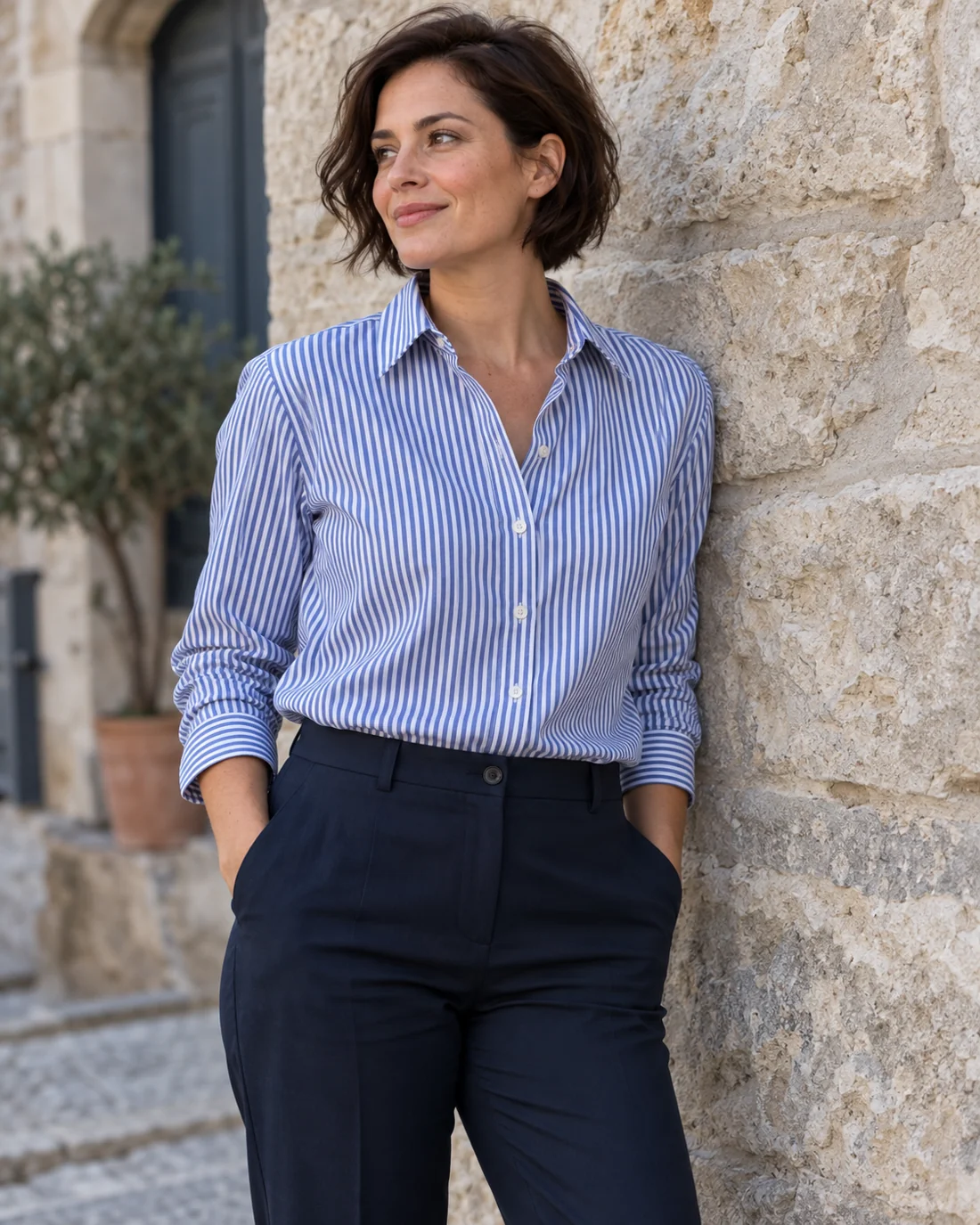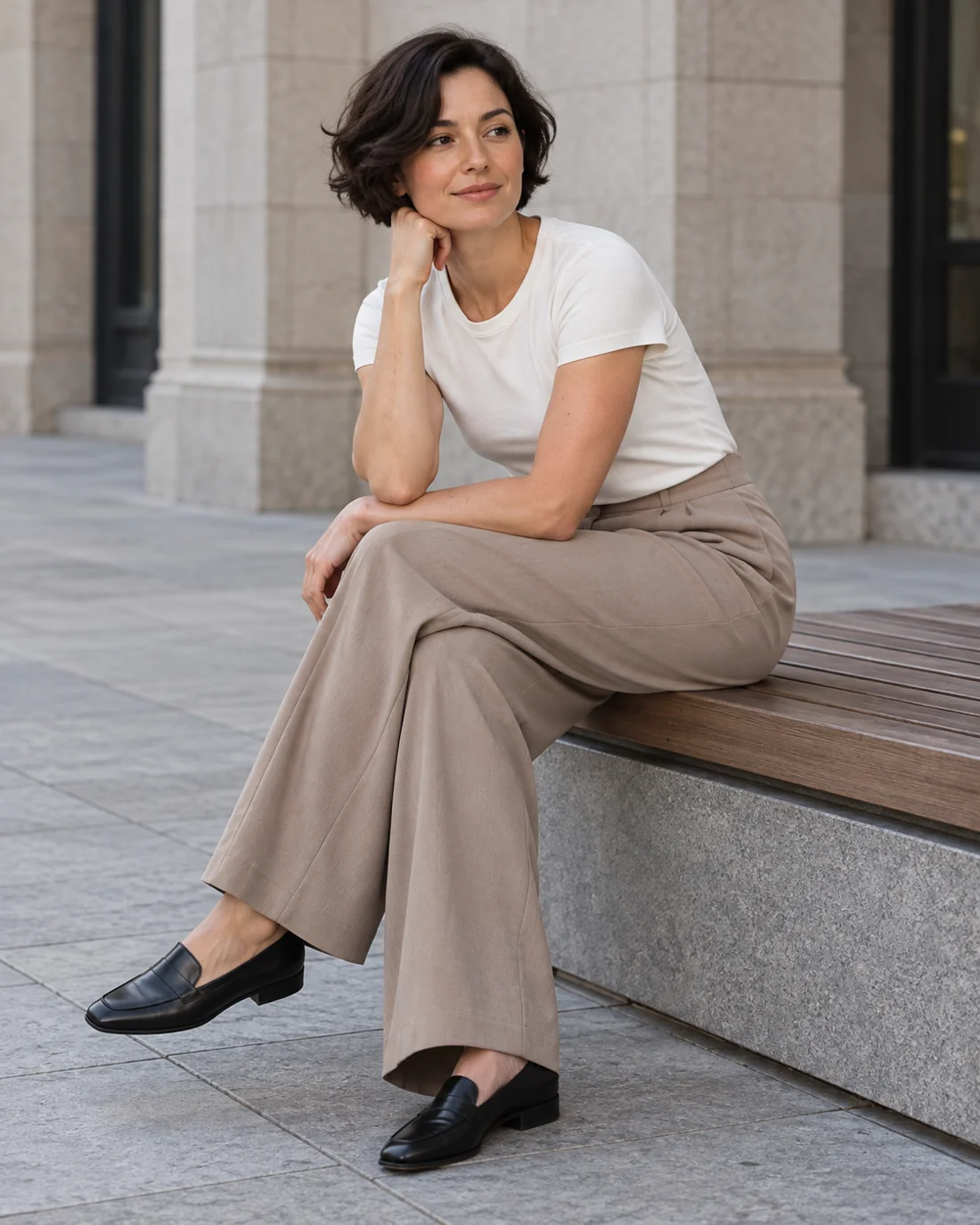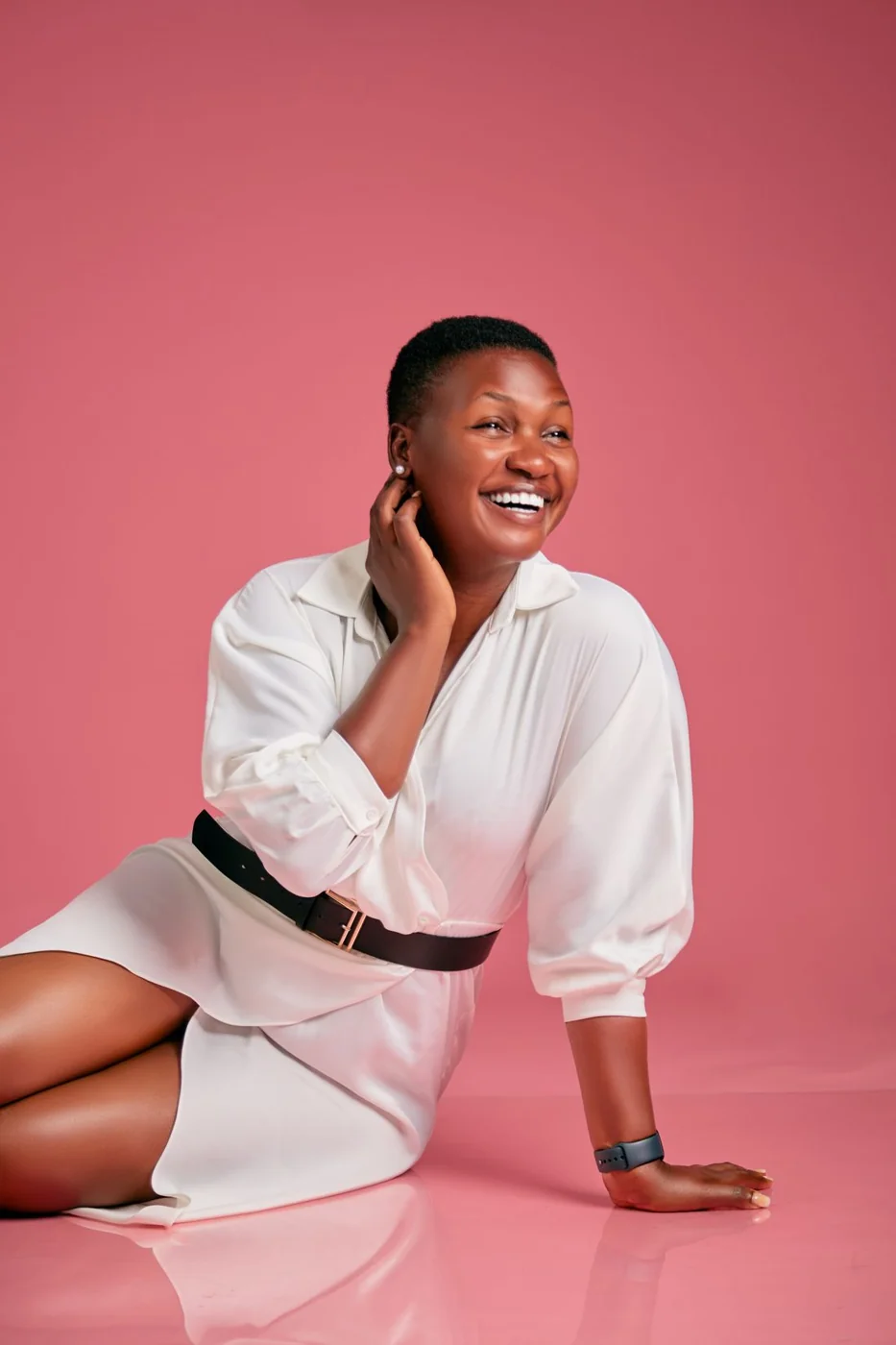
Find its shape while buttoned
Try the dress without an extra belt first. This reveals its basic shape. If it comes with a fabric belt, then try tying it loosely and more firmly. The arrangements change how much fabric sits above the waist. Choose the version that lets you sit and move your arms.
Check the button opening while seated. If the gaps show more than you want, another fit often helps more than a tighter belt. A belt can create additional pulling. An alteration may be possible depending on construction; do not decide solely from the size label.
Open as a long layer
The clothes beneath an open dress should form a complete combination, such as trousers with a plain T-shirt. Begin with related or quiet colours so you can judge the additional edges. The two open fronts already create movement and do not require more loose layers.
Walk a few steps and turn. A very long hem may catch between the legs or against the bag. If you want to close the dress outside, test that version over the clothes beneath too. An arrangement that becomes too tight when closed offers less protection from conditions than expected.
Arrange sleeves and collar
A shirt dress with a firm collar can create several visible edges beneath another jacket. Do not automatically expose all of them. Try the collar inside and outside the jacket and compare which moves comfortably. Very narrow jacket sleeves can bunch over the dress sleeves.
If you turn the sleeves up, check that the fold stays in place. A cuff that repeatedly slips down soon becomes irritating. Sometimes the original sleeve length is the simpler answer.
Save two deliberate uses
Photograph one closed and one open combination with their shoes. Note which bag and outer layer work with each. This turns a theoretically versatile idea into an actually wearable selection. You need not use every possibility; if the dress works much better buttoned, that can remain its only job.