Look without pulling the shirt into place
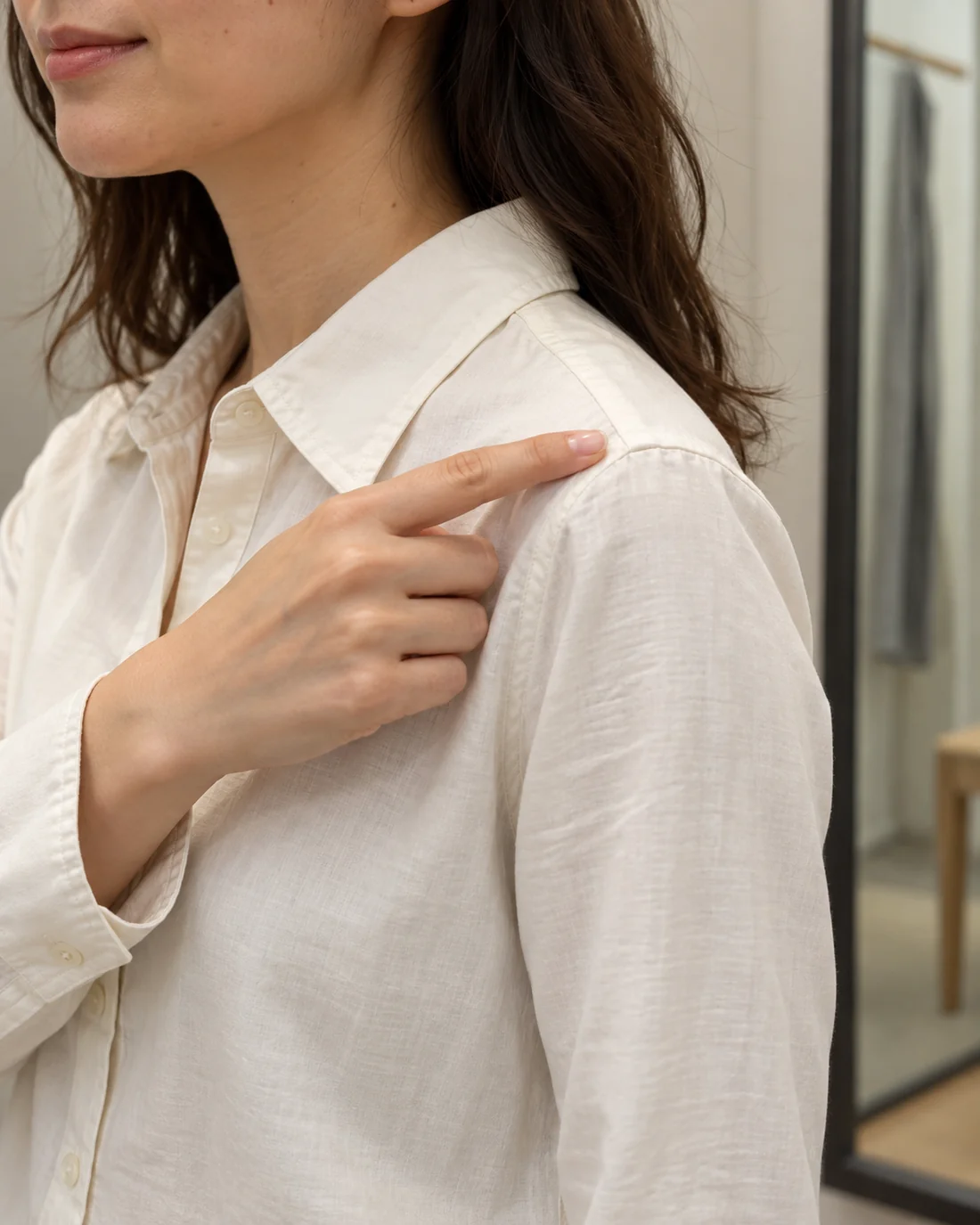
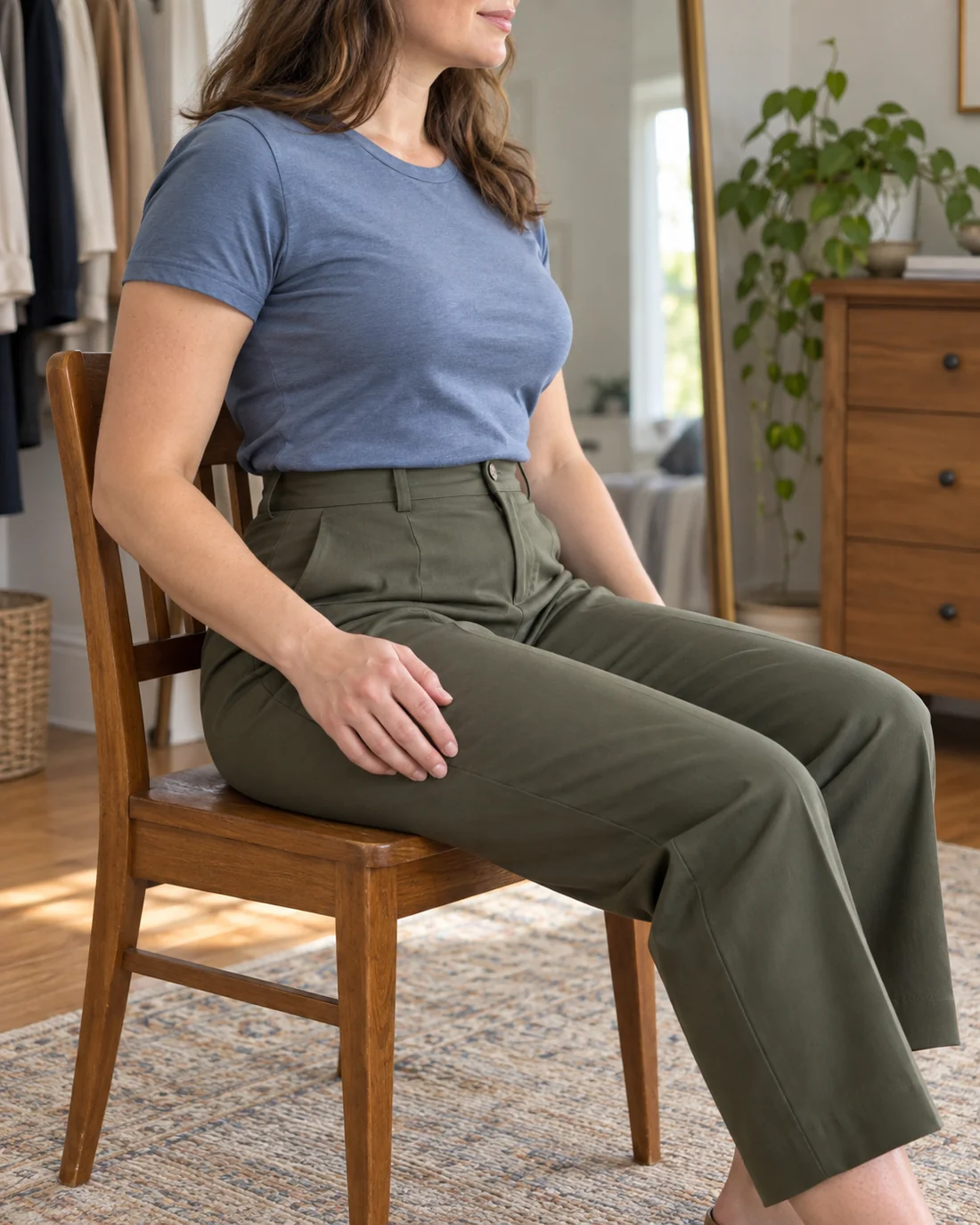
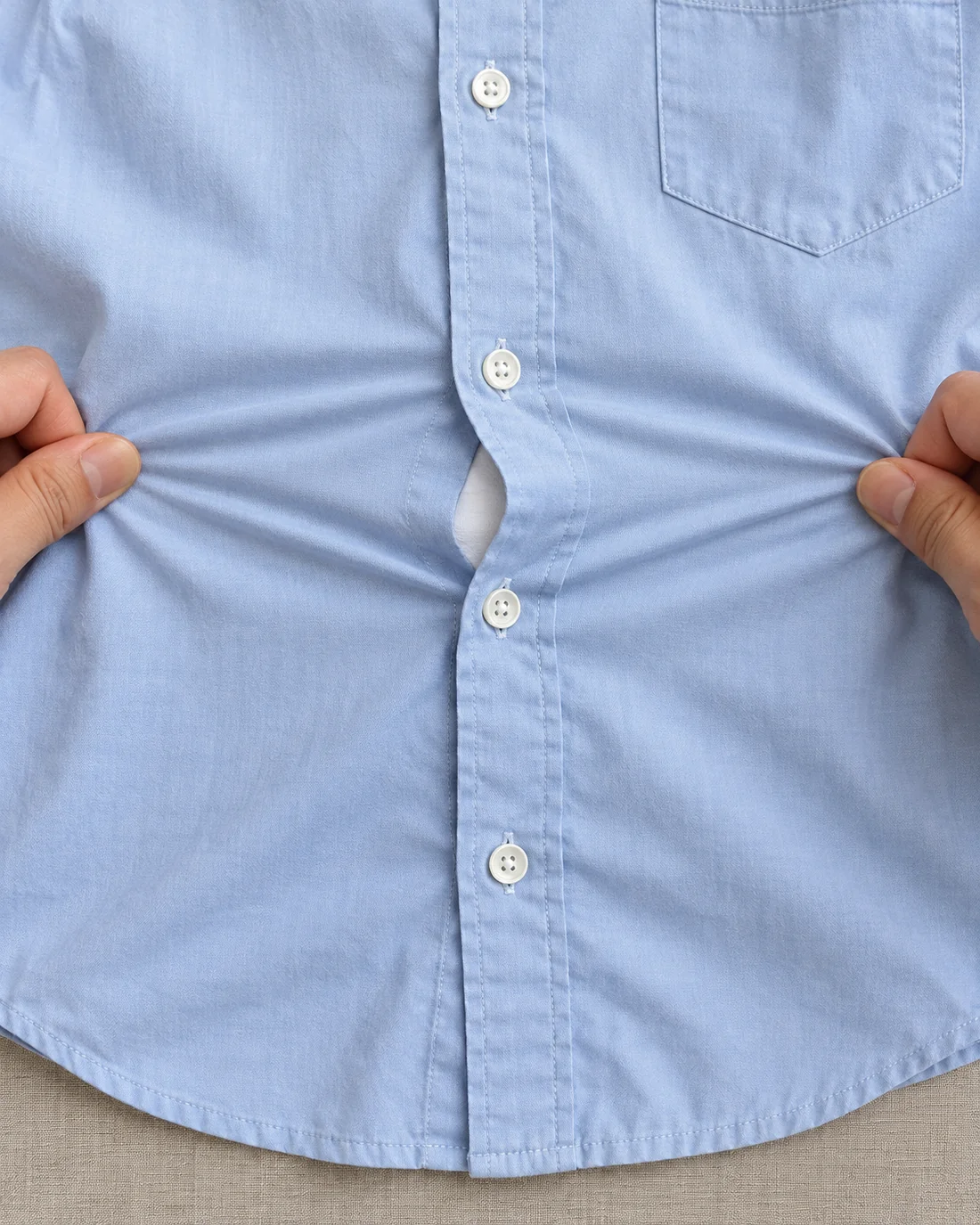
Button the shirt normally and let it hang. Avoid pulling both front panels down to flatten the placket for the mirror. Reach forwards and sit down. Observe whether one section opens or several buttons appear under tension.
Also check how the shirt is tucked into your trousers. Fabric held firmly at the back can create extra tension as you reach forwards. Untuck the shirt and repeat the movement. This helps distinguish a problem caused by the combination from a fit issue that remains when the shirt hangs freely.
Compare size and cut separately
A larger size can provide more room but may also change the shoulders and sleeves substantially. Assess the whole fit rather than the placket alone. A different cut that distributes its room differently may work better than a larger version of the same design. The spacing between buttons also affects where an opening appears.
Consider the fabric. A soft material falls differently from firm poplin, and a stretch component does not guarantee that every movement will be tension-free. Try the shirt with the underwear or underlayer you intend to use. Additional layers can change the room available inside it.
A solution needs to work during the day
You might choose to wear the shirt open over a top. That creates a different outfit rather than secretly repairing a fit intended to be worn closed. If you need the shirt fastened, temporary attachments should not carry all the tension. A professional alteration can be considered, but it will not suit every construction.
For a new shirt, comparing an alternative that already passes the movement test is worthwhile. With an existing favourite, first explore whether wearing it open or tucking it differently gives it another use. The useful result is being able to move without continually checking the button placket, rather than achieving a smooth appearance only while standing perfectly still.