Bring the intended socks
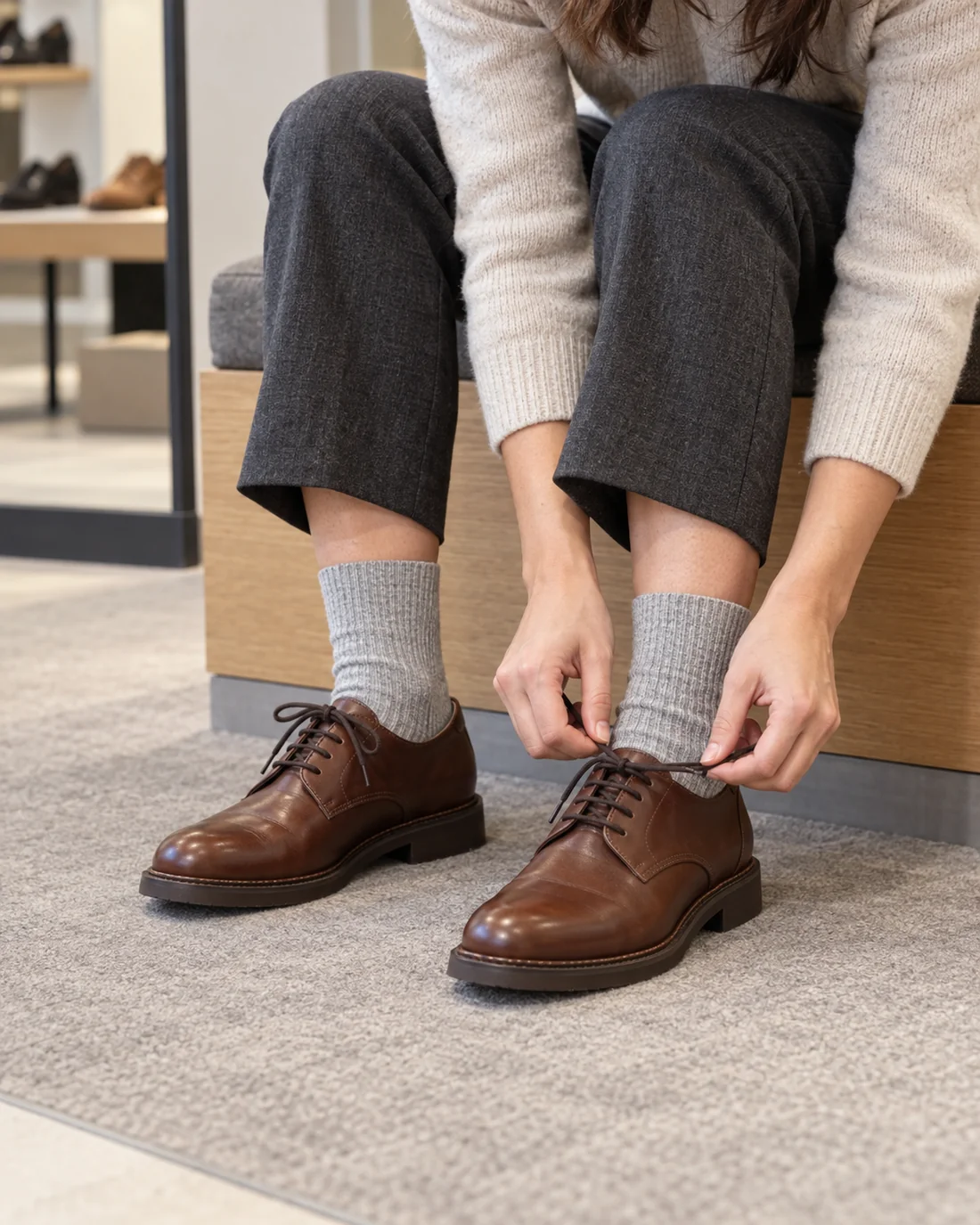
Choose a clean pair with the planned thickness and shape. A cuff or seam sitting awkwardly can interfere with the fitting. Smooth the sock first and then compare the shoe. If you intend to use different sock types, try them one after another rather than wearing one type on each foot.
Try both shoes. Fasten laces, straps or other adjustable parts as you would in daily use. An unfastened shoe does not show how it fits closed. Notice whether adjustment is straightforward or already at an extreme with little room for variation.
Stand and walk a few steps
Place weight on both feet and walk on a suitable clean surface. Check whether your toes have comfortable room, the heel slips out noticeably or an edge presses firmly. A brief fitting cannot predict every long day, but it can reveal obvious problems.
Do not judge fit solely by a general finger-width rule. Shape, closure and intended use differ. If one size feels close at the front and the next is much too loose at the back, another shape may help more than choosing between those two. Avoid dismissing discomfort solely in the hope that breaking the shoes in will resolve it.
Check the outfit and intended journey
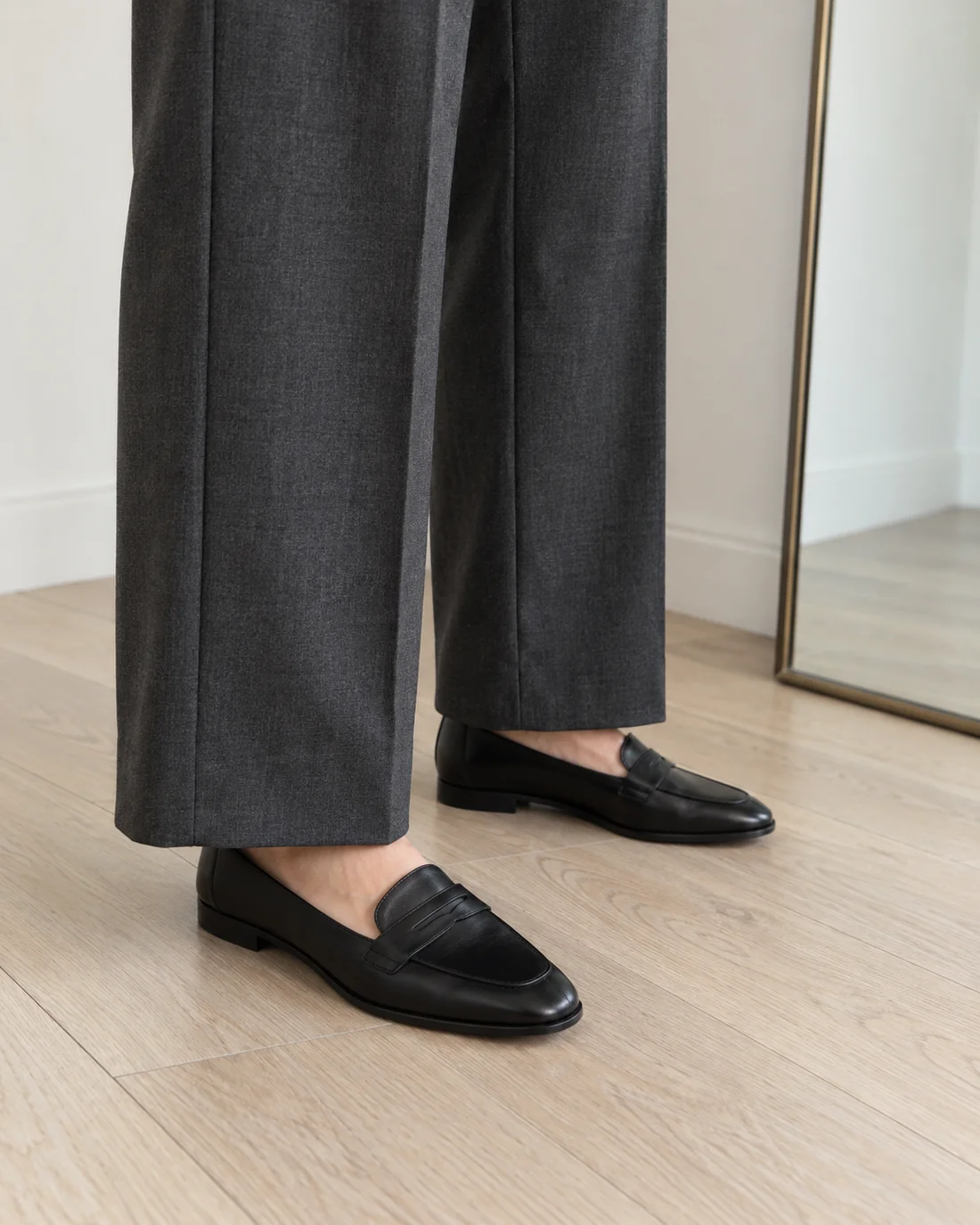
Wear the planned trousers or skirt too. A hem may catch on the shoe, and the visible sock height may differ from what you expected. Walk a few steps in that combination as well. Appearance and comfort can then be assessed together.
If choosing an unfamiliar shoe shape for an occasion, allow a clean indoor try-on in accordance with the retailer's conditions. A long outdoor test is not needed to discover an uncomfortable fastening or a sock that continually slips. A suitable alternative is more useful than an outfit whose shoes you want to avoid from the start.
Record the result specifically
With a successful pair, note the socks used and the lacing adjustment. Those details can explain why the same shoes feel different with another combination later. The size label alone does not contain that information.
A styling fitting is not a professional assessment of persistent discomfort. For choosing in a shop, the immediate aim is straightforward: shoes that feel comfortable with the intended socks and normal movements, without treating obvious pressure as an unavoidable part of buying them.