Find the intended position
Fasten the skirt and let it sit where the cut places it. A hip-sitting design does not need pulling up to the waist, and a skirt cut for a higher position may hang differently when worn lower. If you want to change its position, include the side seams, pockets and hem in the assessment.
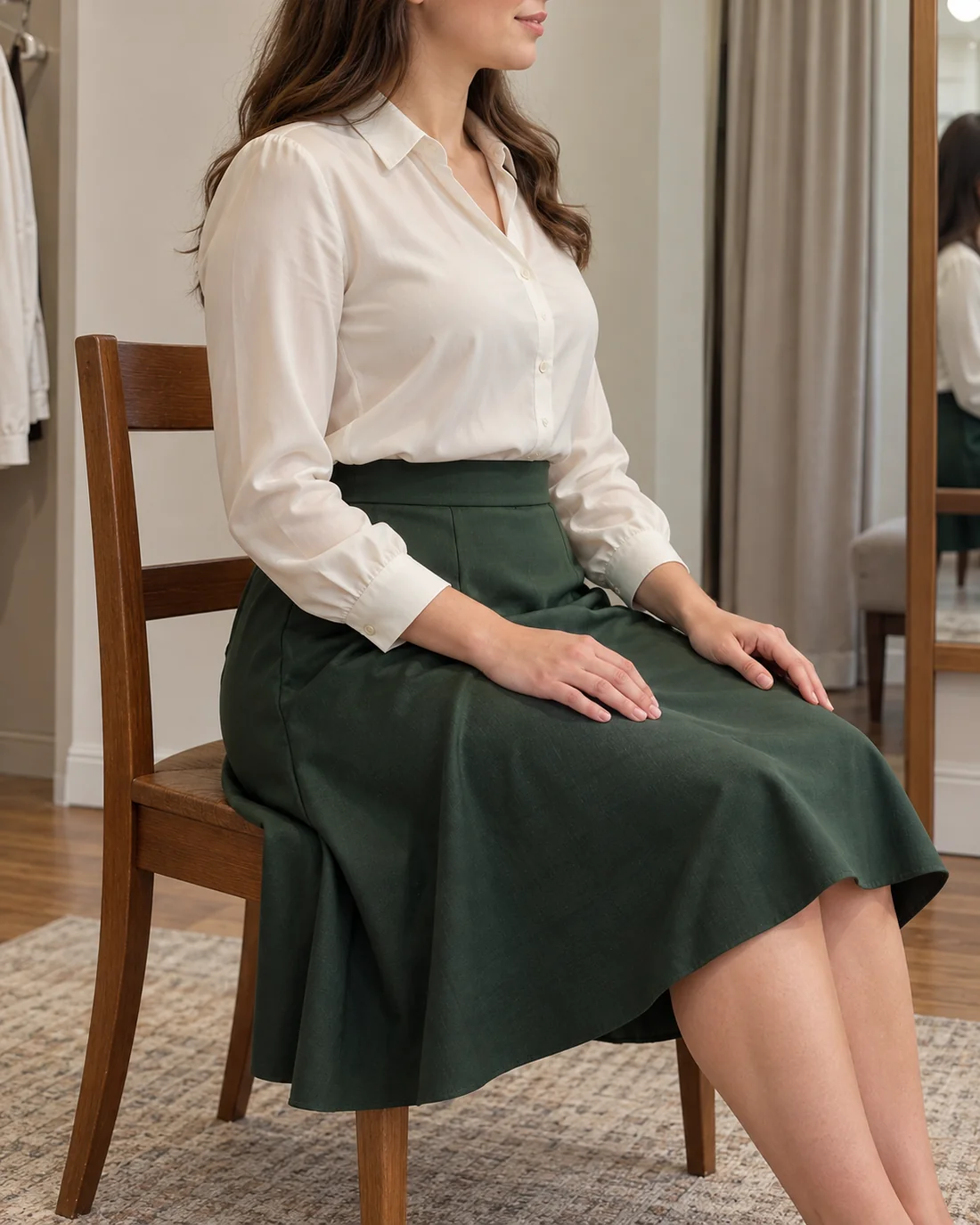
Tuck in the top if that is part of the planned outfit. Doing so changes the space needed at the waistband. Trying the skirt with a very thin top is not a complete test for an outfit involving a full blouse. Distribute the fabric rather than gathering a large fold beneath one part of the band.
Sit, stand and sit again
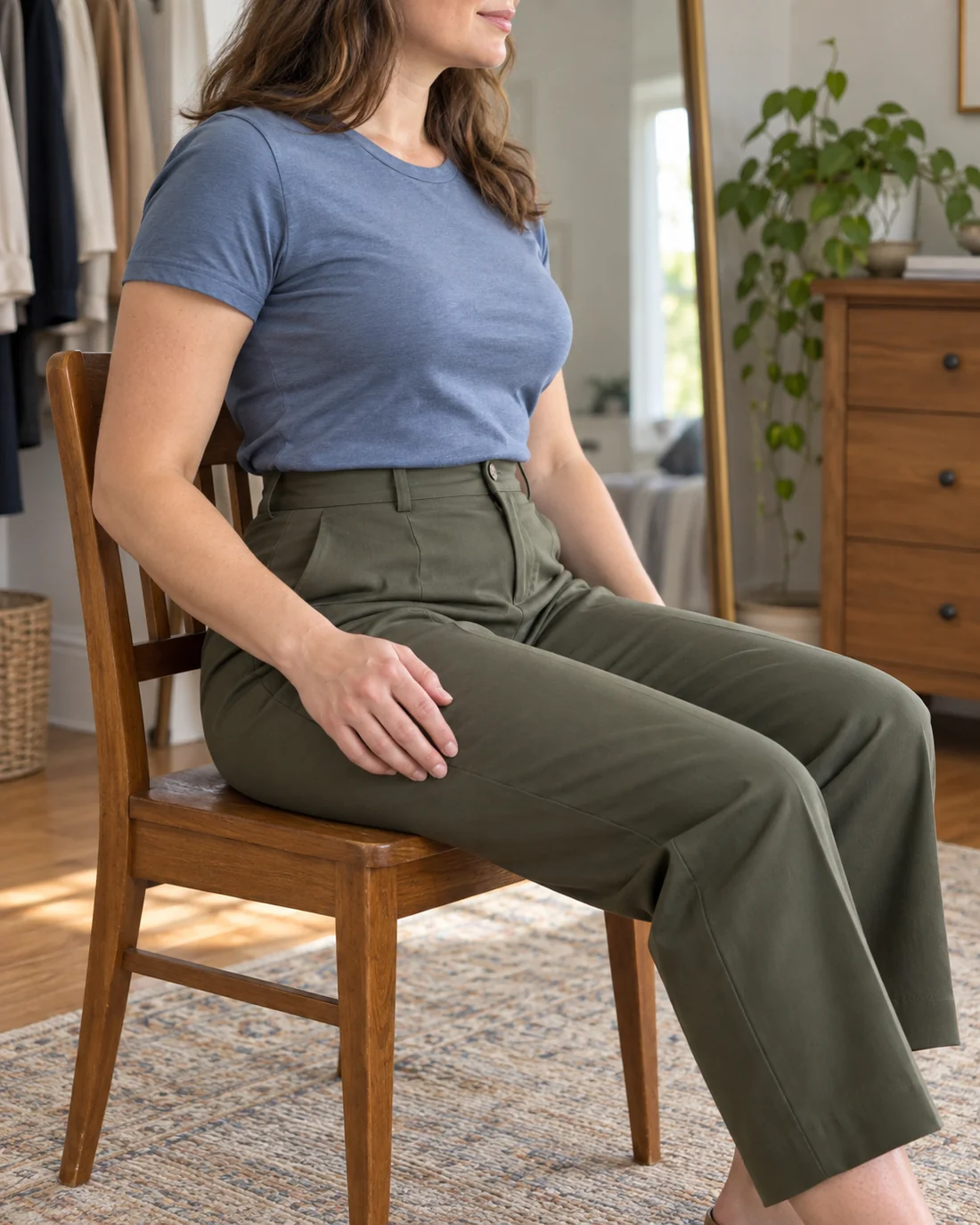
Remain seated for a few minutes. Notice whether the band digs in, rolls over substantially or pushes the skirt upwards. An elastic waistband is not automatically comfortable; its width and tension matter too. Check whether a fastening or internal seam creates a particular pressure point.
Stand up and see whether the skirt settles again. If it needs twisting straight or pulling down every time, compare another size or waistband shape. A belt only helps if the skirt remains comfortable with it and does not develop unwanted bunching elsewhere.
Waistband width is not the whole fit
A tight area at the hips or seat can push a skirt upwards even when the waistband itself has room. Look at the overall drape. Pulling lines or pockets that gape noticeably are reasons to make a comparison, not reasons to remain as motionless as possible during the fitting.
If you are considering a small alteration, establish the work involved before buying. A lining, zip and pocket construction can affect what appears to be a simple waistband adjustment. Choose a skirt whose fit works for your day rather than only the one that looks smoothest in the first standing moment.