Begin with relaxed arms
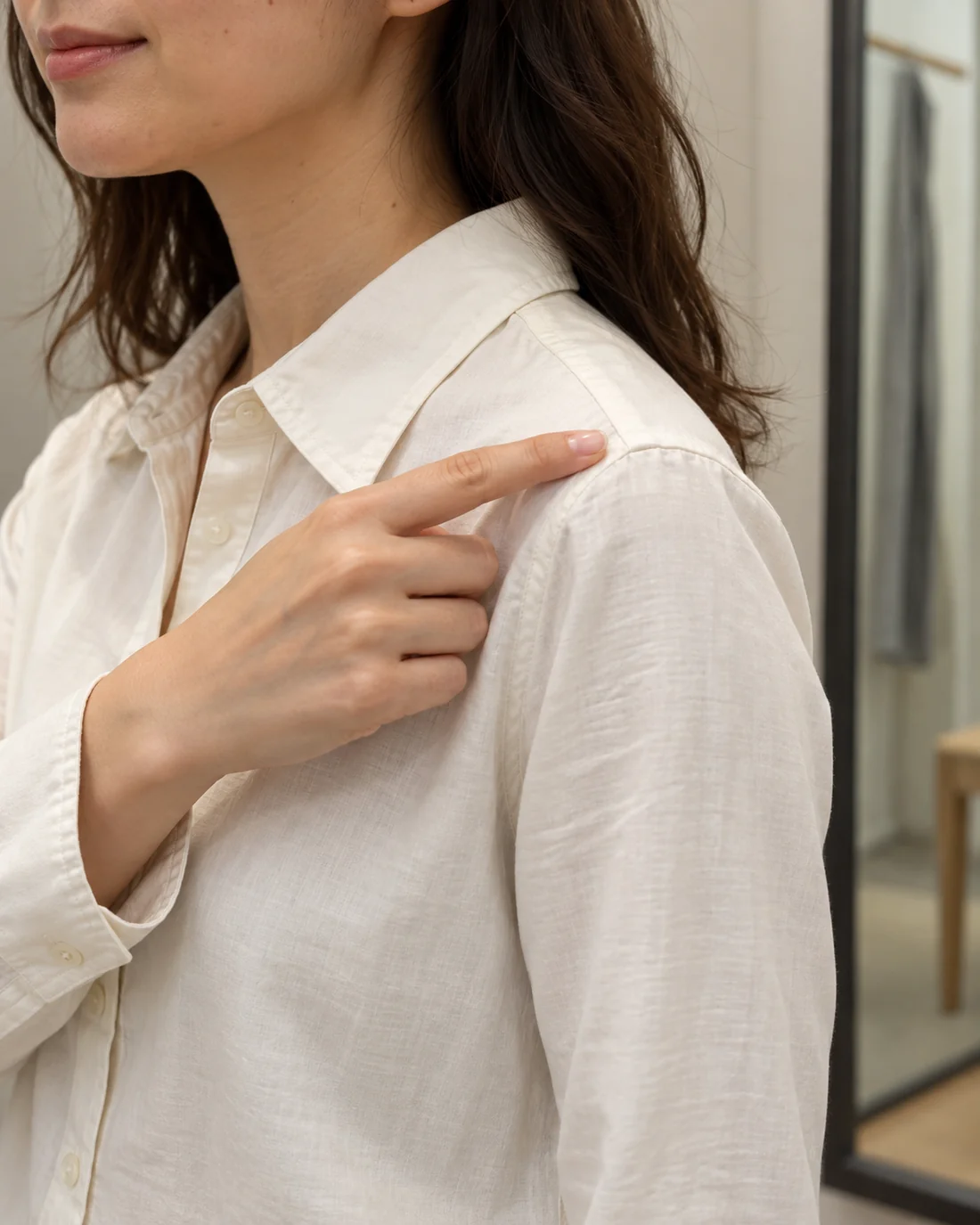
Put each layer on normally and settle the sleeves. Let your arms hang without raising your shoulders or pushing the sleeves back briefly for the mirror. An elastic cuff can hold length differently from a wide, open sleeve ending.
Then bend your arms. A shirt sleeve moves differently from a lined jacket sleeve. If you want the shirt cuff visible, check with straight and bent arms. The visible amount does not need to stay identical through every movement. It simply should not depend on an arrangement that immediately slips out of place.
Use your hands
Pick up a bag, use your phone and rest your hands on a table. Excess fabric over the fingers can interfere with these actions. If you intend to turn a sleeve back, test whether the fold stays instead of holding it briefly. Also check whether that creates too much bulk at the wrist.
A coat sleeve may appear shorter with thick knitwear beneath it because the extra volume uses more space. Compare the actual layers you plan to wear. Testing over a thin top does not establish how the combination will sit on a cold day.
Inspect details before an alteration
Buttons, splits, lining and distinctive cuffs affect a proposed shortening. Have the work assessed where necessary rather than assuming it will be simple. Some details cannot be moved upwards freely without changing their appearance or function.
Finally, remember which combination you tested. “The sleeves fit” is more precise when it is clear whether that means the shirt alone or the shirt, jacket and coat together. This avoids turning one measurement into a rule for every layer and makes later comparisons easier when you change only one of the garments.