Check the dress on its own
Put on the dress with the underlayers you actually intend to wear. Walk a few steps and sit down. If the fabric rides up, a side seam twists or a hem shows through, adding another top may not solve the underlying problem. Check the straps too: the neckline should remain where you want it without repeated adjustment.
A bias-cut dress may hang differently from a straight-cut one. Judge the piece in your wardrobe rather than assuming it will behave like a similar dress in a photograph. With a close-fitting shape, an open layer on top often leaves more room for movement than a fitted shirt underneath.
Three different directions
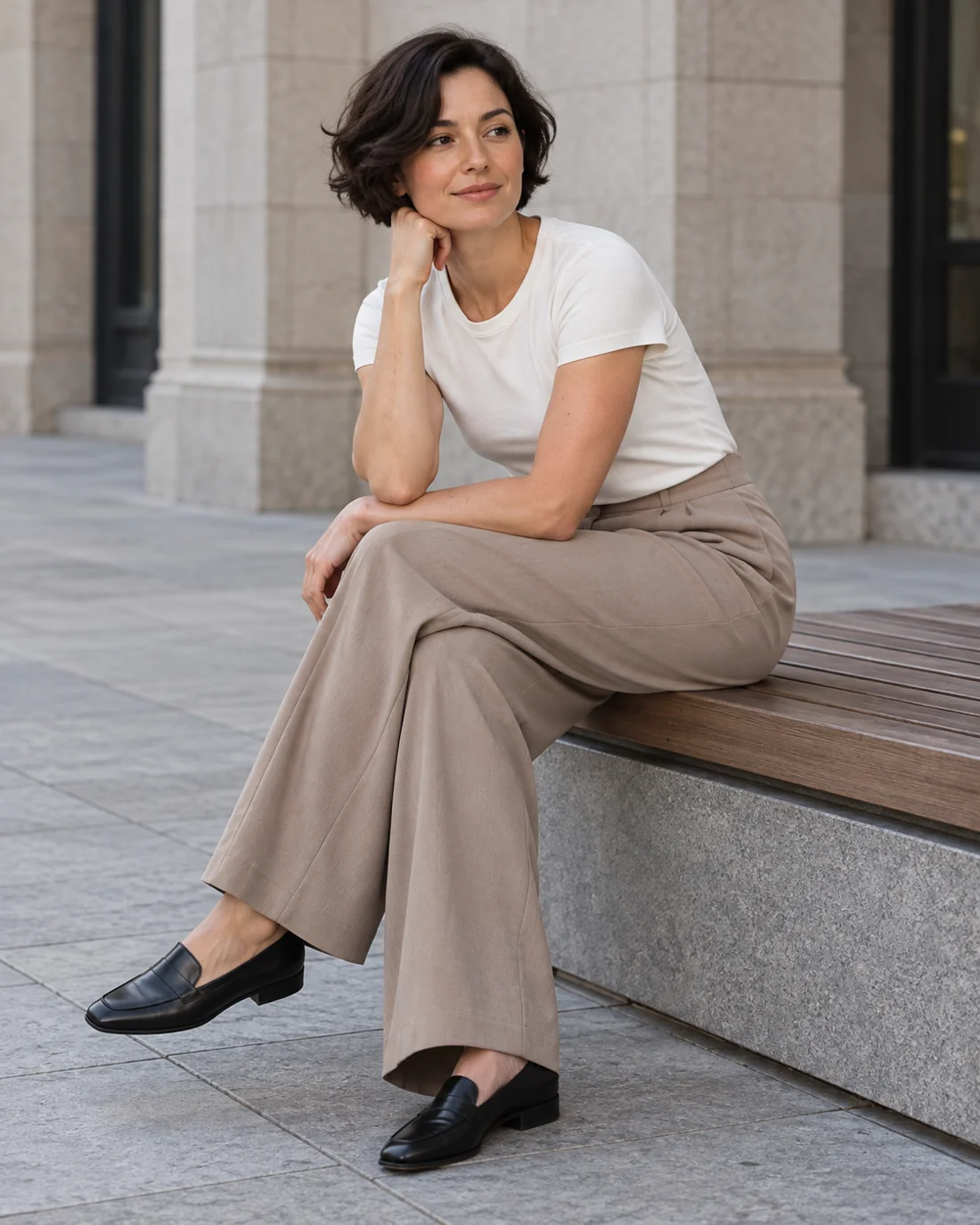
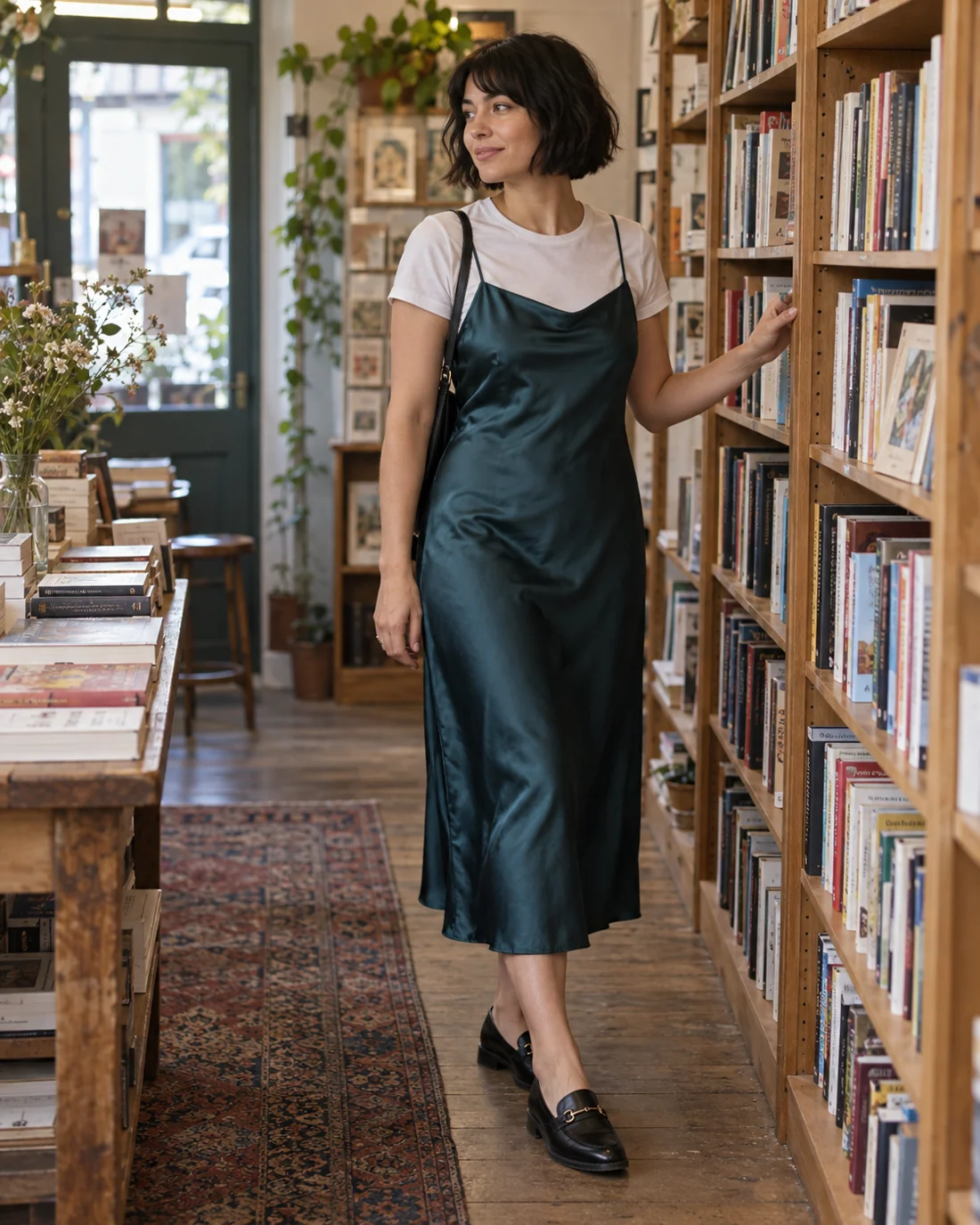
A plain T-shirt underneath turns the dress neckline into a distinct second line. Start with a tee without bulky side seams, and sleeves that do not gather beneath the straps. A crew neck creates a different effect from a high collar; either can remain visible when the edges are deliberately arranged.
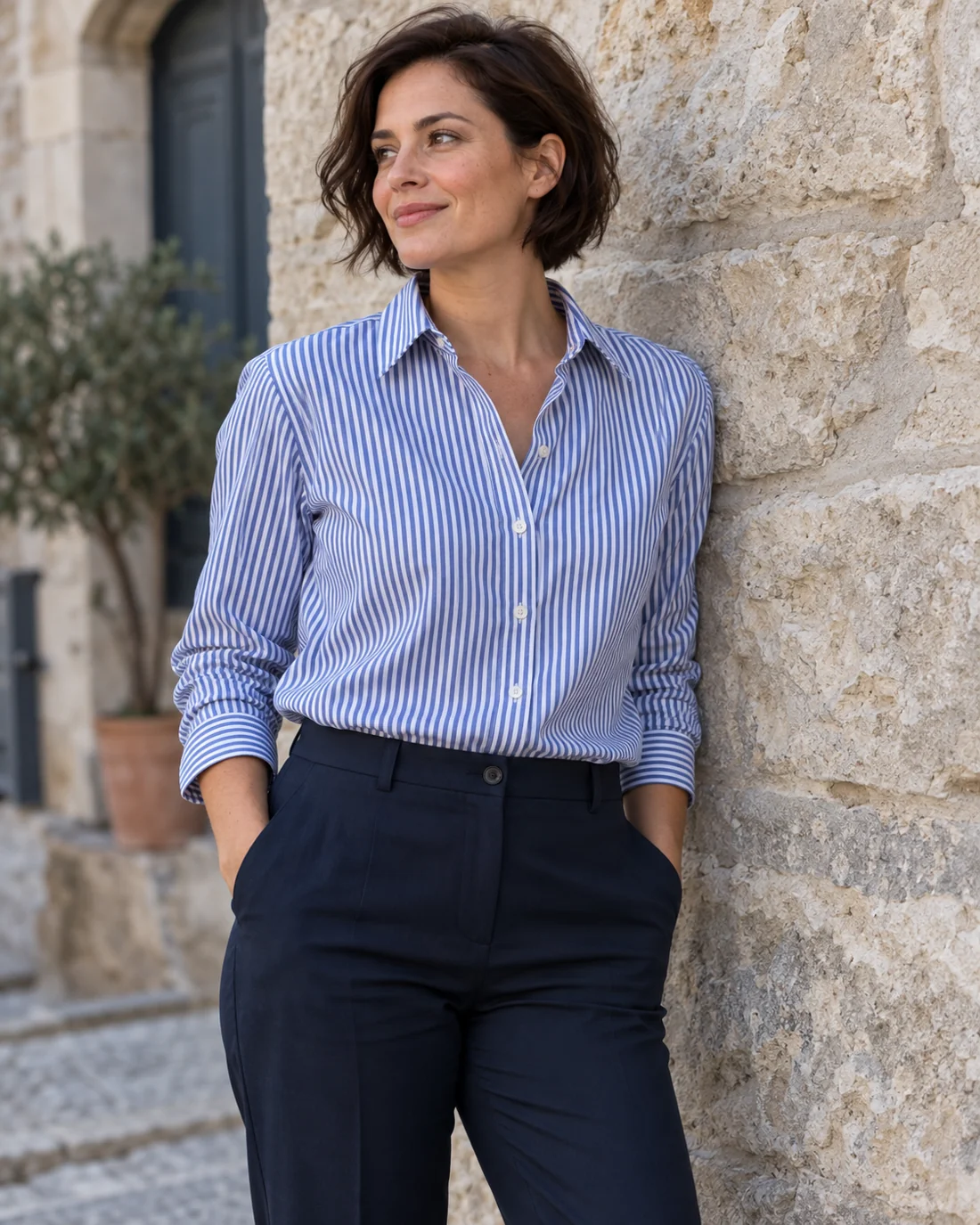
An open cotton shirt leaves the front of the dress exposed. Roll the sleeves only as far as they stay securely during movement. A shirt ending around the hips interrupts the long dress earlier than an extended overshirt does. Try both with the same shoes so that you can judge the change clearly.
A jumper over the top makes the dress read more like a skirt. Its lower edge should not continually climb over the slippery surface. A short, loose jumper can be easier to manage than a long, close band that catches against the fabric.
One dress for two daily plans
For a day involving plenty of sitting, compare a dark slip dress, an open pale shirt and closed flat shoes. The shirt can come off indoors, so you should enjoy the dress alone too. If you prefer continuous shoulder coverage, try a tee beneath instead. That decision changes handling more than another piece of jewellery would.
For an evening with a short outdoor journey, a jumper over the dress may work, then come off later. Consider hair, glasses and jewellery during removal. A cardigan is an alternative if you do not want to pull a layer over your head. It creates a different visible front but may serve the actual sequence better.
For both versions, consider where the removed layer goes. A generous shirt stores differently from a thick jumper. Put it inside the intended bag as a trial before calling the outfit complete. You are then choosing a wearable sequence for the day rather than only an image.
Finish with shoes and a bag
Flat sandals suggest a different everyday setting from closed trainers or ankle boots. Check the actual hem clearance while walking, particularly on stairs. The shoes need not repeat a prescribed colour. A matte bag can already echo the change in texture, without requiring more jewellery.
Hang a successful combination together or photograph the complete outfit. Include a note about the tee or underwear beneath it. With a thin dress, that largely hidden layer can determine whether you can put the outfit on again without another lengthy fitting session.