Check the surface first
Look at the skirt in daylight with the intended underwear. Thin or shiny fabrics may reveal seams and edges more clearly than they do on a hanger. Choose an arrangement you feel comfortable with and test it while seated. An extra layer beneath should not roll or move upward while walking.
Touch the skirt with the planned jumper. Coarse knit surfaces, projecting fastenings or a rough bag can catch the fabric. When materials cling to each other, the intended line changes. Another top or a different bag position may solve this more easily than constant smoothing.
Cotton as a quiet counterpart
A plain T-shirt creates a clearly different surface. Try it loose over the waistband first. If it covers too much of the skirt for your taste, tuck a small front section or choose a shorter existing shirt. A thick bundle at the waistband is often more visible with a fluid skirt.
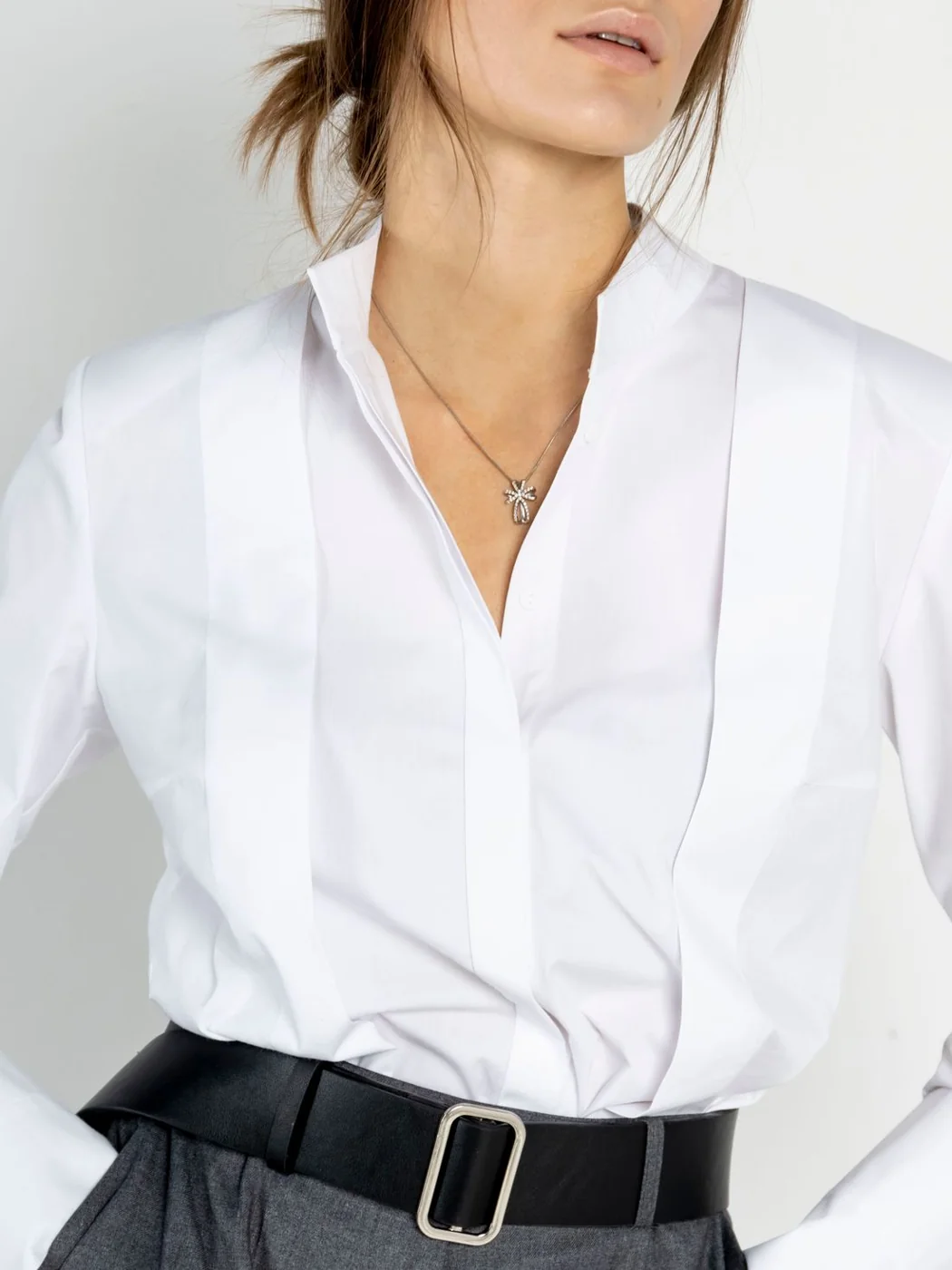
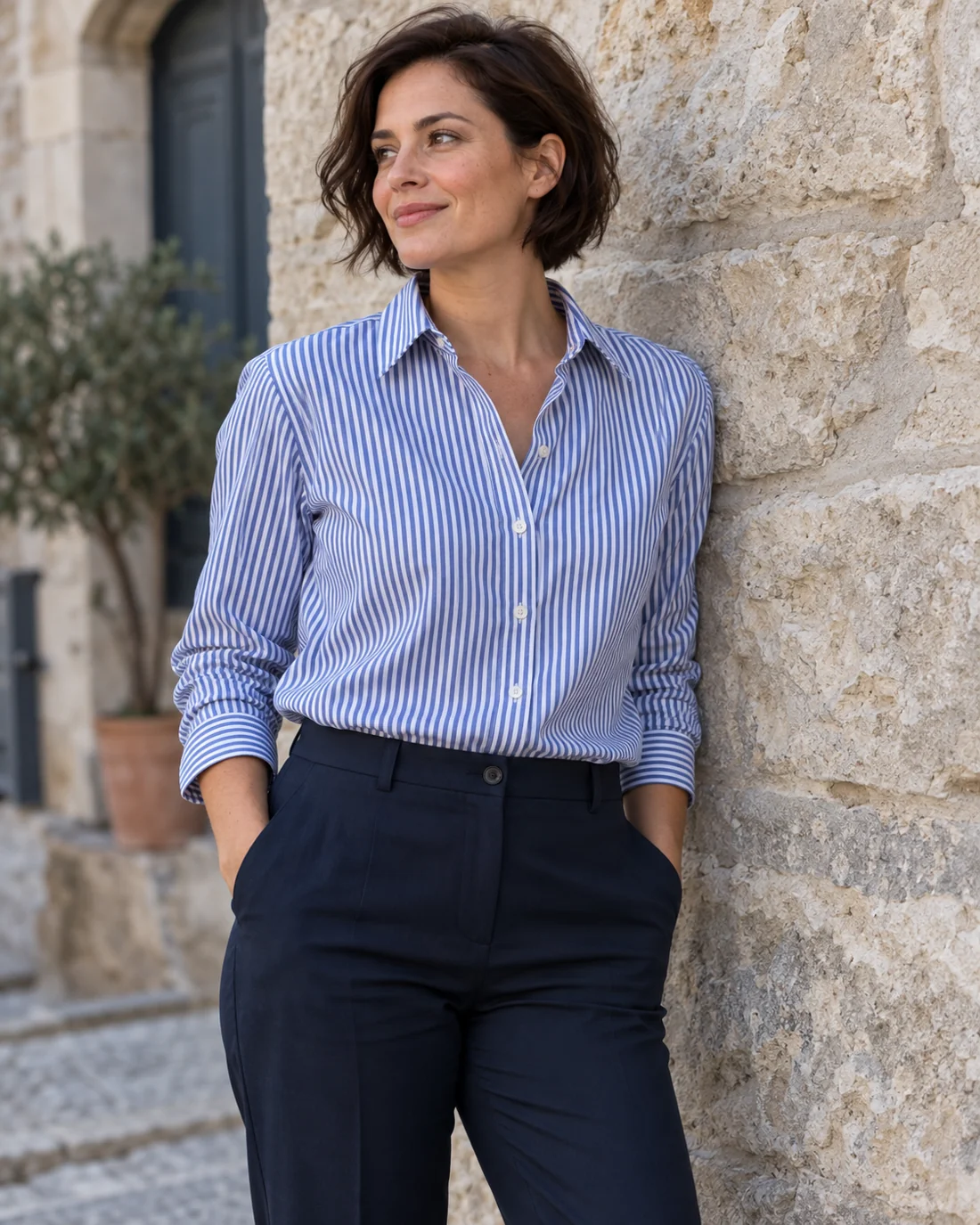
You can button a shirt or wear it open over a simple top. The open version divides the upper area. Check whether the shirt ends move with the skirt or catch against it as you walk.
Choose knitwear by weight
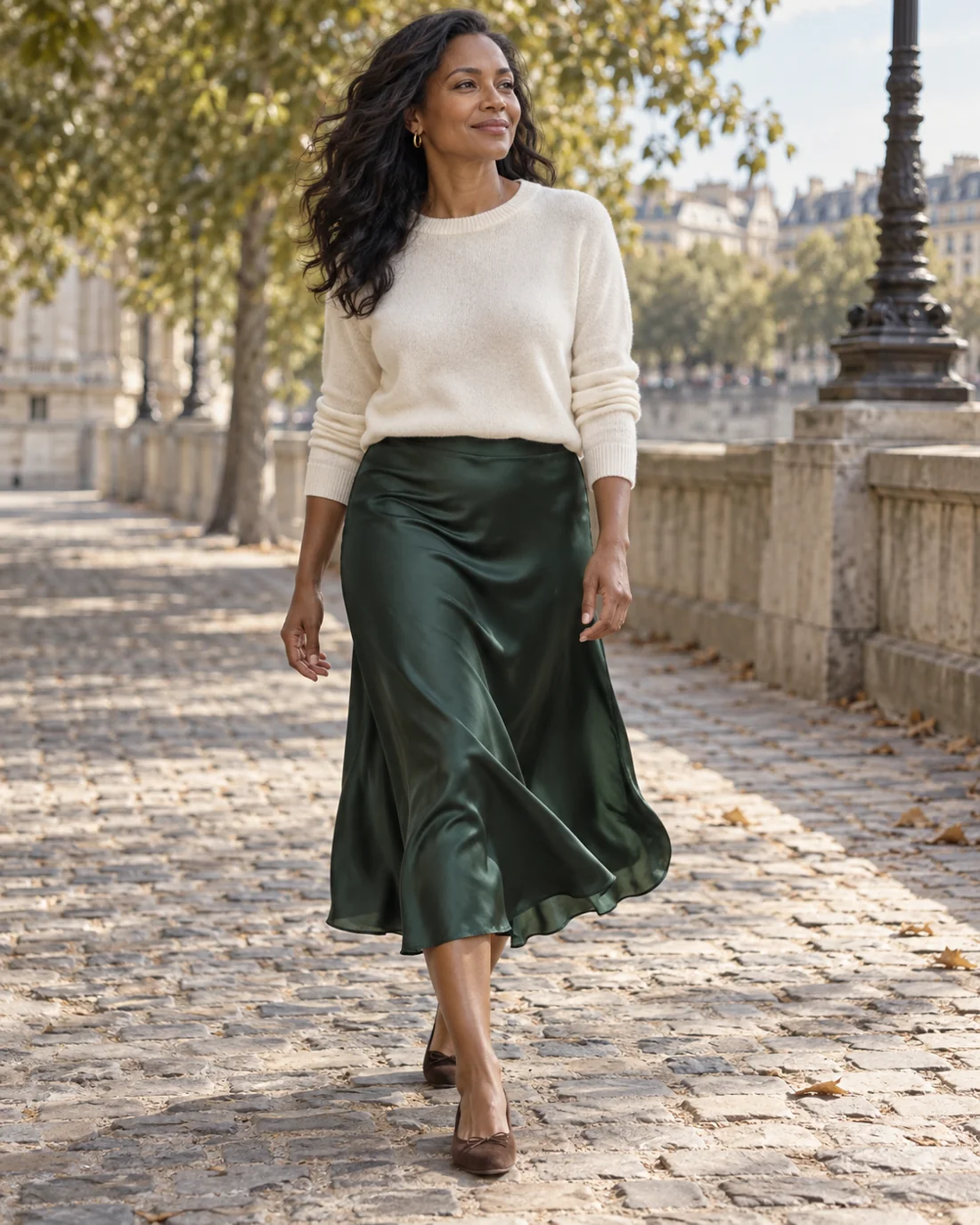
A fine jumper falls differently from heavy, coarse knitting. Either may work, but they create different transitions. A shorter hem on heavy knitwear can leave more skirt visible. Fine knitwear may create a longer loose line. Decide from the actual combination rather than a fixed rule.
Walk in the intended shoes and step upward. The skirt needs to move freely without catching beneath the shoe. Finally, check the outer layer. A long coat can hold the fabric differently from a short jacket, making a complete fitting more useful than a photograph of the top alone.
Try a quiet colour sequence
Place a fluid skirt in a medium shade beside a pale cotton T-shirt and a darker jumper. Both tops can frame the same skirt differently. The pale shirt creates a clearer upper area, while darker knitwear may make the combination quieter. Decide from the worn view because the amount of fabric on a hanger can mislead.
If you need another jacket, test the chosen version first and add the jacket afterwards. Otherwise, too many things change at once. An existing short blazer can work if its edge does not catch on the skirt. A soft cardigan may feel better when much of the day is seated.