Light shades are not identical
Cream, cool grey, sand and an almost white beige can look very different beside the same trousers. Hold the coat next to a white tee and your most frequently worn dark trousers in daylight. You do not need to identify an official colour season. It is enough to notice which existing colours you enjoy beside it.
A clear contrast, such as a pale coat over a dark outfit, makes the central area distinct. Similar pale shades connect the pieces more closely. Either can work. With nearly matching colours, decide deliberately whether you like the small difference rather than treating it as an automatic mistake.
The opening is part of the outfit
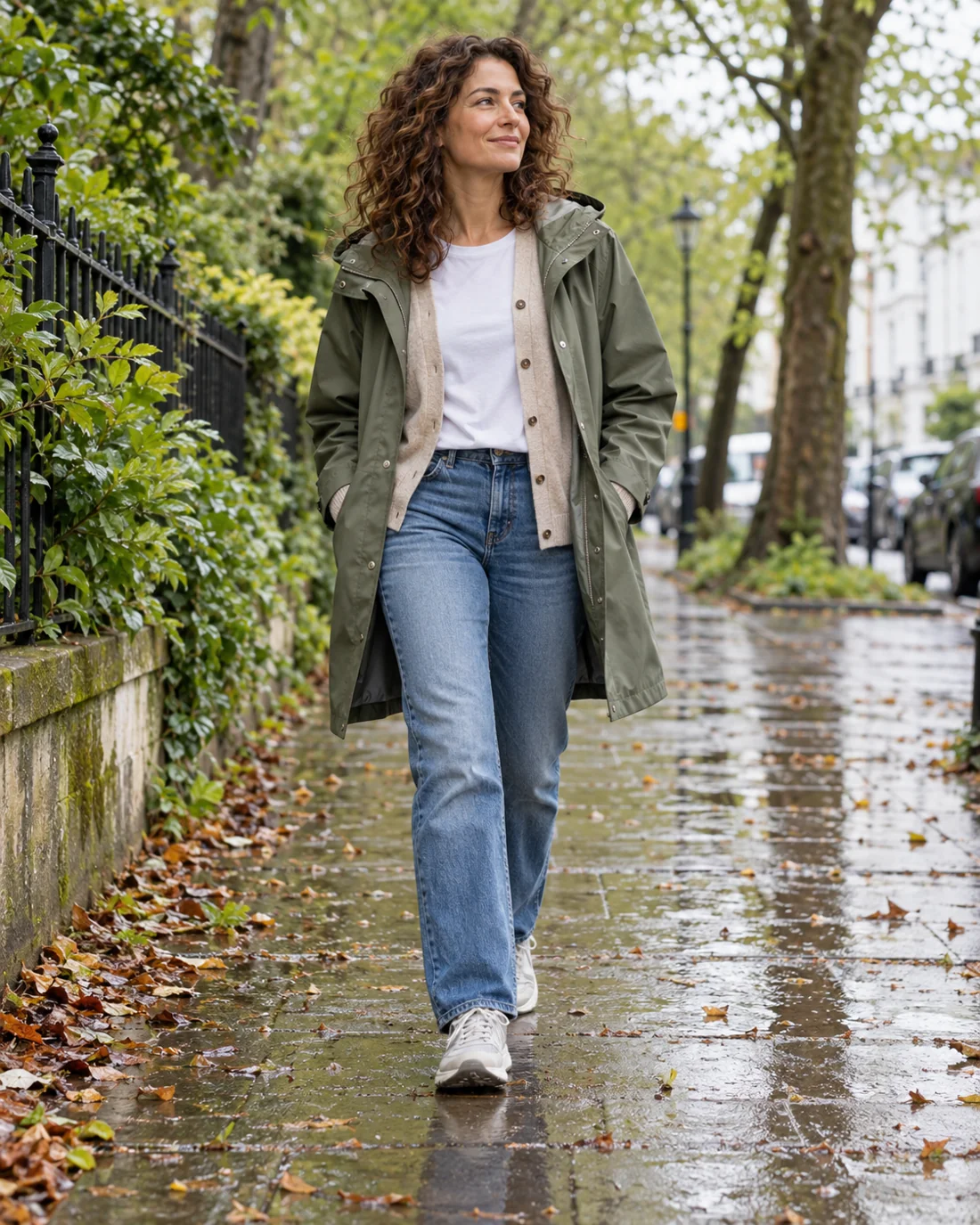
An open coat reveals a long strip of the clothes beneath it. A continuous colour there looks different from a light top above dark trousers. Fasten the coat next: now the collar, shoes, bag and any visible trouser hems provide most of the connection.
If you usually wear the coat closed, you do not need to coordinate every hidden garment with it. Focus on the areas that remain visible. A scarf can change the join around the neck, but need not be added simply because a pale garment supposedly demands an accent colour.
Footwear and everyday marks
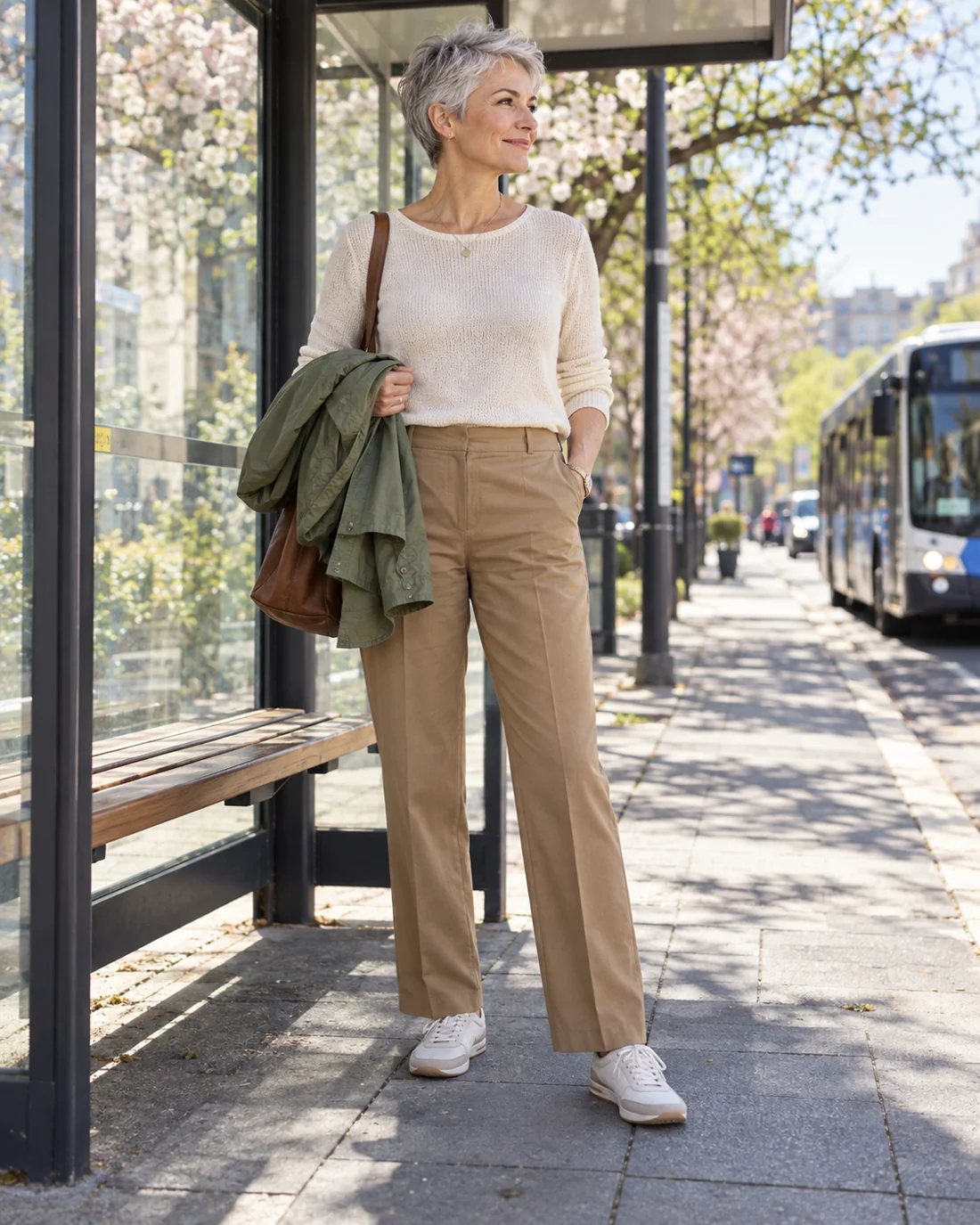
Pale trainers connect differently from dark ankle boots. Begin with footwear suited to the planned journey. A dark bag can echo dark shoes without matching them exactly. View the outfit from a distance so that tiny colour variations do not receive more attention than its overall shape.
Consider where the coat will be placed during the day too. A light hem can touch dirty chair legs, bags or wet surfaces. That is not an argument against the colour, but a reason to check length and handling. Follow the coat's label for care; avoid improvised stain treatments chosen only because its colour is pale.
When two existing combinations work, record them in full. One can remain very simple. The coat does not need a completely new role in every outfit to become something you wear regularly.