Divide the day into situations
First identify the longest period outside and the longest period indoors. A ten-minute walk from a car to a building differs from half an hour on foot. Do not look only at the forecast maximum temperature. The timing of your commute, wind and opportunities to take shelter influence the outer layer you actually need.
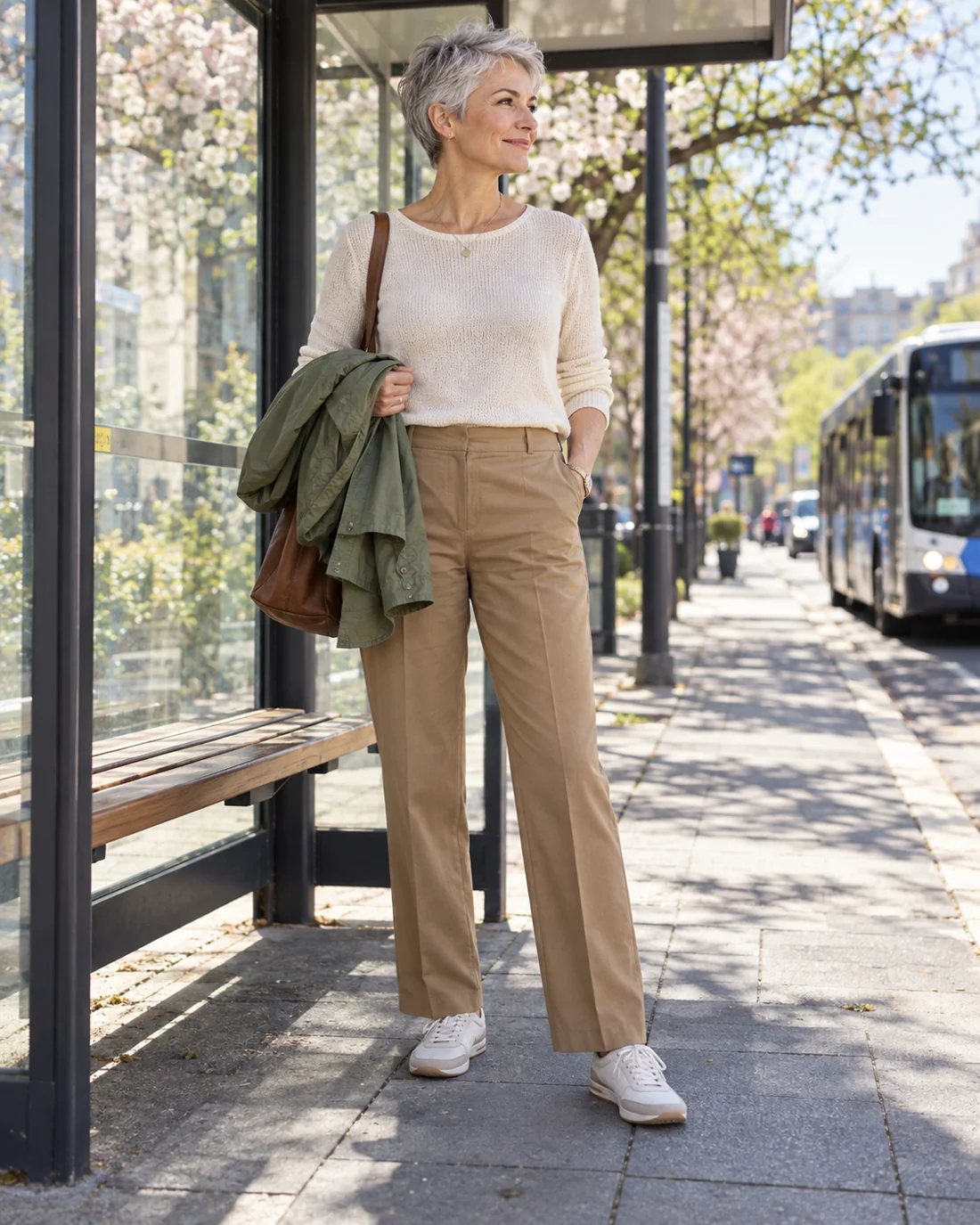
Imagine where removed clothing will go too. Is there a cloakroom, a roomy bag or only a free arm? An extra layer that cannot be carried or stored conveniently soon becomes a burden. Rather than choosing three jackets just in case, give the pieces you already own distinct jobs.
The inner outfit must work alone
First put on what you would wear in the warmest indoor setting. That might be a long-sleeve tee and trousers or a blouse and skirt. Check this outfit completely, including neckline, underwear and footwear. If you feel uncomfortable without the jumper above it, you may keep that jumper on despite being too warm.
With a shirt beneath knitwear, the fabric needs to sit properly beyond the visible collar. Removing the jumper reveals the back, sleeves and button placket as well. A glance after a few minutes of sitting shows whether this layer still looks as you want it to when worn alone.
Simplify a combination deliberately
If several possible layers create a long morning decision, place two complete versions side by side. In one, a cardigan replaces the jumper; in the other, only the shirt remains beneath the outerwear. Put on each complete version and rehearse the longest outdoor section and sitting at the destination. You are comparing an actual job rather than an abstract idea of warmth.
Note which pieces remain in your hands during the change. A bag that just holds the cardigan may already be full once a scarf is added. If you often carry papers or shopping, that space requirement belongs in the decision. One fewer layer can improve handling when the remaining outfit still suits the conditions.
For a day with an unfamiliar indoor setting, prepare a version that adjusts easily. This does not mean taking everything just in case. Choose a middle layer that opens or comes off and keep the rest straightforward. Uncertainty is addressed through a concrete adjustment rather than the maximum number of garments.
Choose an adjustable middle
A cardigan can open without being removed immediately. A jumper does not offer that small adjustment but may suit your clothes and habits better. Decide by handling rather than a fixed ranking. If you move between rooms frequently, an easily reached fastening may matter more than the exact colour.
Test whether the middle layer slides over the sleeves and shoulders. A wide shirt beneath a close cardigan creates folds that may increase when you add another jacket. Try the pieces together, raise your arms and reach for an object. Each layer needs enough space for the one beneath it.
Lengths do not have to become progressively shorter. A visible shirt hem under a cropped jacket can be deliberate. The important point is that nothing catches on pockets or zips. Check the back in particular, since it is less easy to see while dressing.
Choose the outside layer for the journey
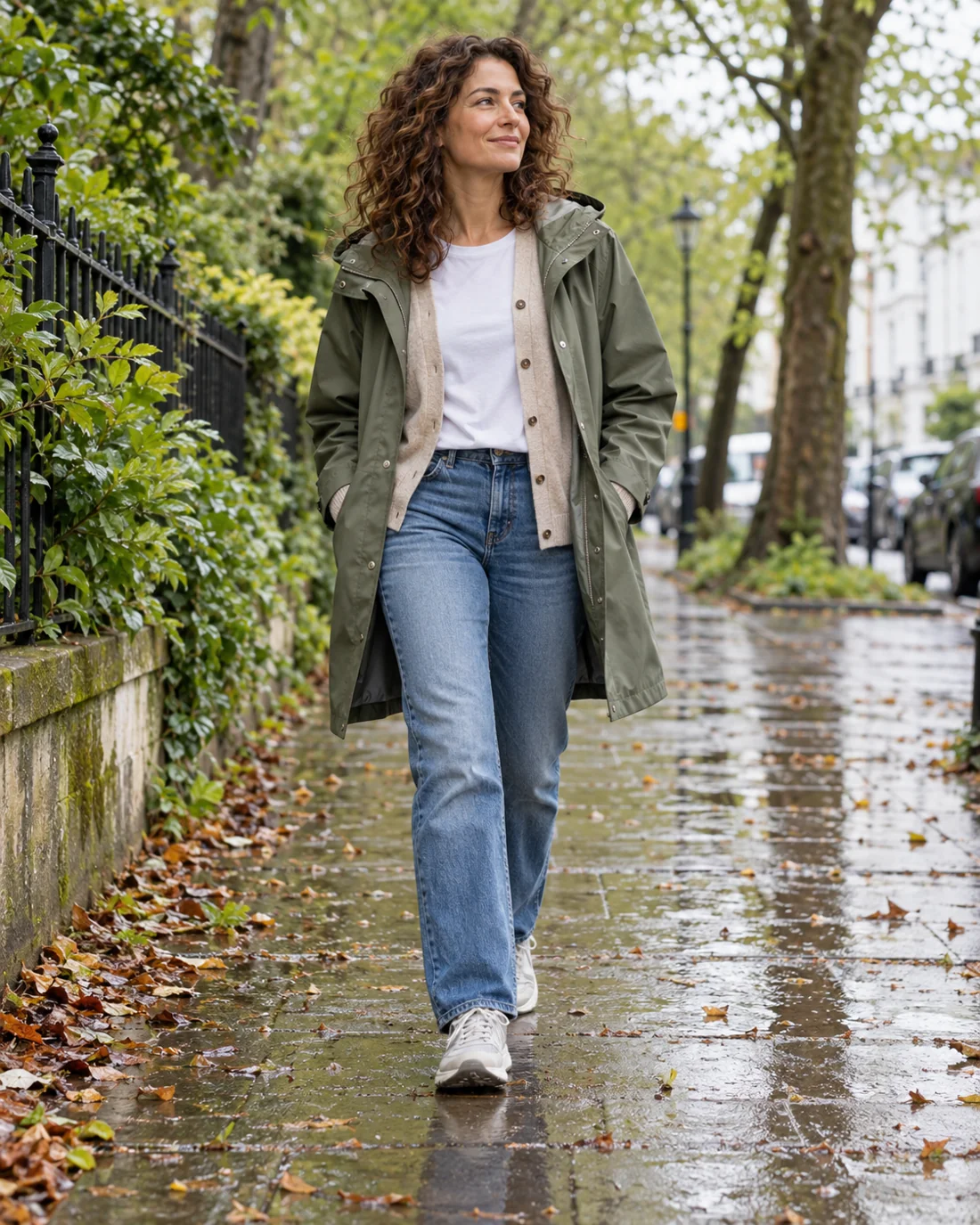
If rain is possible, the jacket's actual suitability matters more than its sporty appearance. Read its product information when you expect protection from wet weather. A smooth fabric or a hood alone does not establish a particular level of waterproofing. An umbrella may fit a short journey; strong wind changes how convenient it is to use.
Put the outer layer over the complete outfit and fasten it. Pressure around the upper arms, a stretched back or a jumper pushed upwards indicates too much volume in the combination. Replace one layer rather than planning to leave the outer jacket open for the entire day.
Make a concrete comparison
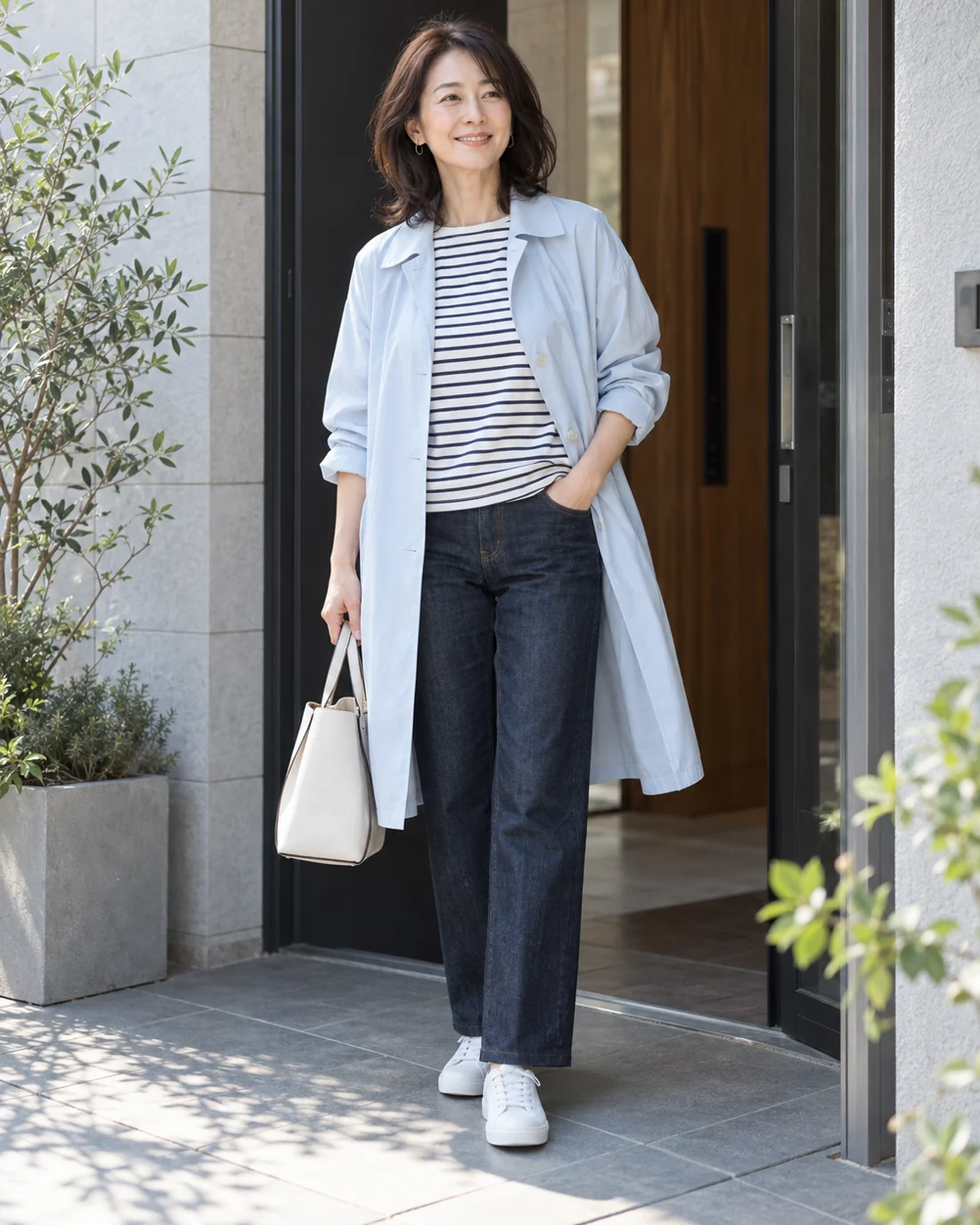
For a walk followed by a warm workplace, start with a cotton shirt, fine cardigan, straight trousers and a suitable rain jacket. Indoors, the shirt and trousers remain a complete outfit. The cardigan can go over a chair back if it does not obstruct anything, or fold into a bag.
For a day spent mainly inside, that arrangement may be excessive. Compare the shirt with a single outer jacket instead. The aim is not the largest possible number of layers, but a combination whose versions suit the actual timetable. After wearing it once, note which layer remained unused and which one you missed. That small observation gives you a more useful starting point next time than copying a fixed seasonal formula.