Identify the existing base
Place your most-used trousers, jackets and shoes together. Your base may be mainly black and grey, or navy and beige. Each gives a different starting point. A rust top beside black has more contrast than beside a similarly warm brown. Decide which difference you want.
Neutral does not mean that every shade must work with every other one. Two greys can differ noticeably, and a greenish beige behaves differently from a pinkish one. Daylight helps with comparison. Looking at the actual garments together is enough; there is no need to learn an entire colour system.
Begin with a small area
If a shade is unfamiliar, it can appear first in a scarf, bag or visible tee. A small area changes an outfit differently from a whole coat. Compare a burgundy scarf with a grey jacket, for example, then a burgundy jumper beneath the same jacket.
An accessory is not a compulsory intermediate step, however. If you like olive trousers and they work with several existing tops, they can provide the larger area immediately. The question is not whether the colour is sufficiently noticeable, but whether you actually want to wear the combination.
Three concrete starting combinations
Place a burgundy jumper and an existing dark jacket beside grey trousers. Indoors, the jumper becomes the large colour area; outdoors, perhaps only its neckline shows. If that shade matters particularly to you, check both states before looking for more coordinating accessories.
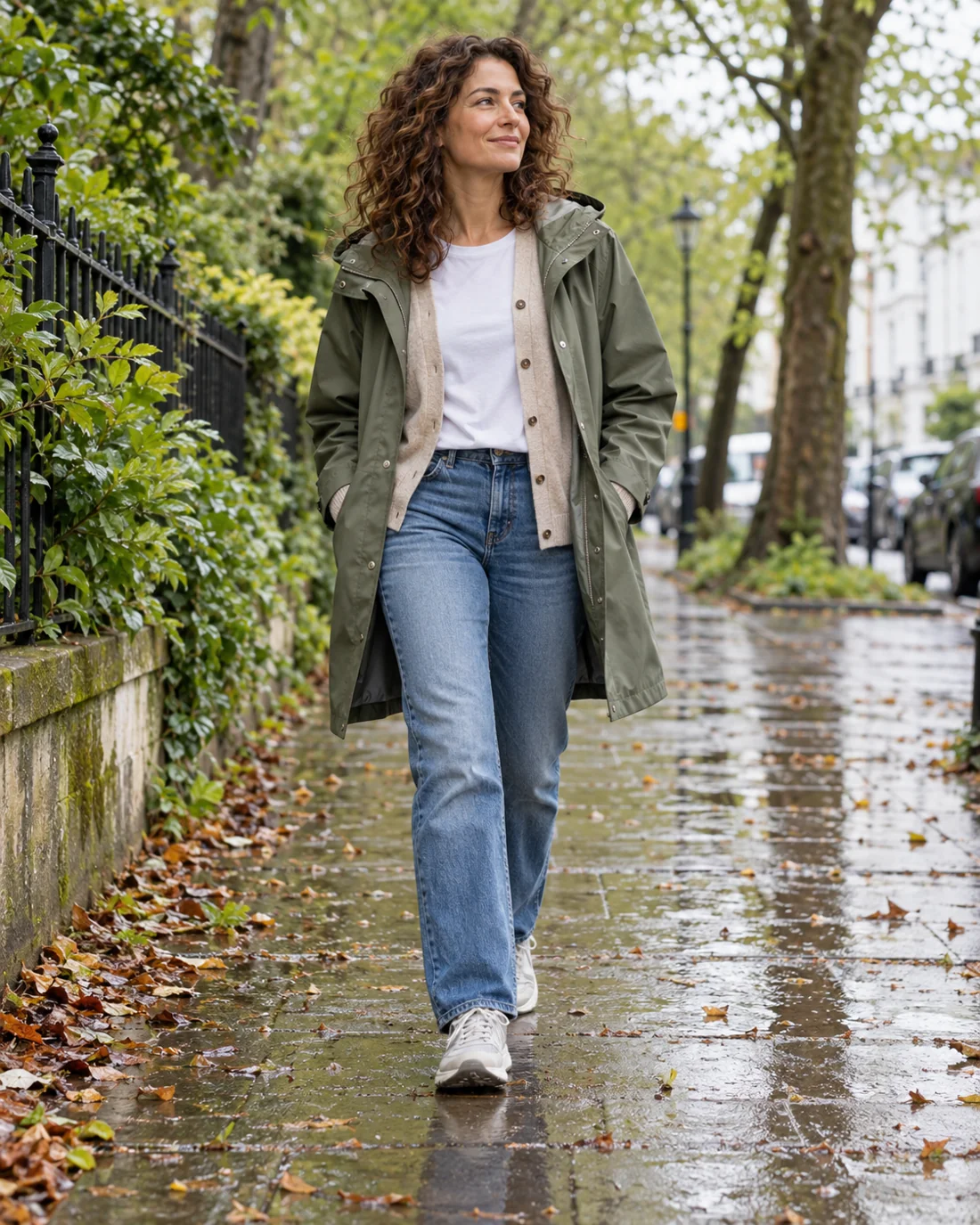
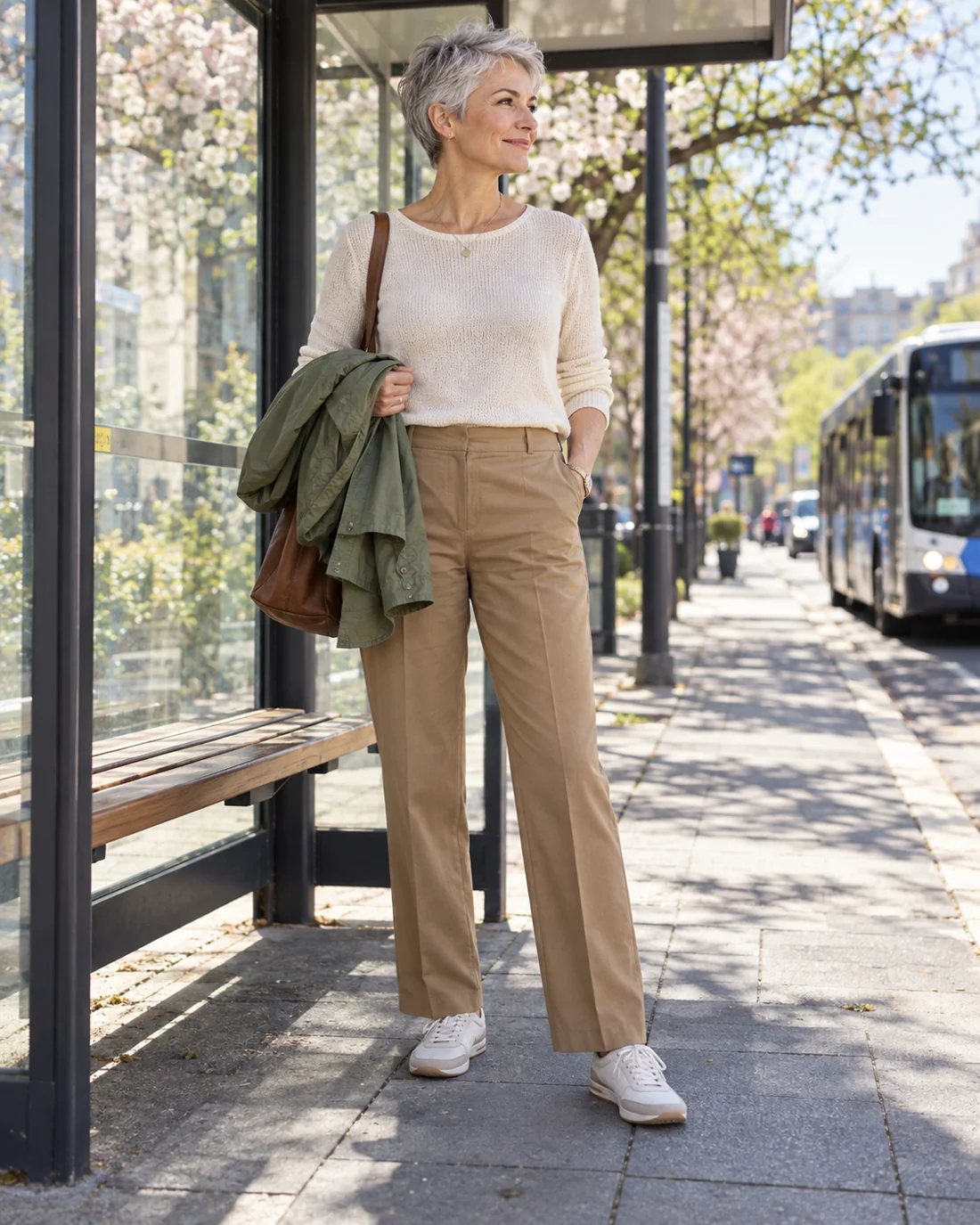
Beige trousers with an olive shirt take another direction. Brown shoes can strengthen the warmer element, while black ones provide a clearer ending. First choose between footwear suitable for the route. A colour idea is of limited use when it only works with an uncomfortable pair.
With a dark dress, a rust scarf can make a small change. Fold it as intended and inspect the amount actually visible. If it feels excessive around the neck, a bag you own in that colour may provide an alternative. Both items need not be used simultaneously simply because they approximately coordinate.
Connect two autumn shades
Rust and olive, or burgundy and brown, can work together but introduce more visible colour decisions. Let one occupy a noticeably larger area initially and keep the rest straightforward. Olive trousers with a small rust scarf are easier to assess than a patterned jacket, bag and shoes all added together.
If both shades are very dark, their differences may almost disappear indoors. That is not wrong. Simply check whether you like the combination in the light where it will mostly be worn. An office outfit need not be judged exclusively in sunshine.
Limit repetition
An accent does not need repeating in three other belongings. One colourful jumper may already be enough. Repetition is useful when it arises from existing items, such as a related shade in a skirt print. Do not automatically buy matching shoes to create a connection the outfit does not need.
Record two complete versions: one with clear contrast and one with closer tones. Next time you dress, you can choose by occasion or mood without resolving the entire colour question again.