Assess the visible lines
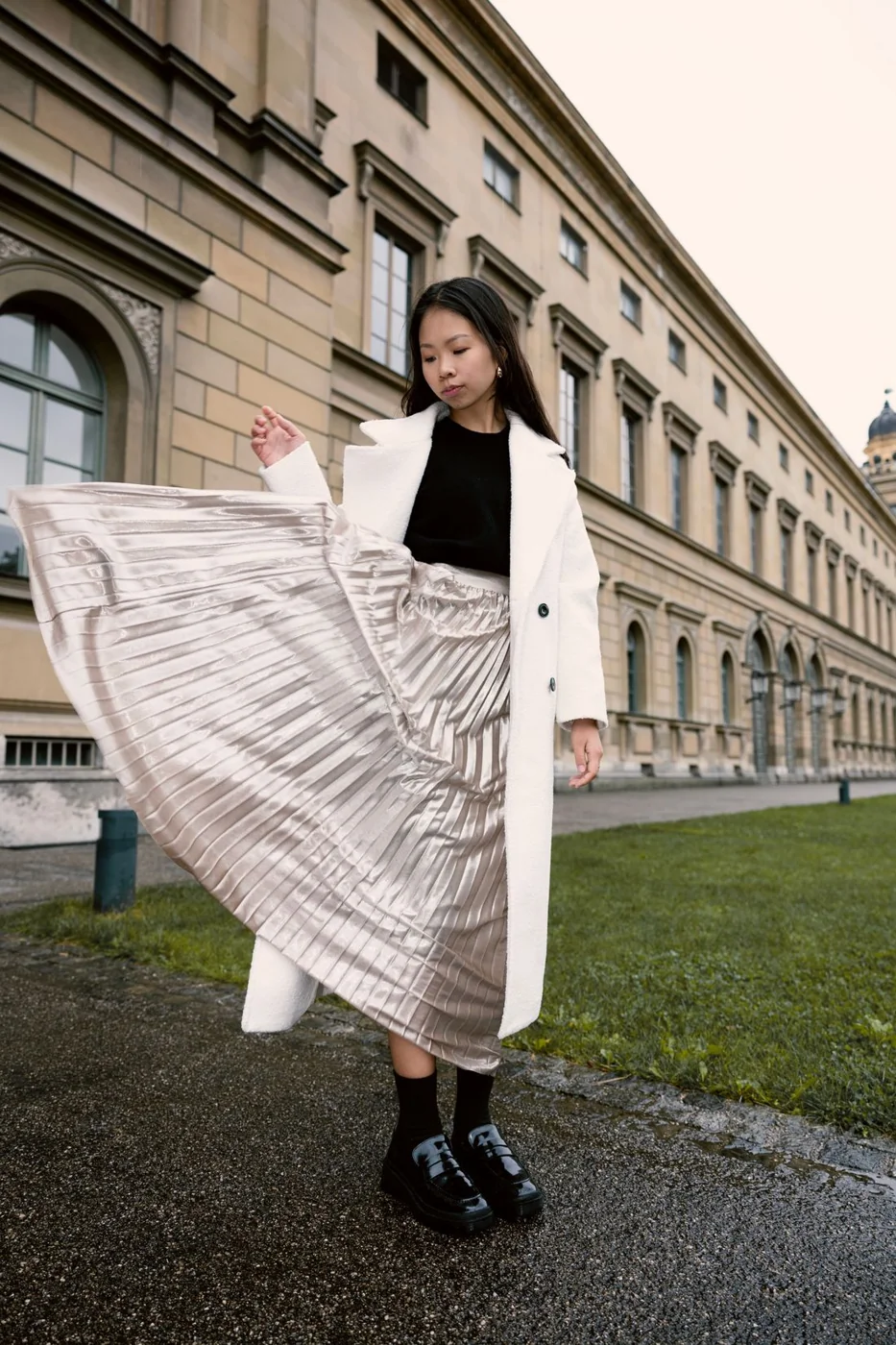
A coat noticeably shorter than the skirt reveals a larger lower area. This can look particularly clear when the fabrics have different colours or textures. A small incidental strip creates a different effect. Decide whether you like that specific distance rather than automatically calling it wrong.
A long coat above a short skirt may mainly show shoes and legs when fastened. Open it too, because the inner outfit then becomes visible again. If you remove the coat at the destination, the clothes underneath need to work independently; their colours need not repeat every concealed area of the coat.
With asymmetric hems, the side view is useful. A skirt may barely show at the front but appear clearly at the back. Turn and walk a few steps. The combination can look different from each angle, but should not depend on one carefully selected photographic perspective.
Let width and movement help decide
A full skirt beneath a narrow coat may be compressed at the lower edge. Fasten the coat and sit down. If you continually need to pull fabric out from its edges, the shapes may not work together for that day's activities. A roomier coat or another skirt is then simpler.
A walking slit should allow the movement for which the garment was designed. Check whether a second hem or lining blocks it. Stairs are particularly useful for revealing whether the lengths work only while standing or also during ordinary steps.
For a meaningful comparison, photograph the same skirt with two coats and unchanged shoes. Look at the gap, amount of fabric and visible centre of the outfit. You do not need to turn this into a universal formula for every skirt. Knowing two concrete combinations that move comfortably and have lines you enjoy is enough.