Check room in the relevant places
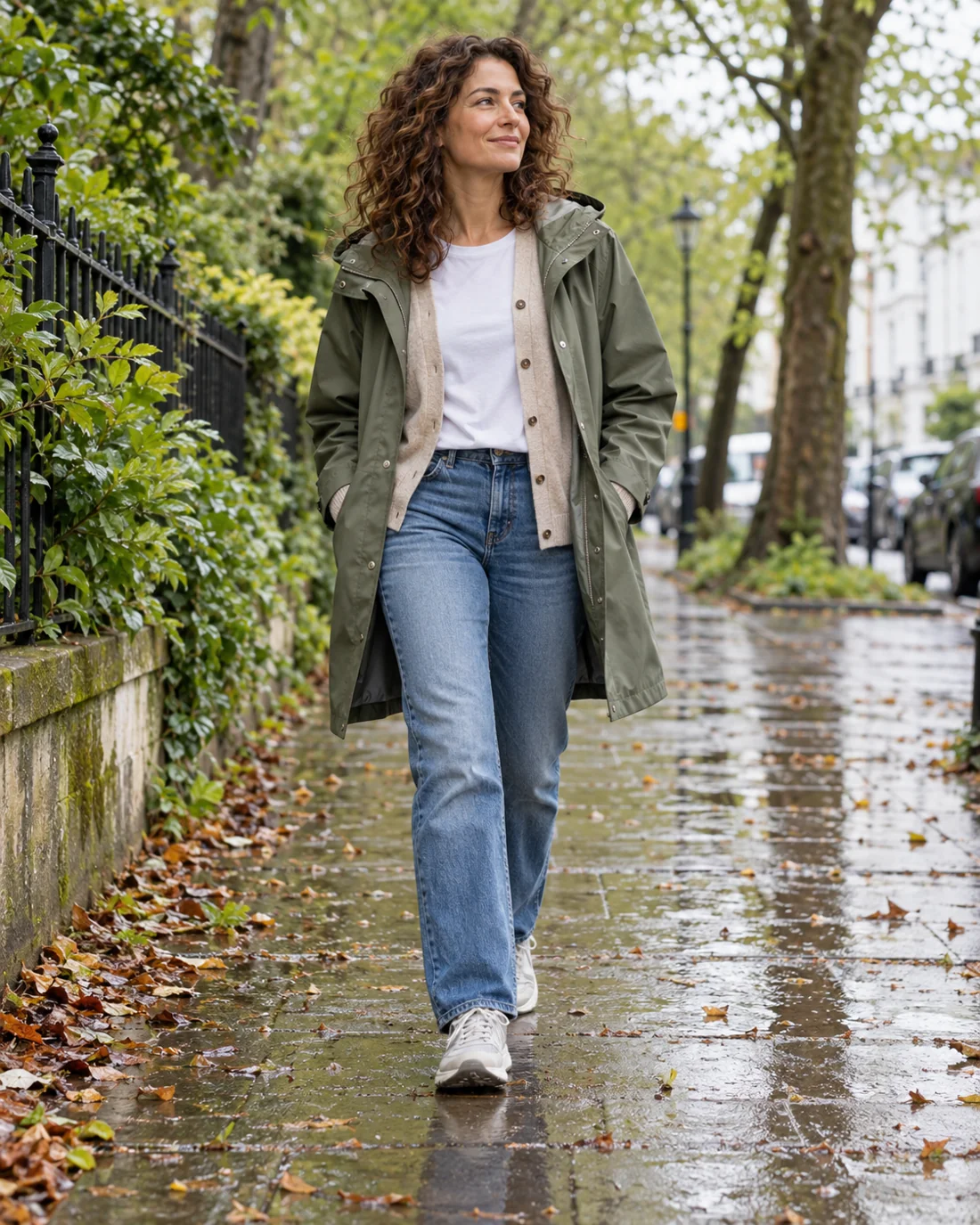
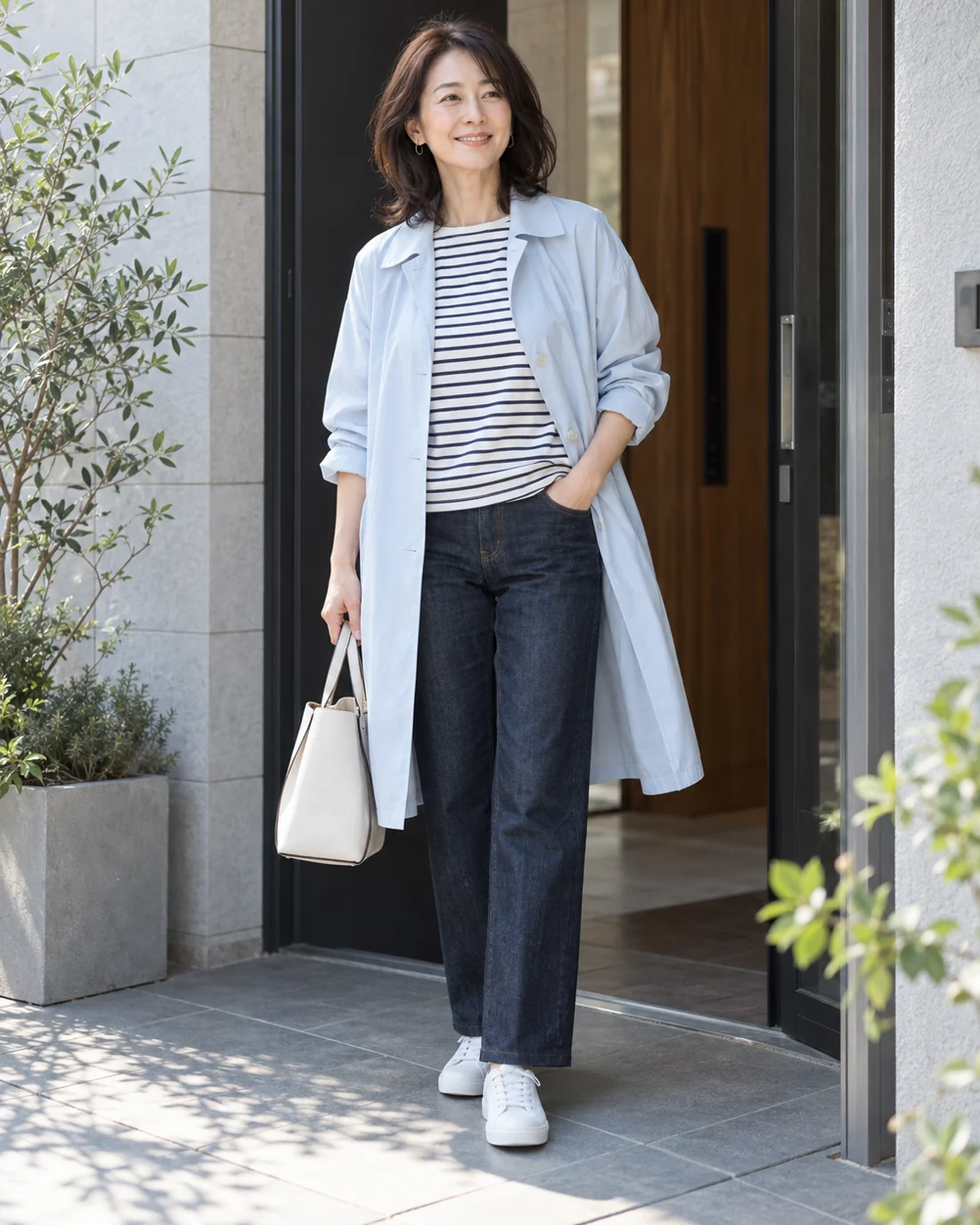
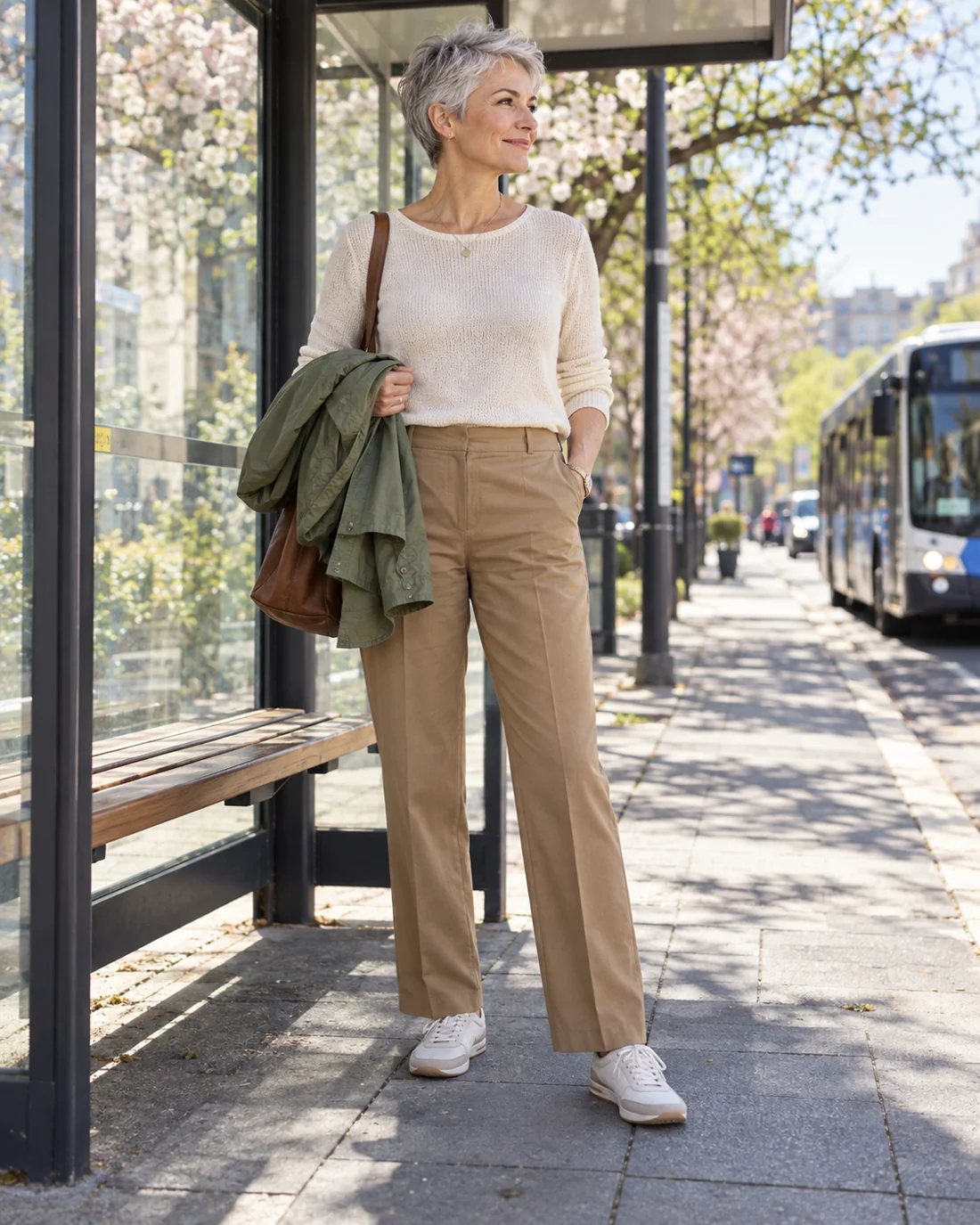
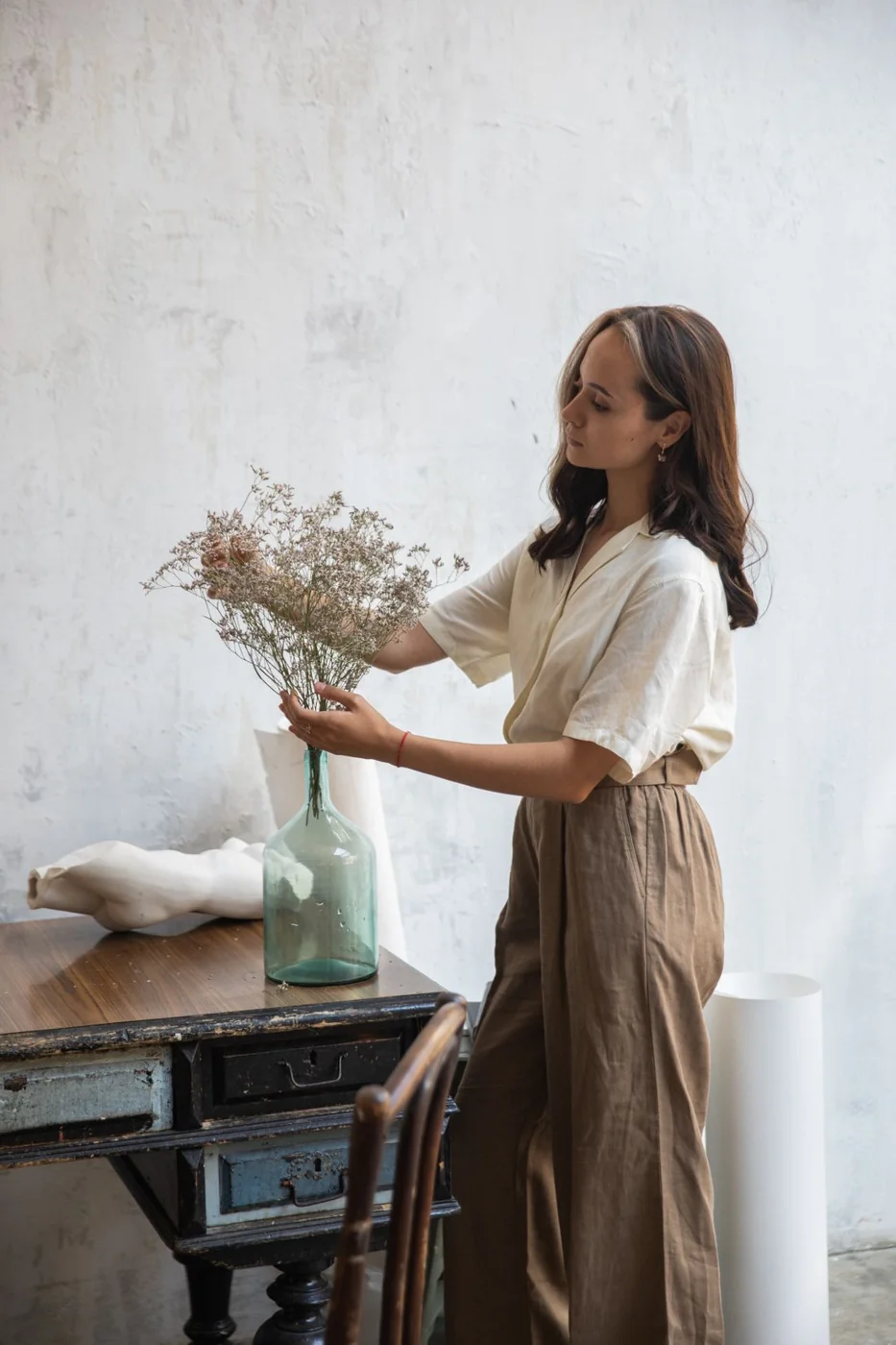
A wide blouse can still be tight across shoulders and upper arms. Raise your arms, reach forwards and sit down. Trousers with loose legs may press at the waist; an elastic waistband does not guarantee comfort in every seated position either. Assess those areas separately rather than choosing a size solely by its visible width.
If both top and trousers are loose, a clear hem position can organise the combination. A shorter top, a loosely tucked front or a continuous colour are different options. You do not need to add a tight piece to satisfy a supposed balancing rule.
Look at the actual fabric
Hold pale fabrics against daylight, then examine them while wearing the intended underwear. A hanger does not reveal how tension changes when you sit. If you want an extra underlayer, include it from the start and compare whether another garment you own would feel easier without that addition.
Material names alone tell you little about the specific thickness, weave or fit. A thin item and a densely constructed one made from the same fibre may feel different. Judge the garment itself rather than ranking all fabrics from the label alone.
Remove unnecessary additions
Try a loose shirt with shorts, for example, or a wide dress with shoes suitable for the planned walk. Leave out the belt, vest and neck scarf initially. Then add only what you actually miss, such as a bag for belongings or a light layer for an indoor stop later.
Extended time in strong sun or extreme heat involves considerations beyond outfit styling. Do not automatically treat ordinary clothing as certified sun protection, and adapt activities to the conditions. For the outfit itself, the most useful test stays concrete: can you walk, sit and carry what you need without continually rearranging fabric?