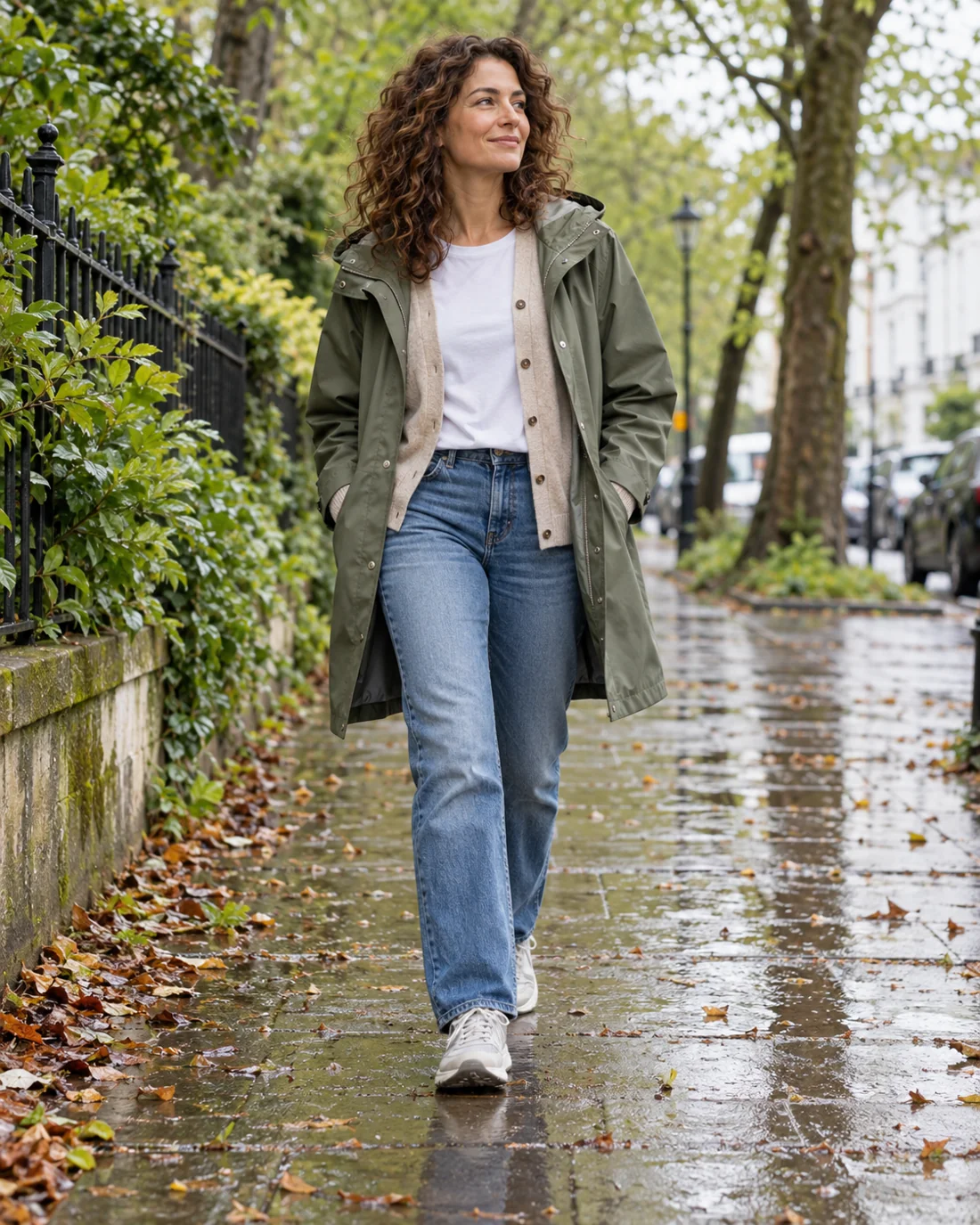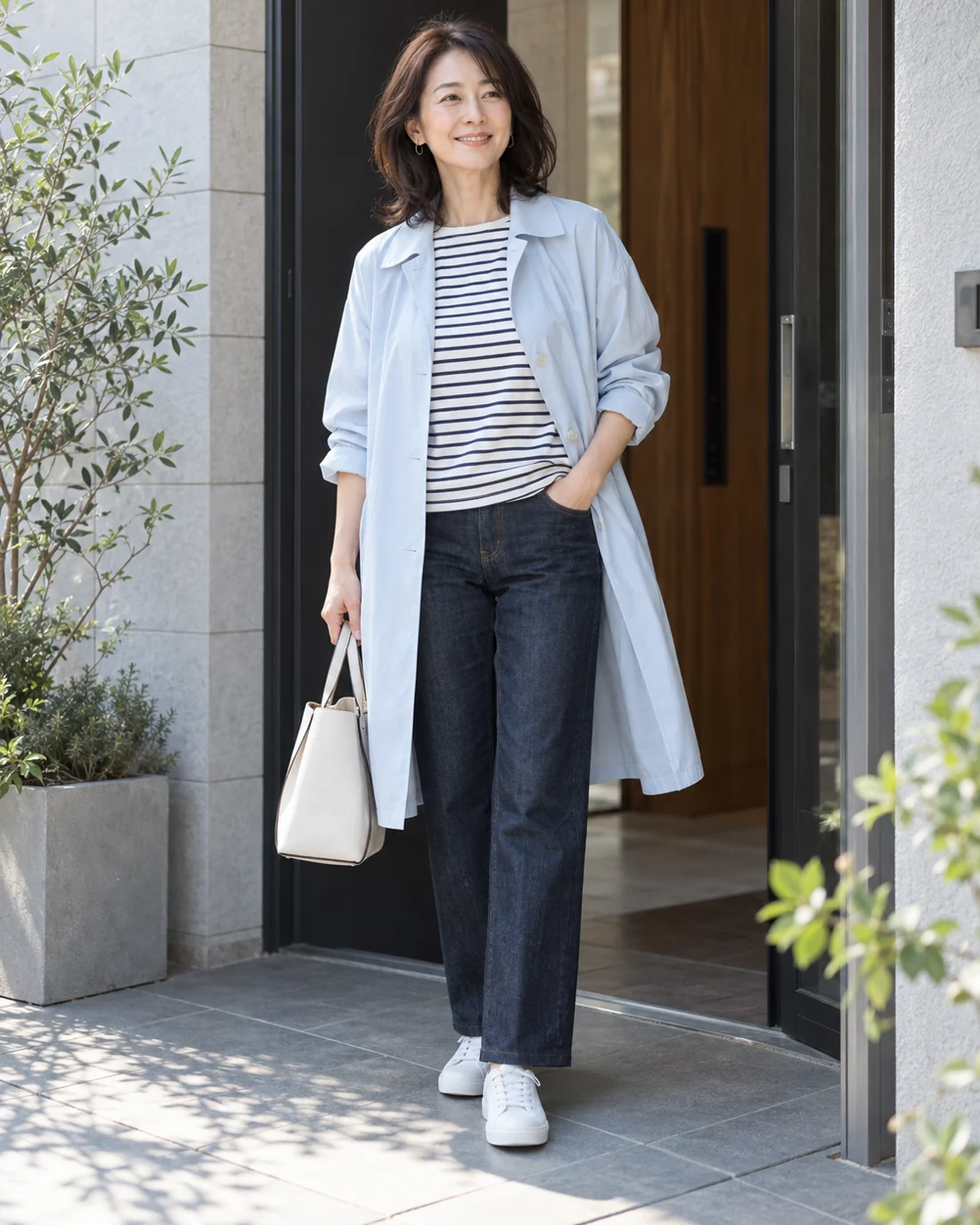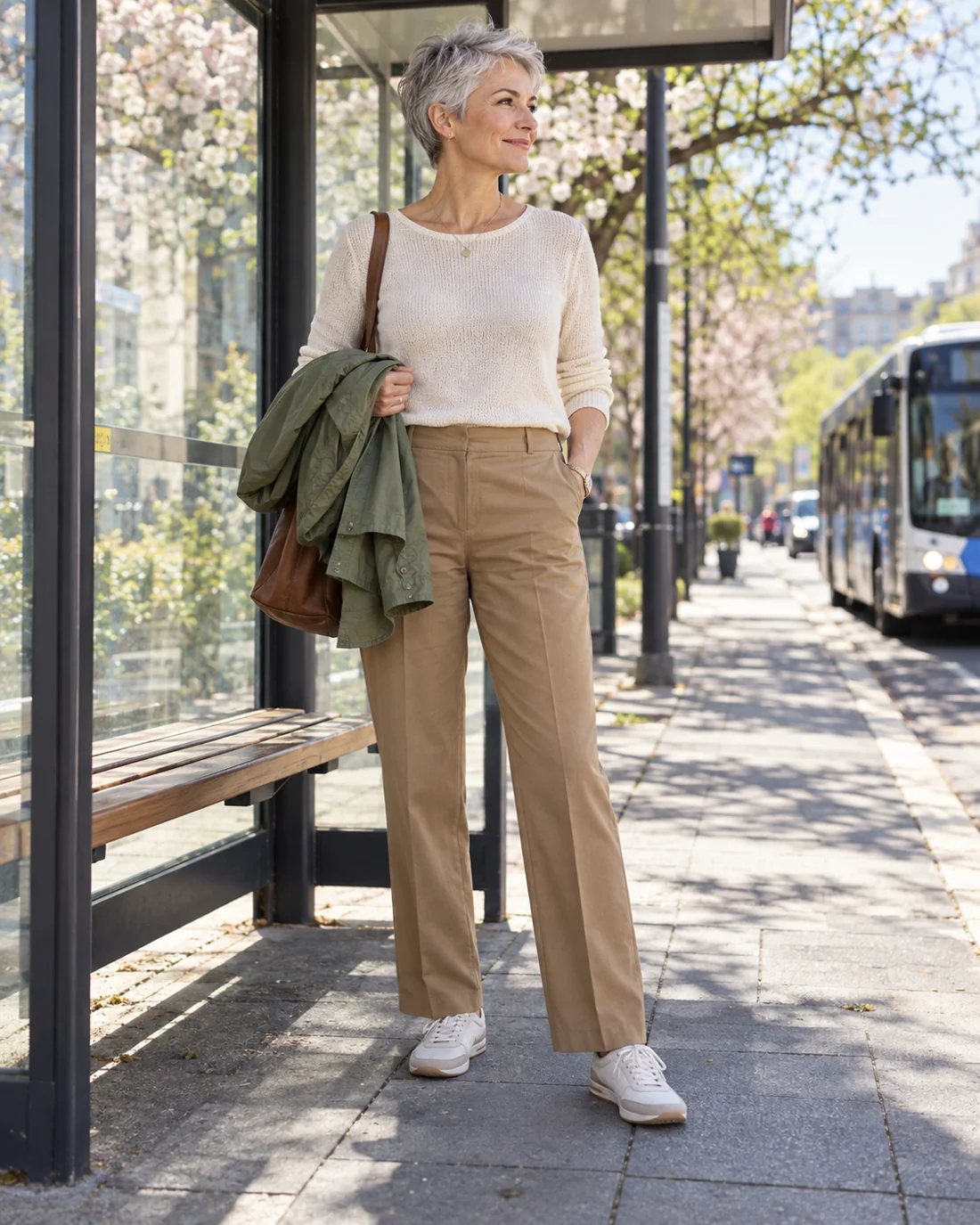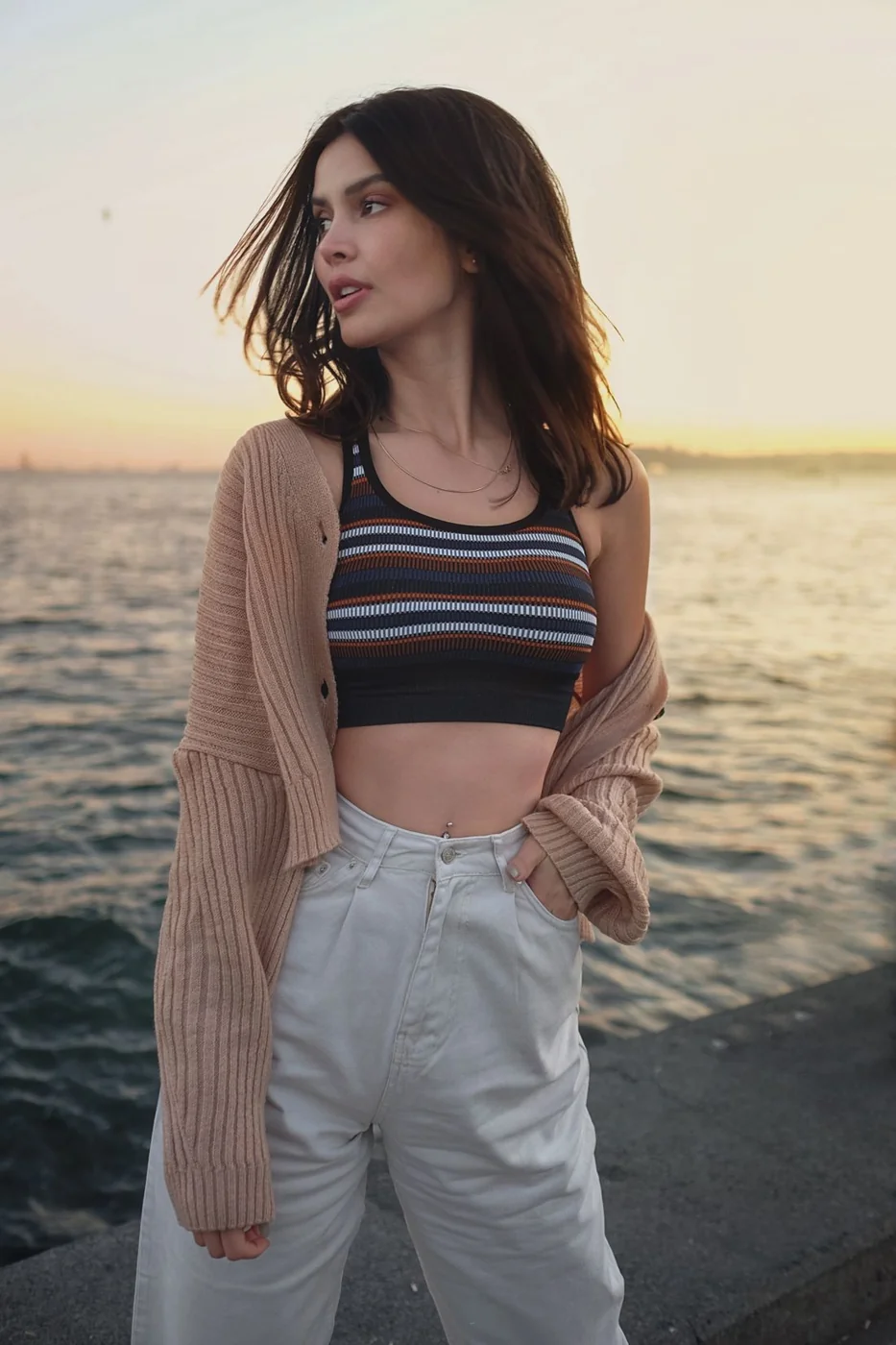
Over a dress or sleeveless top
A short cardigan leaves much of a dress visible, while a longer jacket covers more of its shape. Try both open and fastened. With a dress that has a full waist or prominent sleeves, a close layer may push fabric into folds. Shared movement matters more than a prescribed jacket length.
A large scarf can rest over the shoulders but may need frequent holding in place. If you will eat, carry things or walk a lot, a layer with sleeves may be easier. The scarf remains an option when you like how it handles for that particular evening.
With trousers and a tee
An open shirt adds another surface without hiding the complete outfit. Check whether its fabric is sufficient for the expected setting. The phrase summer shirt says little about how it will feel later. A different jacket may be more useful for an extended period outdoors.
If the tee and trousers already have different colours, begin with a layer that echoes one of them. A deliberate third shade is possible too. Keep shoes and bag unchanged initially so that you can actually identify the effect of the additional layer.
Carry it, remove it, put it back on
Try carrying the folded layer with your usual bag contents. If it only fits under heavy pressure, it may be too large for that arrangement. When carried over an arm, long ties should not trail on the ground. A jacket with a delicate surface may need a different bag.
Finally, put the layer on again after sitting for a few minutes. You will notice whether it catches against the fabric underneath or whether a hem has ridden up. A simple combination you can restore without a mirror is often more comfortable for a long evening than a carefully arranged layer that needs correcting after every movement.