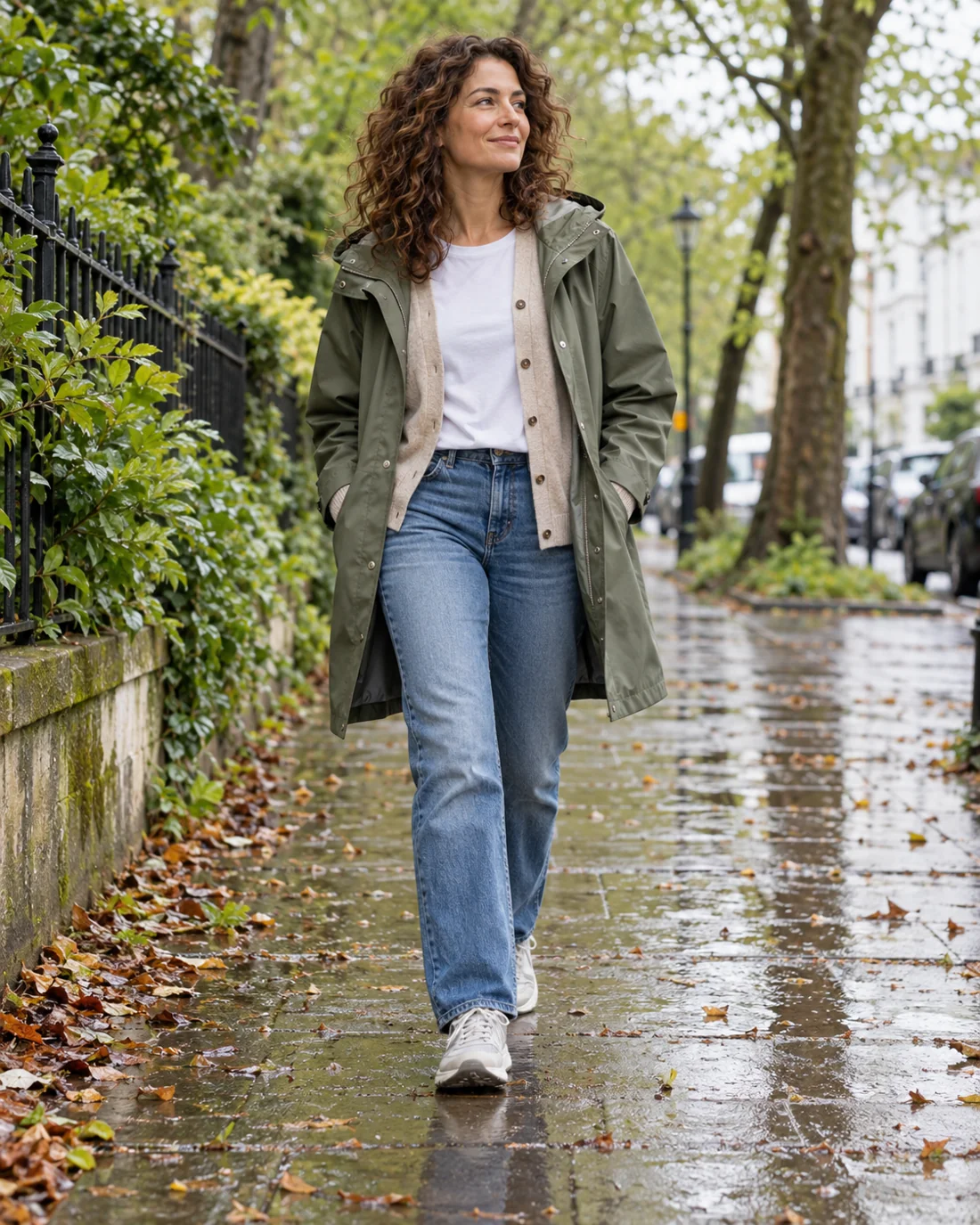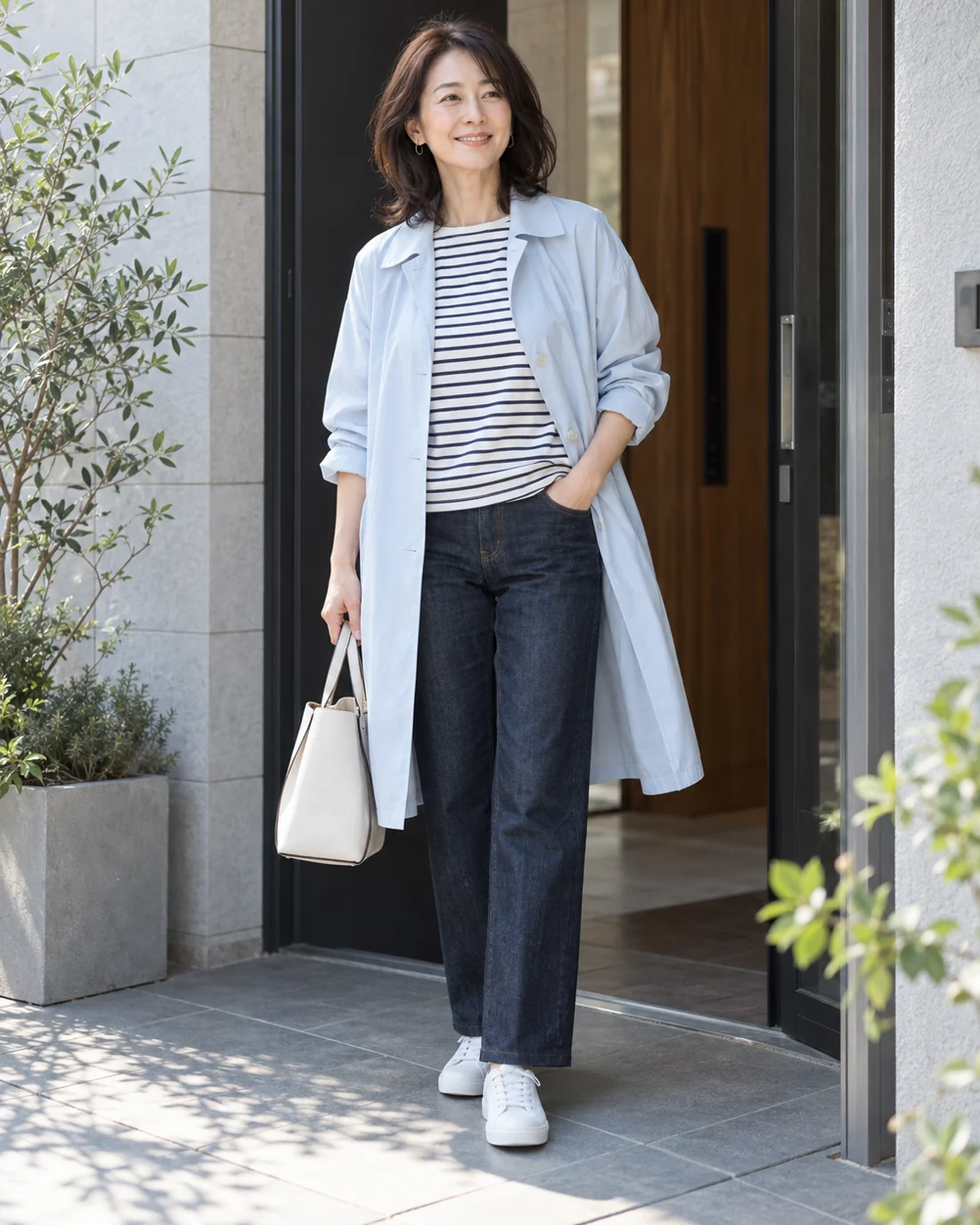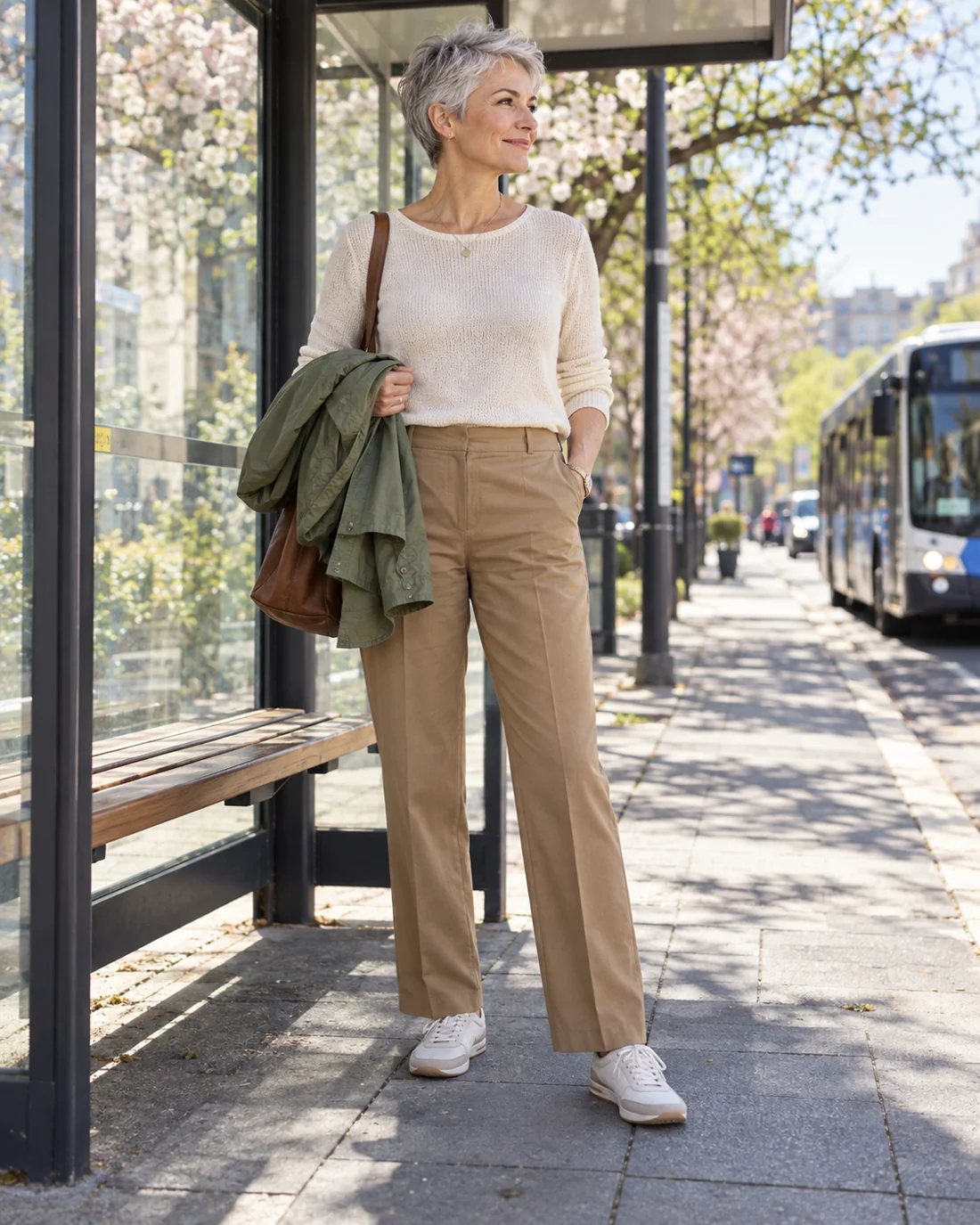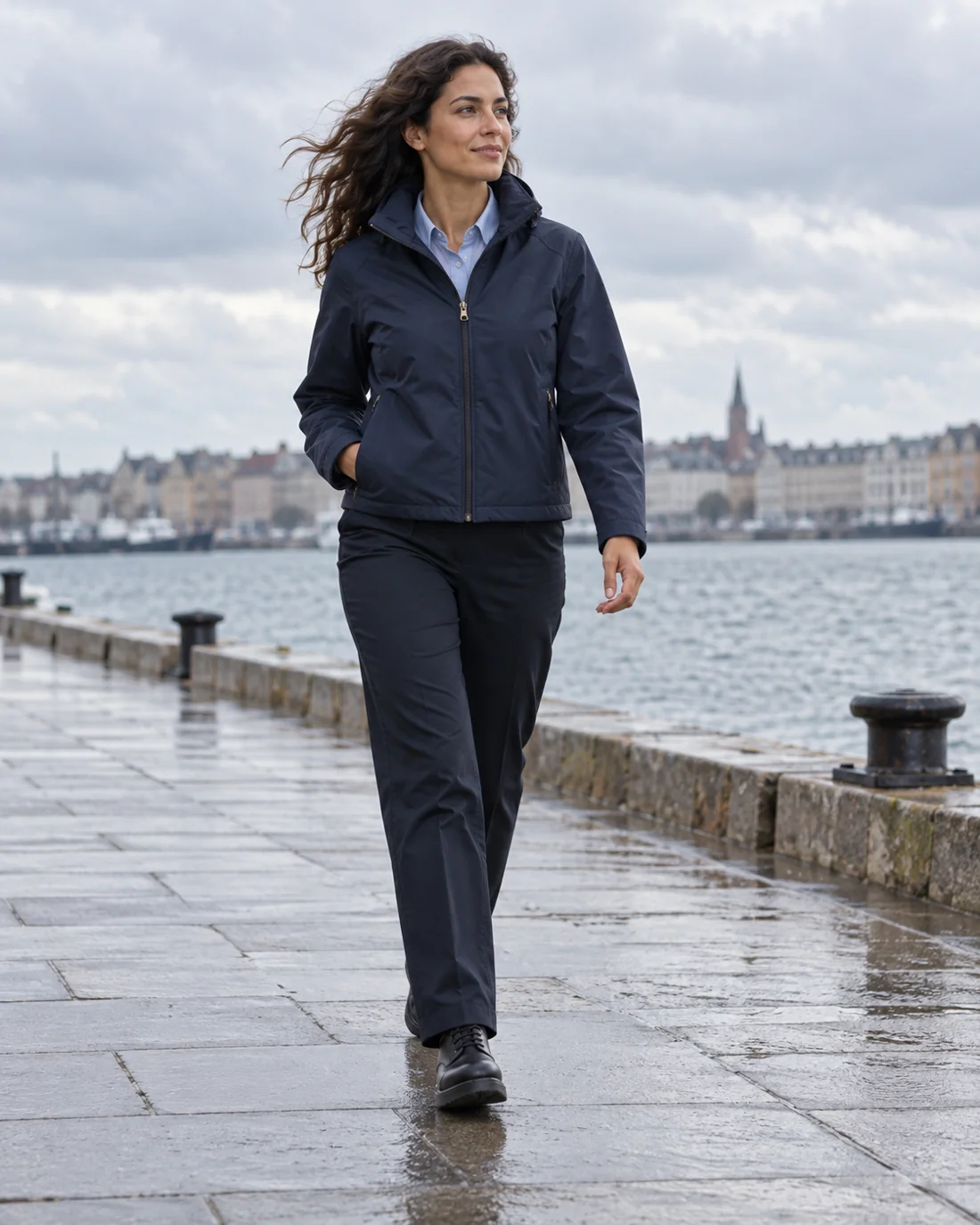
Reduce loose areas where useful
A full dress can still suit the day if you enjoy its movement and its coverage works for you. Walk, turn and check the fastenings. Wrap garments deserve particular attention at the overlap. If you need to reserve a hand for holding fabric constantly, a different shape you already own may be easier for that journey.
A long open coat moves differently from a fastened one. Close it over the full outfit as a trial. If that is uncomfortable, the problem is not solved merely because you normally wear it open. An outer layer needs to allow the way of wearing required that day.
Include scarves, hats and bags
Long scarf ends may fit inside a jacket if they do not create pressure there. Knots should remain comfortable without restricting neck movement. A scarf that continually blows backwards may suit a calm indoor setting but not the whole journey.
Check a hat while tilting and turning your head. A secure fit does not mean an unpleasantly tight one. If you must hold it constantly, choose another option for the day. A bag with a suitable strap length can free your hands, but should not swing excessively with each step.
Keep a complete outfit underneath
Plan the inner combination as carefully as the outer layer. When the coat or jacket comes off at the destination, top and lower garment should work alone. A straightforward arrangement can be particularly comfortable on a busy journey because fewer loose details require correction.
Strong wind or weather warnings are not simply styling questions. Adapt the route to actual conditions and do not expect an outfit to provide protection it cannot offer. For ordinary windy journeys, use a concrete test: which pieces stay in place themselves, and which require more attention than you have available while travelling?