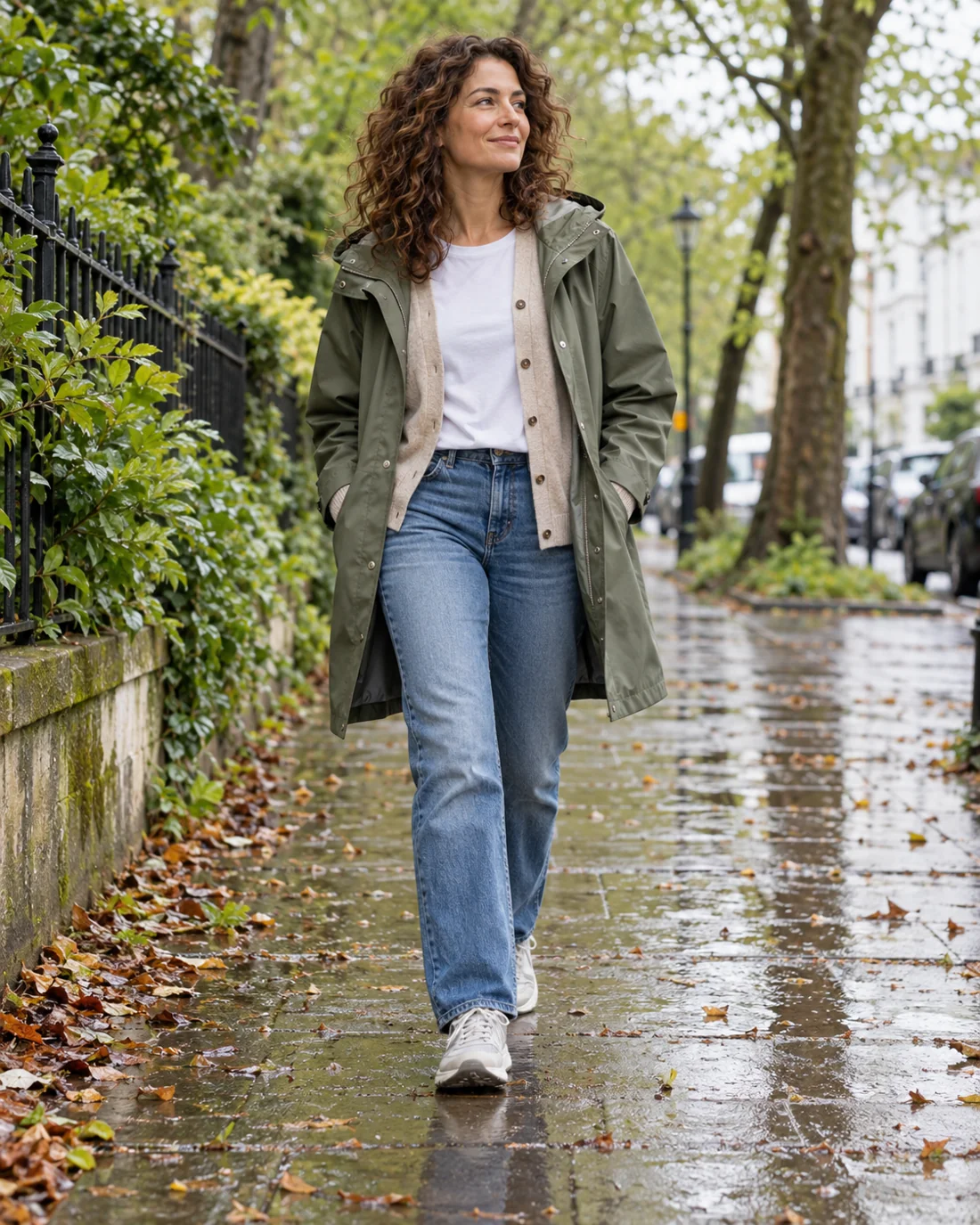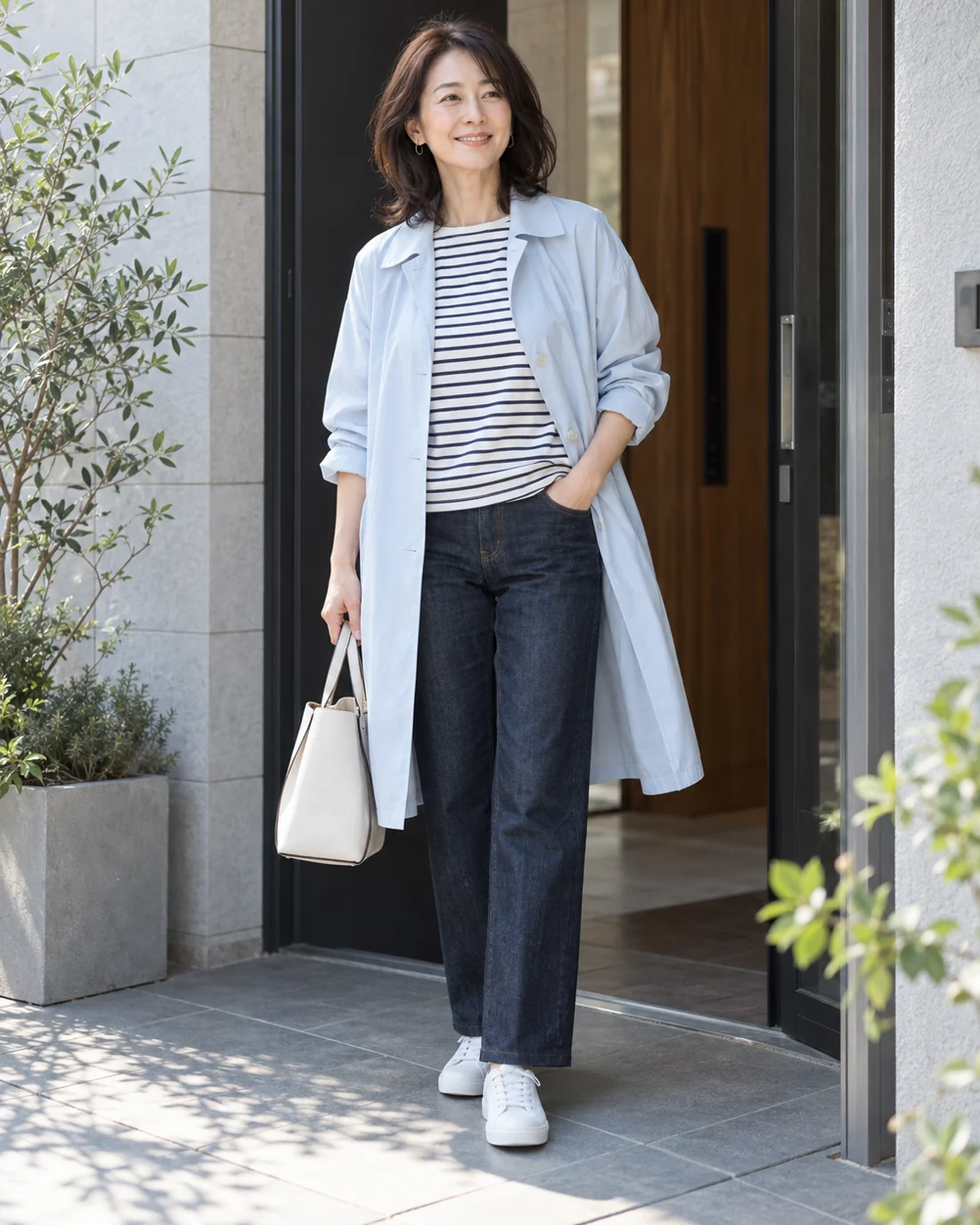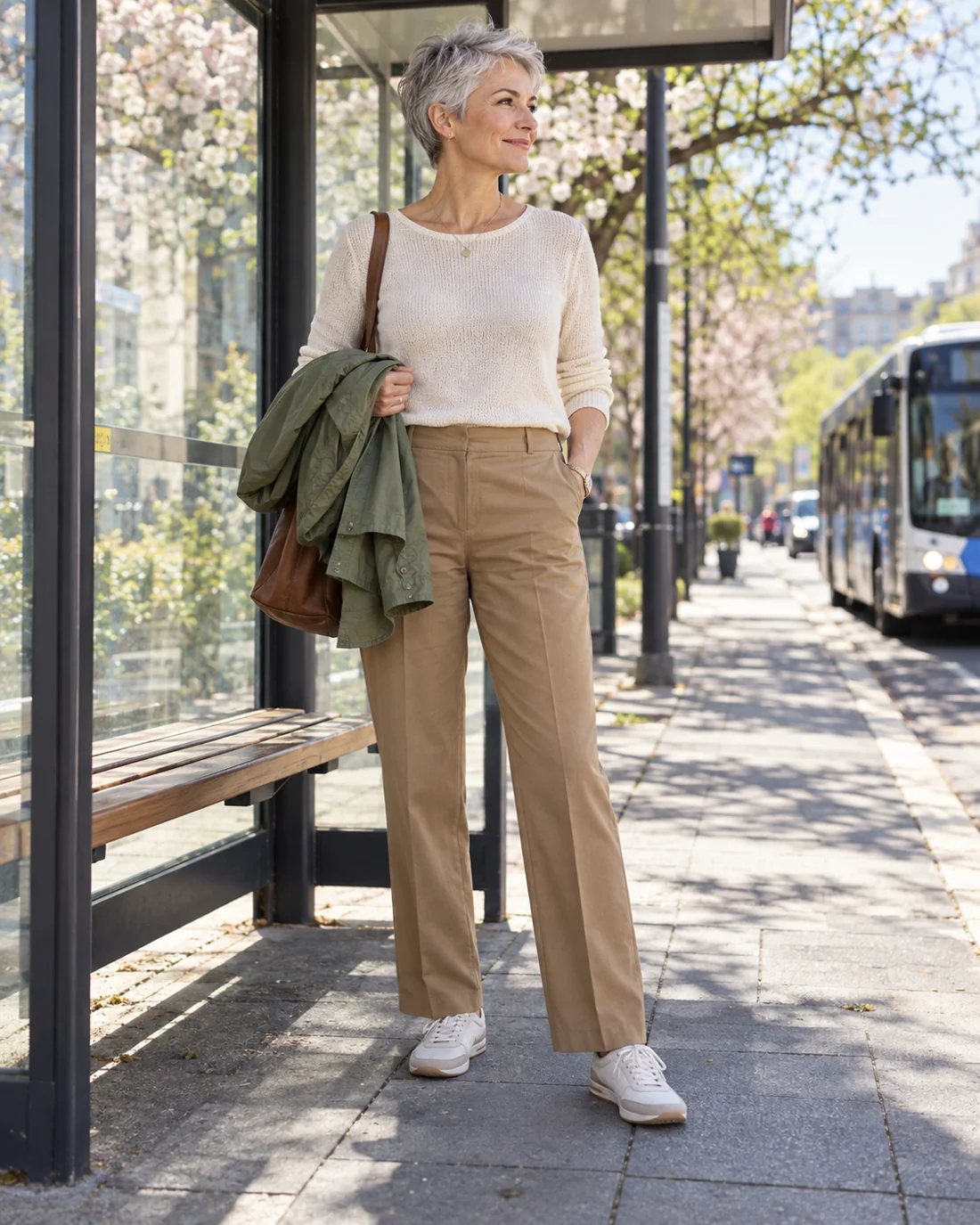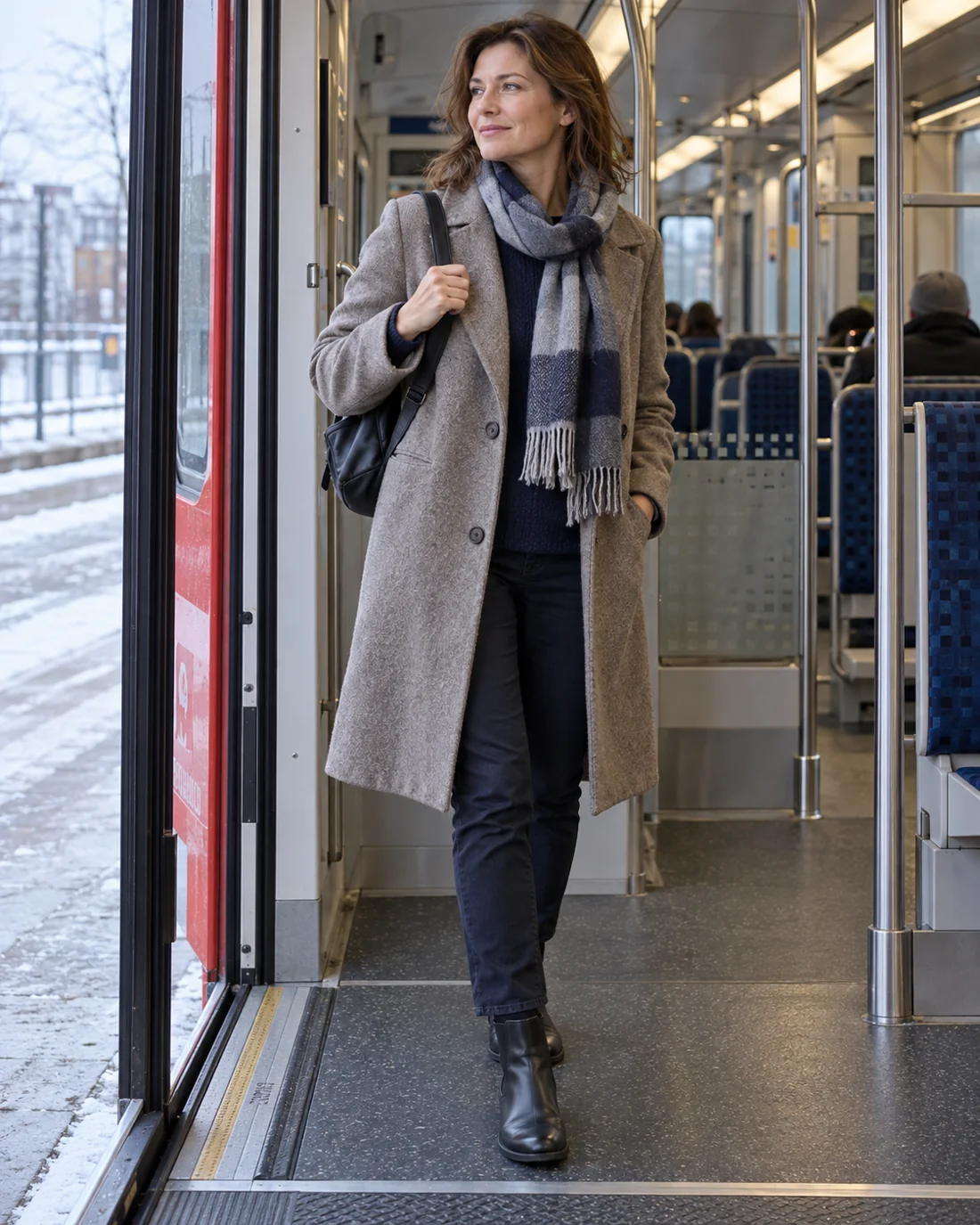
Begin with luggage
Decide which bag or suitcase you will actually take. A backpack sits differently over a coat from a shoulder bag, while a wheeled case leaves one hand free until you reach stairs. Try the clothing with the normal weight. An empty backpack will not reveal whether several layers create pressure at the shoulders.
Long coat belts, loose scarf ends and very wide sleeves can interfere with carrying. Arrange them so you can reach handles and tickets. This does not mean abandoning every scarf or long coat; the pieces simply need to work with the handling you expect.
Test the outdoor journey completely
Choose footwear for the walking sections and actual conditions. Appearance alone does not establish suitability. Add the intended socks and walk for a few minutes. Check whether a long trouser hem slips beneath your heel or touches the ground when you take a larger step.
Fasten the coat over every layer. Reach forwards, lift the bag strap and sit briefly. If the combination is comfortable only without luggage, change a layer or the carrying arrangement before travelling. The outfit needs to work during a transfer, not only in a platform photograph.
Plan a usable seated version
Beneath the coat, have a complete combination in which you want to sit for a while. A jumper may suit the carriage or may become too warm. If it might come off, inspect the tee or shirt beneath on its own beforehand. It should provide the coverage you want.
Sit in the trousers or skirt on an ordinary chair and lean slightly forwards. A belt, hard zip or several overlapping bands may press differently from when you stand. Try a less bulky arrangement before planning extra accessories.
Consider where coat and scarf will go when removed. Keep them together so smaller pieces cannot fall unnoticed. Plan to use a bag for storage only when it genuinely has room beyond the travel contents. Available space inside a train varies; do not rely on a particular cloakroom arrangement.
Be ready for the next outdoor section
Place gloves and other needed pieces somewhere accessible before stowing everything. If the stop is brief or the platform busy, you will not want to search beneath several bags for one garment. The order in which you remove things helps when putting them on again.
A connected colour combination can use few pieces: dark trousers, a light shirt, mid-grey cardigan and an existing coat, for example. The colours are only an illustration. What matters is that each layer works alone and together. Afterwards, note which extra layer helped and which merely occupied space. That gives you a more precise starting point for the next similar journey.